
Telecom base stations
House communications, power and battery equipment in a serviceable outdoor enclosure.
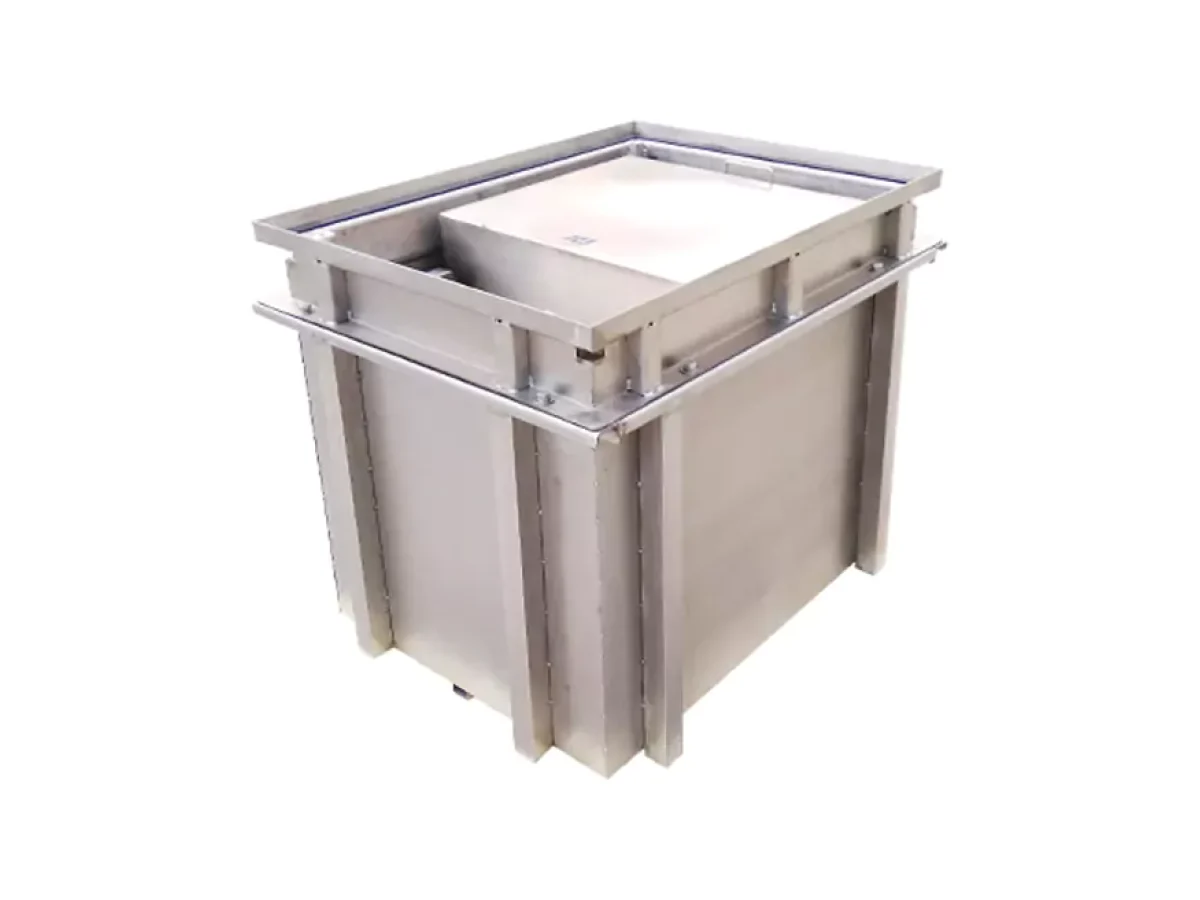
A direct-buried 304 stainless-steel communications cabinet with a vertical pull-out service structure, SMC cover and environmental monitoring for sites with limited above-ground space.
The Underground Telecom Cabinet places communications equipment below grade while retaining vertical access for servicing. It is intended for sidewalks, parks, green belts and other locations where an above-ground cabinet would consume space or affect appearance.
The cabinet and its civil works must be designed as one system. A protected enclosure does not remove the need to assess groundwater, drainage, flooding, surface loads or safe access to the lifting mechanism.
Provide the chamber drawing and groundwater information before choosing equipment. Assess soil-assisted heat dissipation against actual heat load and soil conditions. Confirm cable sealing, sump strategy, power circuits, monitoring and the unobstructed vertical maintenance envelope.
Huijue Group can review OEM underground cabinets, private labels and sample- or drawing-based chamber interfaces. Structural feasibility, tooling, ingress and lifting tests, quantities and delivery/civil-work scope require engineering confirmation.
Send chamber geometry, groundwater and flood data, surface load, equipment heat and mass, cable routes, monitoring needs and lifting access.
| Installation format | Direct-buried / vertical pull-out |
|---|---|
| Cabinet material | 304 stainless steel |
| Manhole-cover material | SMC |
| Protection rating | IP68 |
| Cabinet-body dimensions | 900 (D) × 580 (W) × 500 (H) mm |
| Manhole-cover dimensions | 700 × 700 × 35 mm |
| Source-listed overall configuration | 1000 (H) × 700 (W) × 700 (D) mm |
| AC input | 220 V AC |
| Surge protection | 40 kA |
| Branch outputs | 16 A / 1P × 1; 10 A / 1P × 1 |
| Operating temperature | -30°C to +60°C |
| Relative humidity | 5–80% |
| Source-listed structural load | 100 kg on each side; 400 kg on top |
Published operating conditions are −30°C to +60°C and 5–80% relative humidity. The source-listed structural values are not a road traffic-load approval; define the actual surface-loading requirement.
Buyer Questions
Answers specific to Underground Telecom Cabinet selection, configuration and purchasing.
Confirm the applicable immersion test conditions and installed interfaces. Groundwater and flooding require project-specific review beyond the rating label.
Do not infer traffic suitability from the listed structural values. Provide the required traffic-load class and civil design criteria for review.
It depends on equipment heat, soil conditions and temperature limits. A thermal assessment is needed for the proposed installation.
Allow the complete vertical extraction path and a safe working area. Confirm dimensions and lifting procedure from the approved arrangement drawing.
Use the deployment context to narrow the configuration before comparing dimensions, capacities and options.
House communications, power and battery equipment in a serviceable outdoor enclosure.
Protect distributed equipment while maintaining cable entry and service access.
Coordinate cabinet capacity, thermal management and equipment zoning.
Fit protected infrastructure into space-constrained or visually sensitive locations.
Before quotation: confirm capacity, interfaces, installation environment, power conditions, quantity and required options.