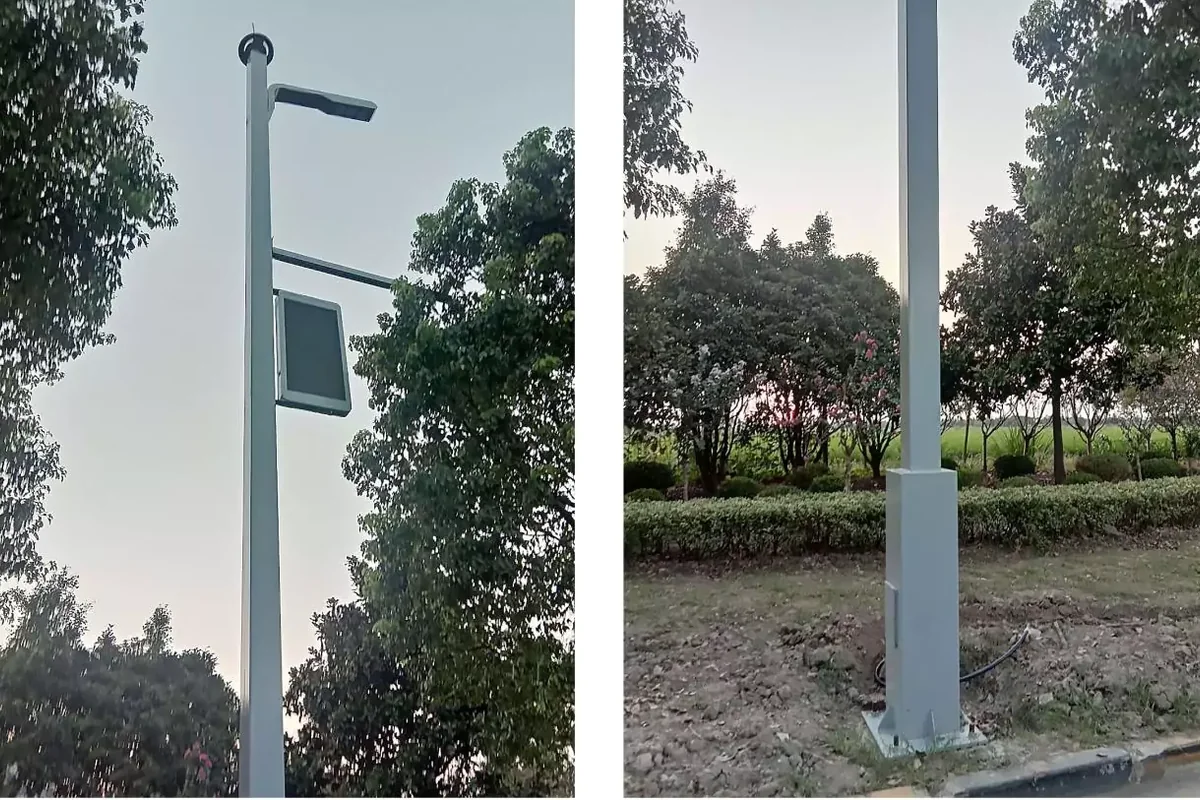
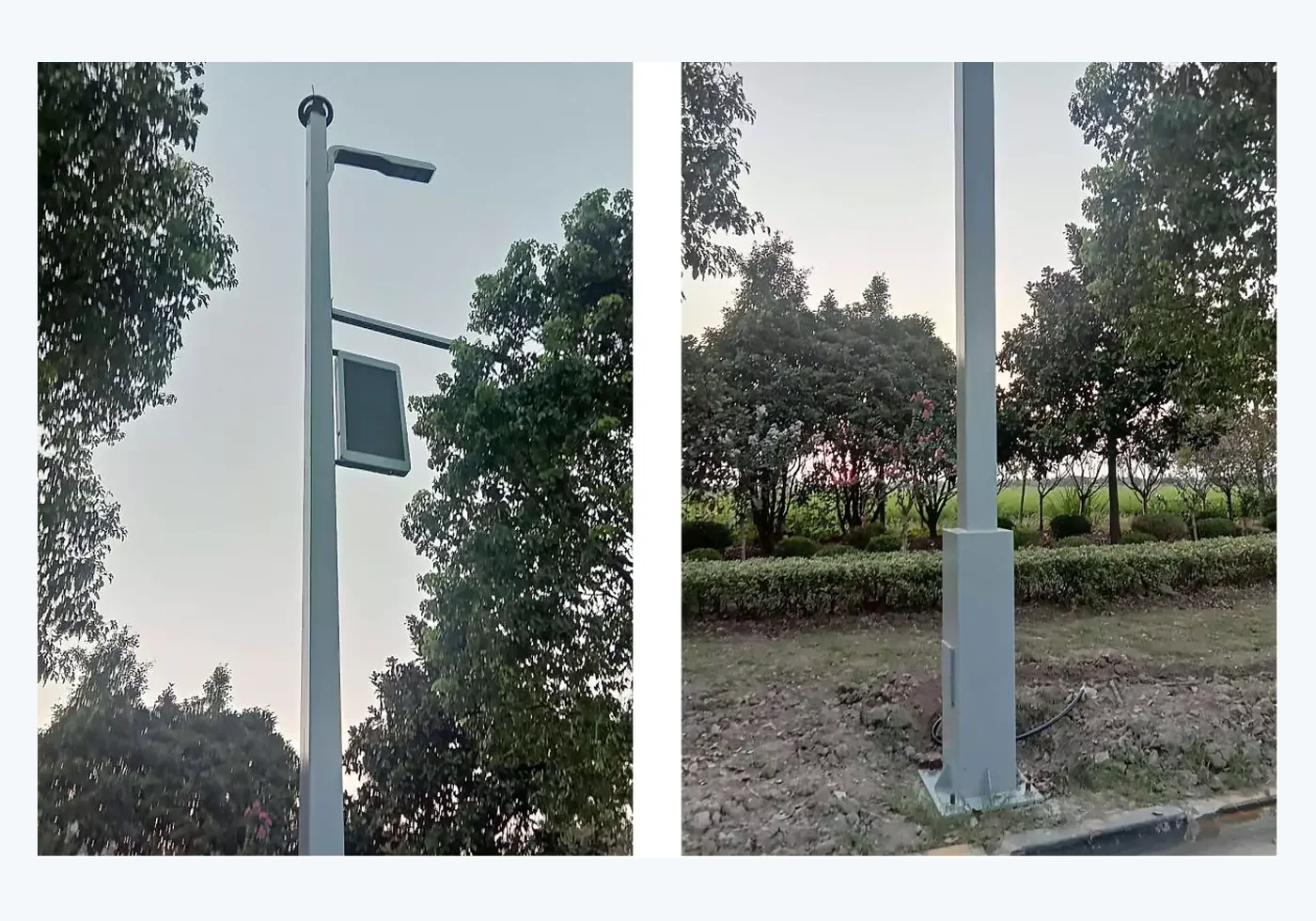
At Fengcheng Industrial Park in Shanghai’s Fengxian District, existing street-light locations were renewed with multifunction smart poles. The project used the established pole positions while replacing the former structures with a platform capable of carrying communications, lighting, video, sensing, public-information and emergency-service equipment.
Project objective
A conventional street-light location provides a powered and distributed physical point in the public realm. The project expanded that point into shared edge infrastructure. Rather than adding separate poles for every function, the new structures were designed to host several devices while reserving interfaces for future smart-city and intelligent-transport equipment.
The documented function set includes a 5G base-station position, intelligent lighting, video surveillance, environmental monitoring, wireless networking, an information display and emergency broadcasting. The case also lists public mobile-phone charging, missing-manhole-cover alarms and full-bin alerts among the supported application scenarios. Devices can be connected progressively to a management platform for unified operation, maintenance and data sharing.
Verified mechanical configuration
- Overall pole height
- 10 m.
- Main pole
- 200 × 200 × 5 mm square tube.
- Base equipment compartment
- 350 × 350 × 5 mm square tube.
- Material
- Q235B.
- Antenna interface
- Reserved mounting holes for a 5G antenna in the top flange.
- Display
- Outdoor full-color P4 screen; 512 × 1024 mm display area; 4 mm pixel pitch.
- Camera arm
- 2 m long, installed at a height of 6.5 m.
For another location, pole height, foundation, wind loading, equipment weight, arm geometry and antenna arrangement require a site-specific structural review. The project dimensions above provide a reference for the Fengcheng installation.
Integration below and above the pole
The base equipment compartment gives the pole a protected location for power, distribution, control and communications interfaces. Cable routes must coordinate incoming utility power, fiber or network links, antenna feeds, display connections, sensors and grounding. The top and side mounting positions must respect equipment weight, service access and clearances while limiting conflicts between antennas, cameras, lighting and the display.
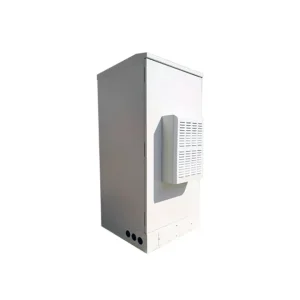
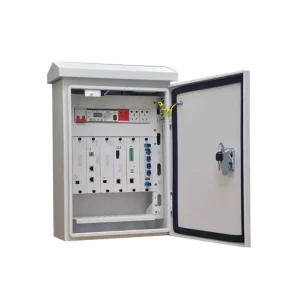
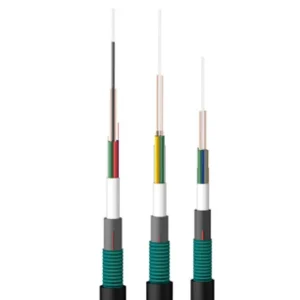
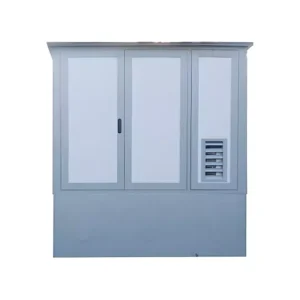
For new projects requiring additional equipment space, Huijue Group can review an outdoor mini cabinet, a power-distribution control box and hybrid fiber-and-power cabling alongside the pole design. Each assembly can be selected around the device list, cable routes and maintenance access.
Platform and operations planning
Combining devices on one structure creates shared infrastructure but does not automatically create unified management. Each subsystem needs an interface definition covering power, network connection, addressing, protocol, alarms, data ownership and maintenance responsibility. Critical lighting or safety functions also need appropriate local behavior if the upstream network or platform is unavailable.
Maintenance planning should distinguish routine lamp, camera, sensor, display and communications work. Safe isolation, access height, traffic control and replacement paths need to be documented. Equipment-compartment ventilation and water control should be selected from the installed heat load and site exposure, while locks and access records protect the shared enclosure.
Why the existing locations mattered
Using former street-light points allowed the project to renew the existing streetscape while consolidating several functions at each infrastructure point. A comparable refurbishment begins with surveys of foundations, buried services, incoming electrical capacity, communications pathways and local planning requirements.
The pole also preserves future interfaces for additional smart-city or transport devices. That expansion capacity should be quantified as allowable structural load, available power, data ports, physical mounting zones and platform licenses—not left as a general promise.
Inputs for a comparable smart-pole project
- Site plan, existing pole locations and underground services
- Required lighting, radio, camera, display and sensor functions
- Device weights, wind areas, mounting heights and service zones
- Available power and branch-protection schedule
- Fiber, wireless and platform communication interfaces
- Data, alarm and maintenance ownership
- Foundation, wind, corrosion and local structural requirements
- Equipment-compartment heat load and environmental protection
- Grounding, surge protection and lightning-protection interfaces
- Future-device allowance and phased installation plan
The Fengcheng project provides a real example of consolidating multiple edge functions at renewed lighting locations. For a similar deployment, send the device list and site plan so the pole, cabinet, power and communications interfaces can be reviewed together.