
Case Study
400 Indoor Energy Cabinets for Satellite Communications
A 400-system indoor energy-cabinet program combined 48 V battery storage, photovoltaic control and electrical protection in a repeatable enclosure for satellite communication and equipment-room applications.
Documented project
Project overview
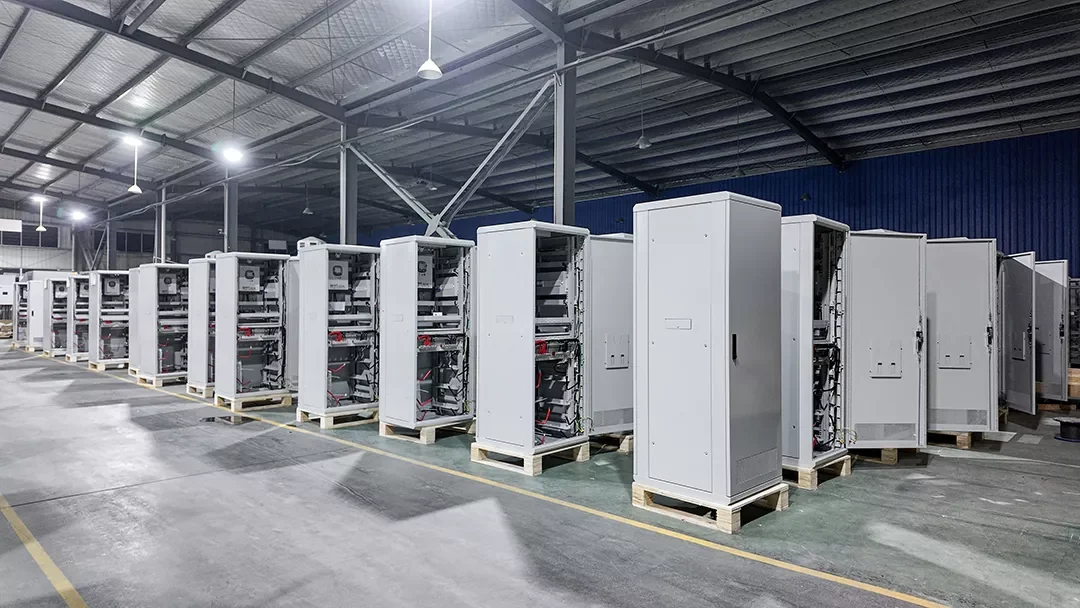
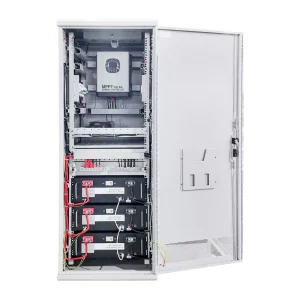
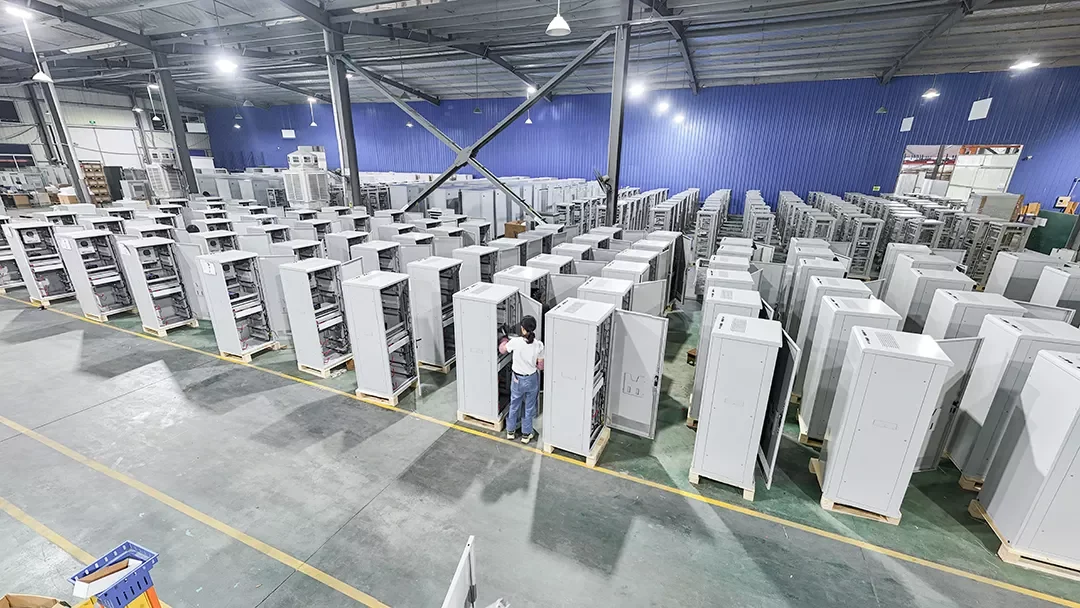
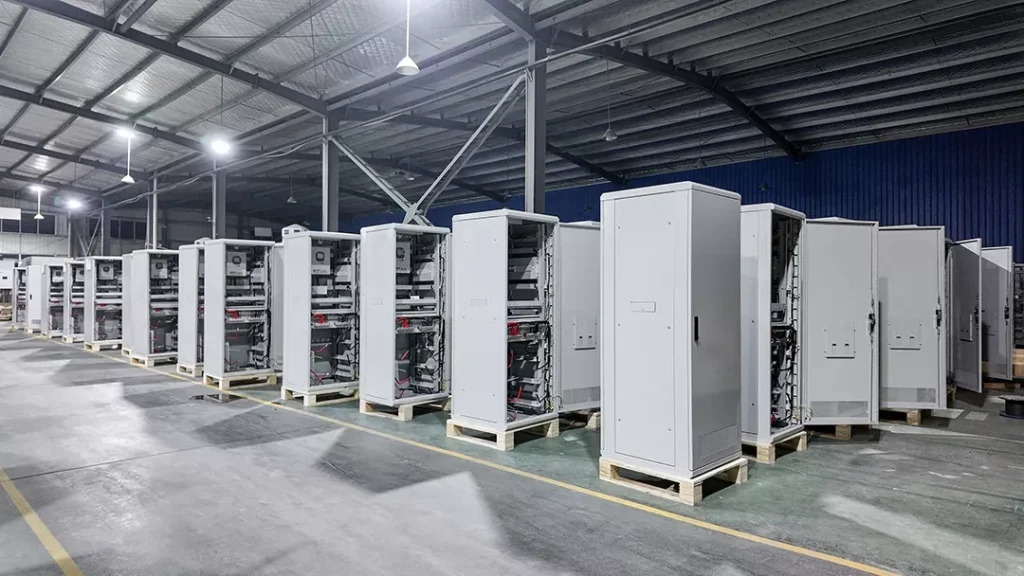
This indoor energy-cabinet program combined repeatable manufacture with a defined telecommunications power package. Huijue Group’s project record identifies 400 customized systems for satellite communication base stations and related equipment-room applications. Each cabinet brought battery storage, photovoltaic control and electrical protection into an indoor enclosure, making the mechanical and electrical arrangement a common production reference.
The documented configuration
| Item | Recorded configuration |
|---|---|
| Program quantity | 400 systems |
| Storage per system | 4.8 kWh; 48 V / 100 Ah lithium iron phosphate pack |
| Aggregate nominal storage | 1.92 MWh across the 400-system program |
| Cabinet dimensions | 1600 × 600 × 600 mm, height × width × depth |
| PV controller | 80 A maximum charging current |
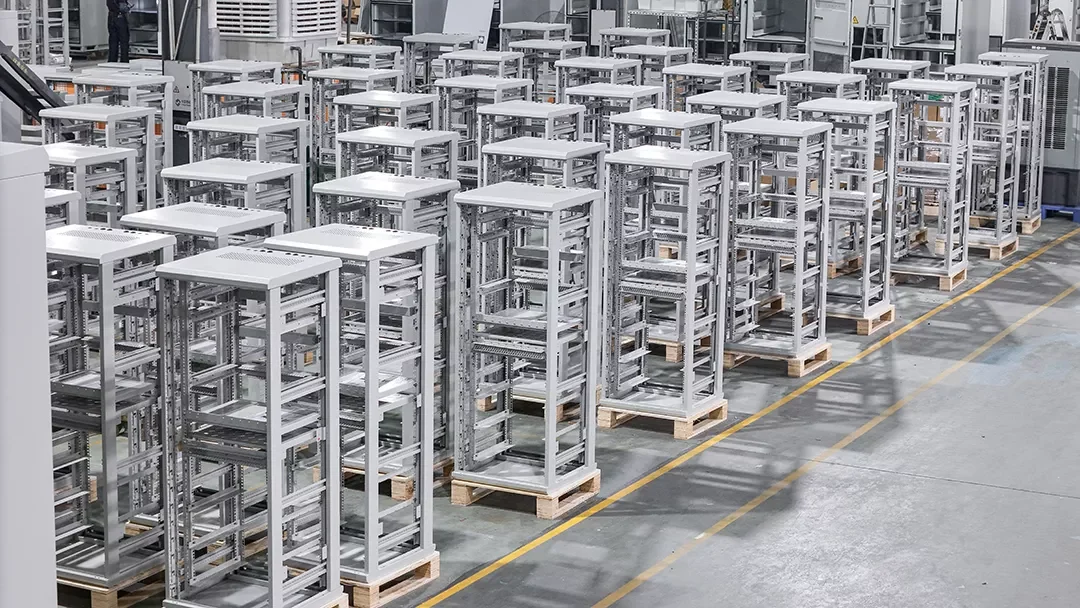
| Mechanical and electrical details | 1.5 mm steel frame; perforated doors and side panels; PV breakers and surge protection; battery and inverter switches |
These values describe the referenced program, not every cabinet in the current product range. In particular, the aggregate storage quantity does not imply that all cabinets formed one electrically parallel battery bank. Site grouping, power conversion topology and output arrangements must be specified separately.
What a repeated cabinet package must control
At this quantity, a controlled internal layout is as important as the outer dimensions. The design has to account for battery support, conductor access, protective-device position, earthing and replacement paths. A small change in one cable entry or bracket can otherwise propagate through a large batch. A manufacturing release should therefore connect the approved drawing, electrical schedule and inspection record to the same revision. Where a program serves several room types, identify common assemblies and approved site-specific variants before ordering rather than treating every cabinet as interchangeable.
- Mechanical boundary
- Enclosure, mounting positions, access, ventilation openings and handling arrangements
- Electrical boundary
- Battery, controller, isolation, protection, earthing and the defined external connection points
- Site boundary
- Upstream supply, room conditions, downstream equipment and installation works confirmed for each deployment
Indoor does not mean environment-free
The program uses ventilated indoor cabinets. A room still imposes temperature, dust, humidity, clearance and cooling conditions that affect the equipment. In a comparable project, confirm where cabinet heat is released, whether nearby equipment changes the intake temperature and how a battery or controller can be removed without dismantling adjacent infrastructure. Perforated panels should not be described as an outdoor protection rating.
Applying the manufacturing approach to another program
- Define one reference cabinet: freeze the equipment list, enclosure drawing, terminations, labels and replaceable parts.
- Validate interfaces: check battery and controller limits, protective devices, connection points and the load-side voltage requirements.
- Approve the inspection plan: identify dimensional checks, wiring verification, protection checks and functional tests required by the order.
- Control batch variations: document the differences between site types rather than allowing unrecorded substitutions.
- Prepare site handover: provide installation information, circuit identification and commissioning records appropriate to the confirmed scope.
The present indoor photovoltaic energy cabinet and communication backup lithium battery module are relevant starting points for a new room-power review; their current specifications must not be substituted for the historical configuration above. Huijue Group can assess OEM labels, private-label presentation and sample- or drawing-based cabinet requirements against fabrication and electrical feasibility. Share the room conditions and required cabinet schedule to define a new production package.
Product pathways
Relevant product families
Use these products as configuration references. Final model selection depends on the approved project inputs.
Manufacturer support
Review the complete system before fixing the bill of materials
Huijue Group supports OEM, private-label and drawing-based customization subject to engineering review and the confirmed production scope.