
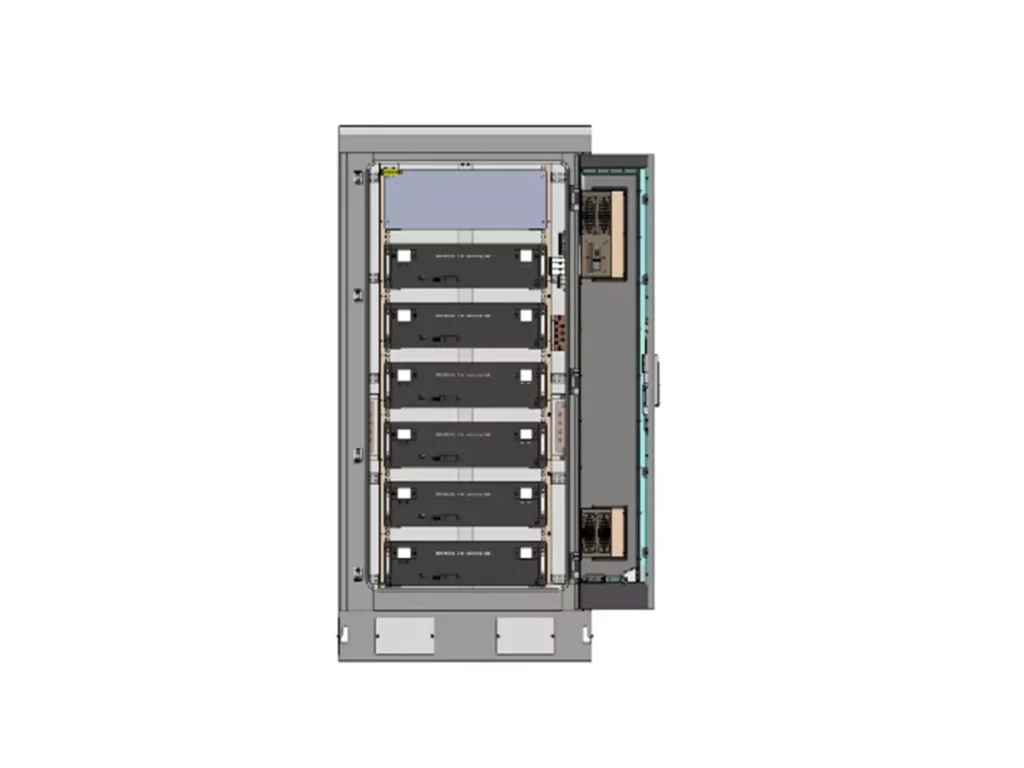
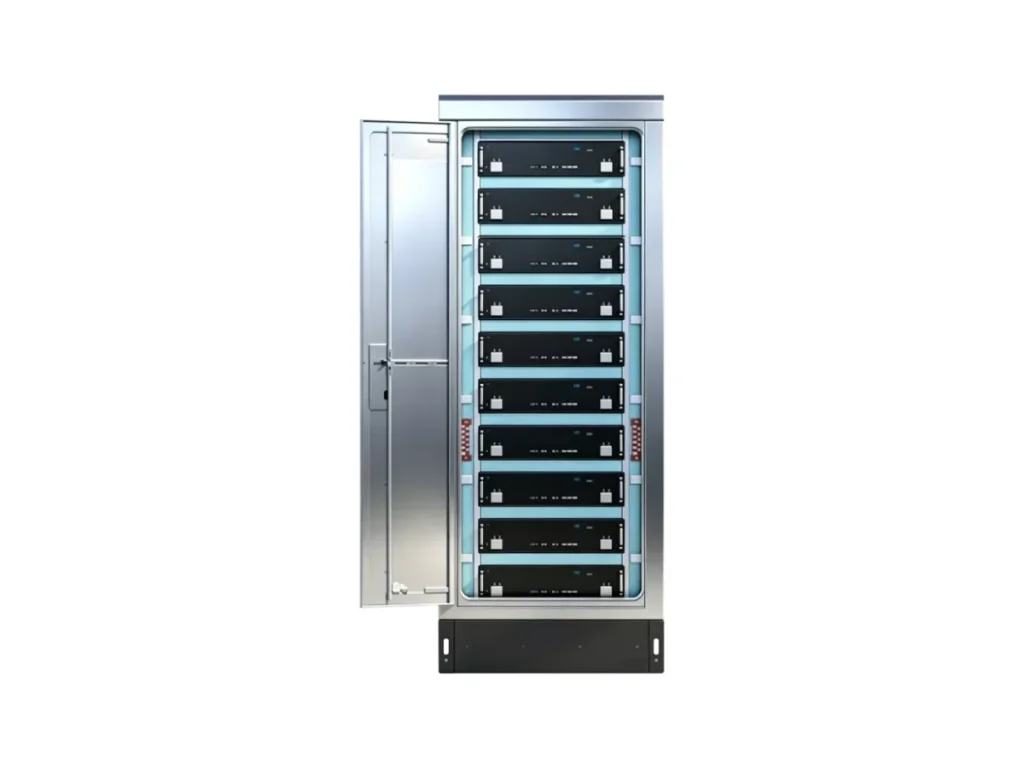
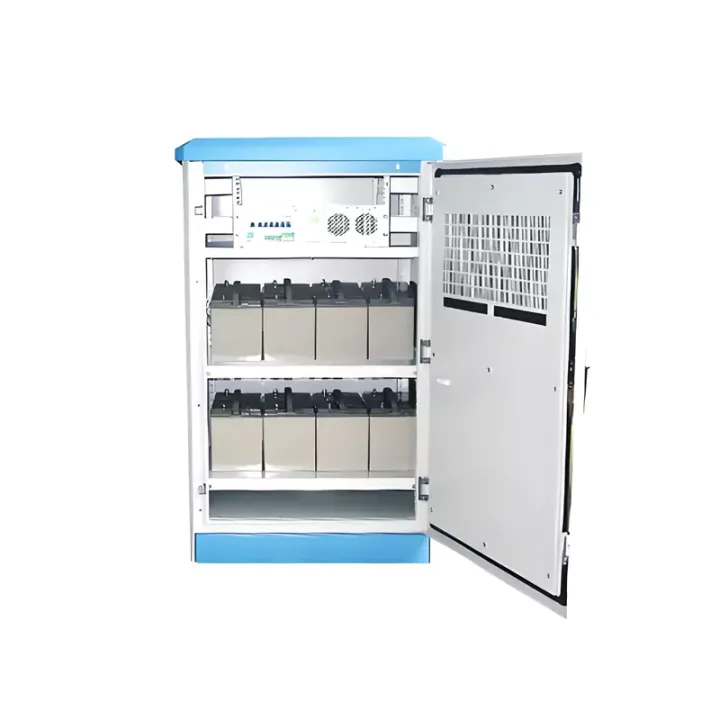
Core equipment rooms
Coordinate DC power, distribution, batteries and monitoring around communications loads.
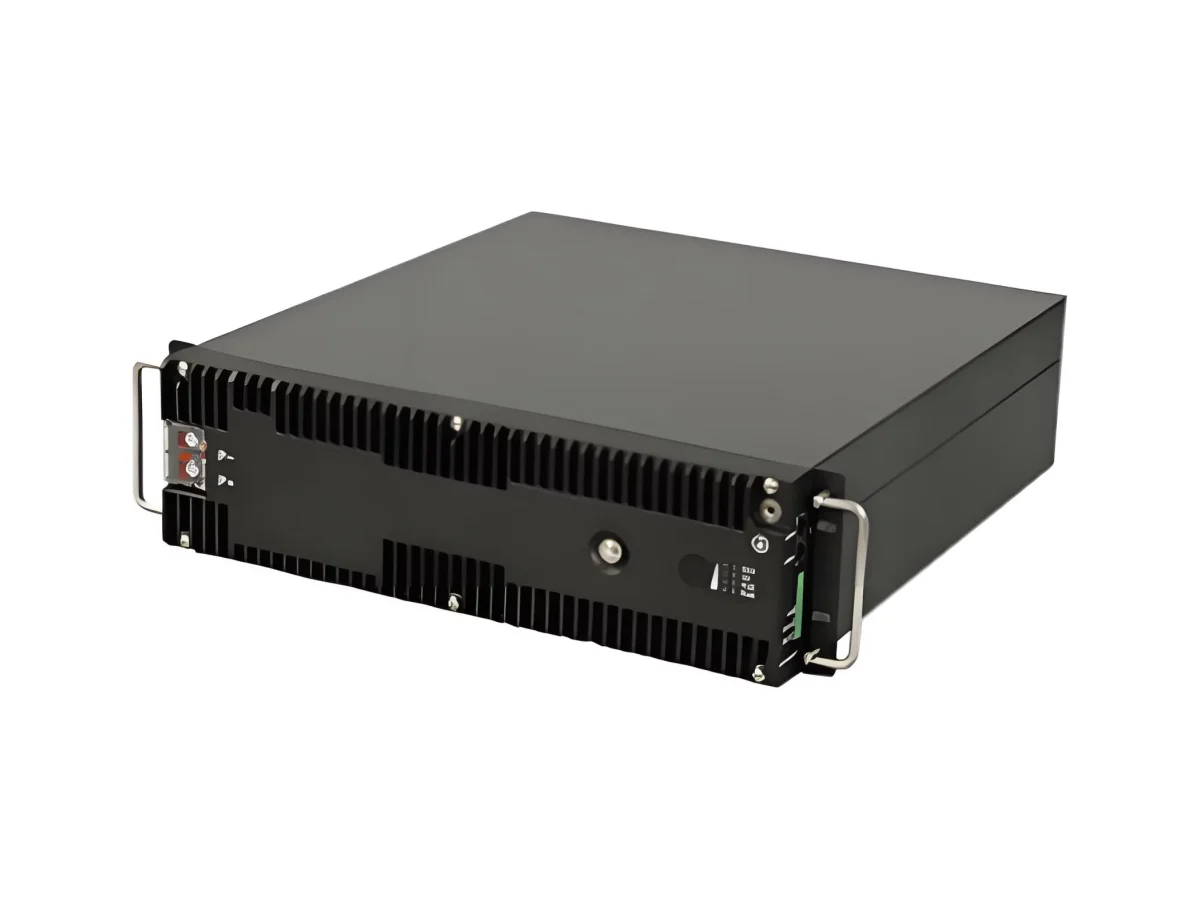
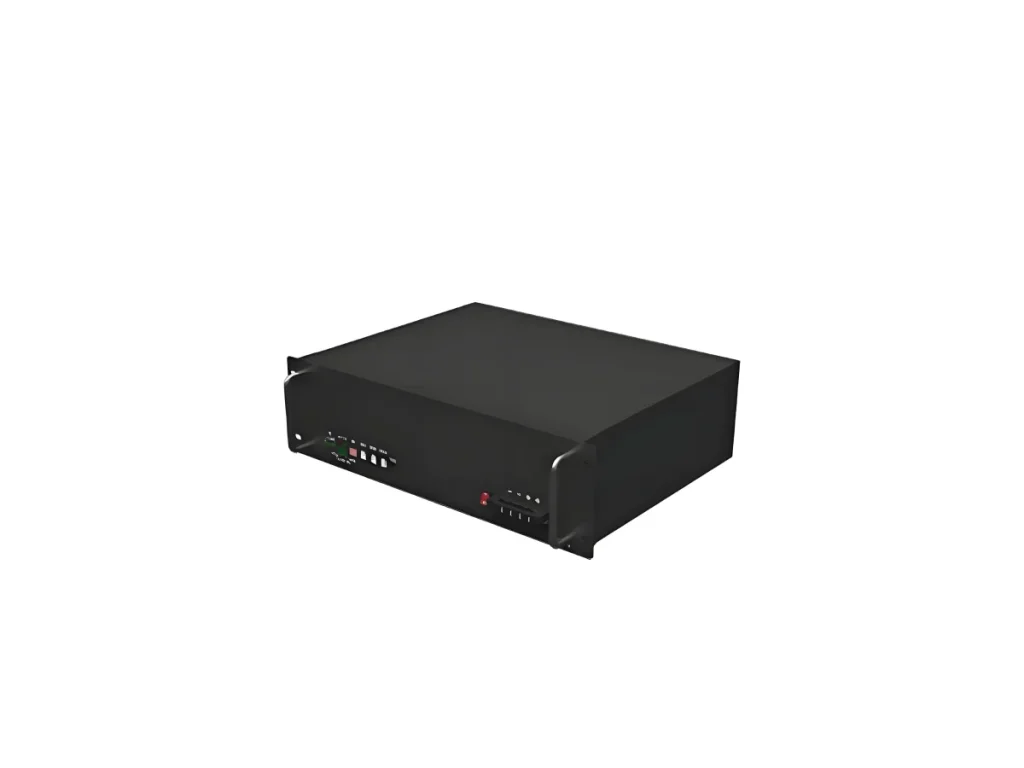
51.2 V, 100 Ah smart LFP backup module offering 5.12 kWh in a 3U chassis, with RS485/CAN and multiple operating modes.
The smart telecom LiFePO4 backup battery module adds status communication and operating-mode control to a rack-mounted telecom battery. Its 51.2 V, 100 Ah LFP configuration provides 5.12 kWh nominal stored energy in a 482 × 490 × 133 mm chassis weighing 50 kg.
The module is intended for systems that need battery participation beyond basic standby discharge. Constant-voltage, pass-through and peak-shift modes are listed, allowing a project to define how storage should interact with its rectifier or hybrid controller. The selected mode and control integration must be agreed before commissioning.
Check rectifier/controller compatibility through both electrical settings and protocol mapping. Confirm available rack depth, module support, parallel quantity and current demand. Backup capacity and any energy-shifting duty should be calculated together so the chosen strategy leaves the required reserve for communications service.
Huijue Group can review intelligent-battery OEM identity, private-label supply and rack assemblies derived from drawings or a sample. Firmware/interface feasibility, chassis tooling, integration tests, production quantity and delivery scope need engineering confirmation.
Provide rectifier/controller model, backup requirement, mode strategy, load/current, rack depth, module quantity, RS485/CAN protocol, temperature and protection schedule.
| Configuration | 51.2 V / 100 Ah |
|---|---|
| Chemistry | LFP |
| Stored energy | 5.12 kWh |
| Size | 482 × 490 × 133 mm |
| Weight | 50 kg |
| Charge voltage | 56.8 V |
| Float voltage | 54.4 V |
| Discharge cut-off | 43.2 V |
| Communication | RS485 / CAN |
| Operating modes | Constant voltage / pass-through / peak-shift storage |
Published charging range is 0°C to 65°C; discharge range is −20°C to 65°C. Use a suitable rack/cabinet and verify current limits over the actual temperature profile.
Buyer Questions
Answers specific to Smart Telecom LiFePO4 Backup Battery Module selection, configuration and purchasing.
No. A matching physical interface is insufficient; message format, addressing, control functions and electrical settings need integration verification.
The published charging range starts at 0°C. A colder installation requires an approved thermal arrangement and explicit engineering confirmation.
The module lists peak-shift operation, but the controller strategy must reserve enough usable storage for the required outage duty. Provide both the operating schedule and backup target.
The module is 3U high with a 490 mm chassis depth and 50 kg listed weight. Allow additional room for cables and verify rack support.
Use the deployment context to narrow the configuration before comparing dimensions, capacities and options.
Coordinate DC power, distribution, batteries and monitoring around communications loads.
Use integrated or wall-mounted systems where equipment space is limited.
Match generation, storage and power conversion to load and autonomy requirements.
Combine grid, solar, battery or generator inputs around a defined operating strategy.
Before quotation: confirm capacity, interfaces, installation environment, power conditions, quantity and required options.