
Core equipment rooms
Coordinate DC power, distribution, batteries and monitoring around communications loads.
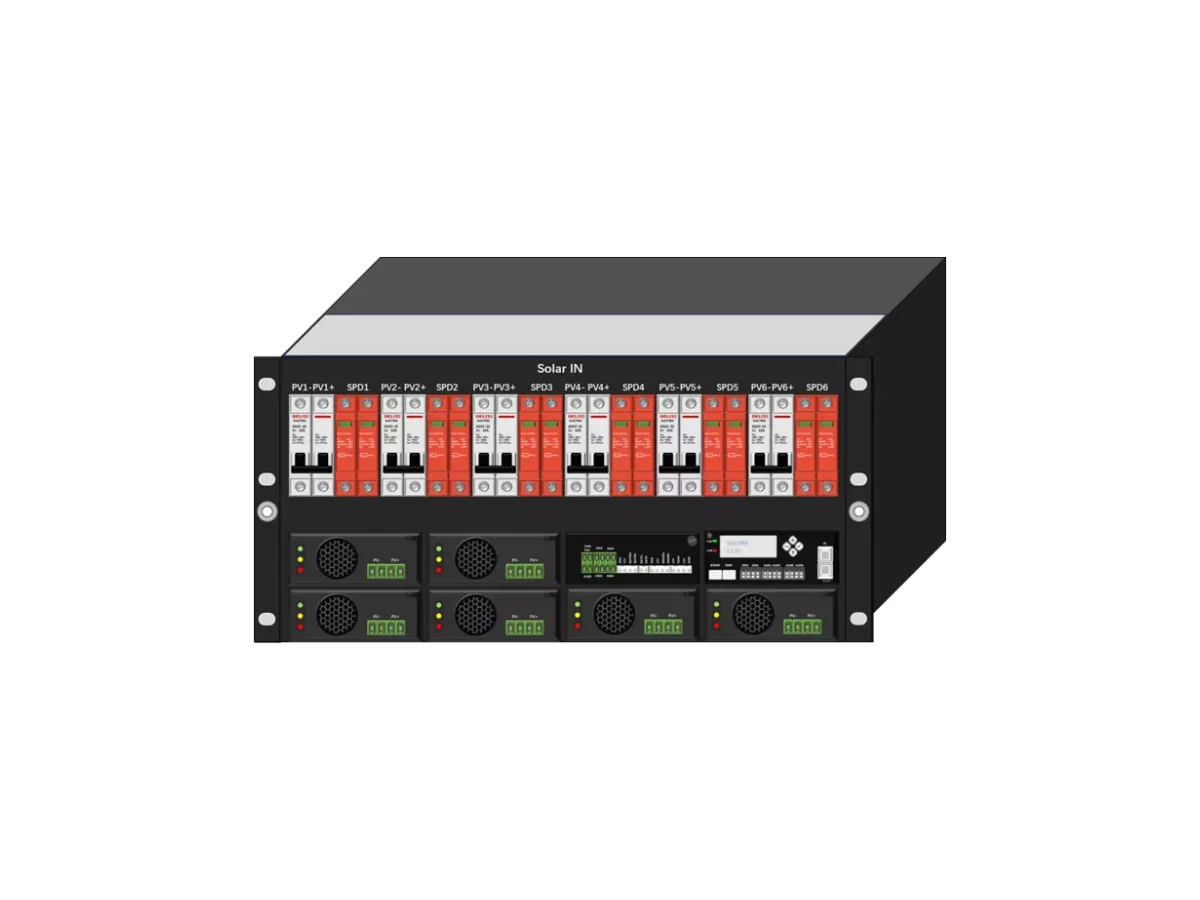
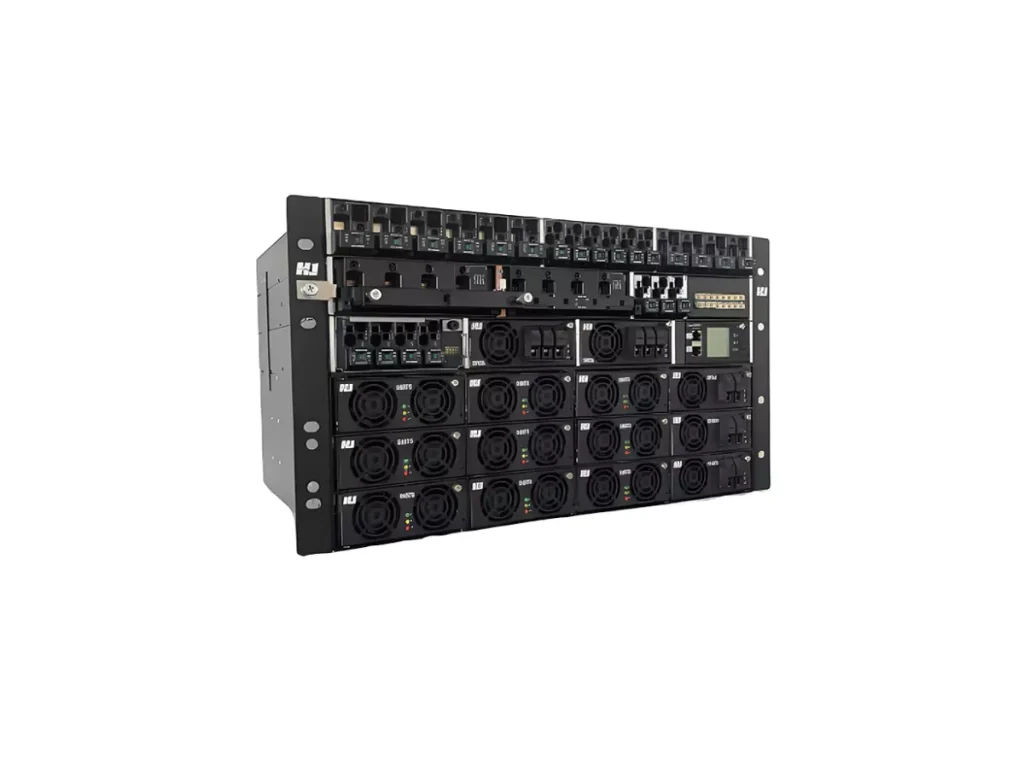
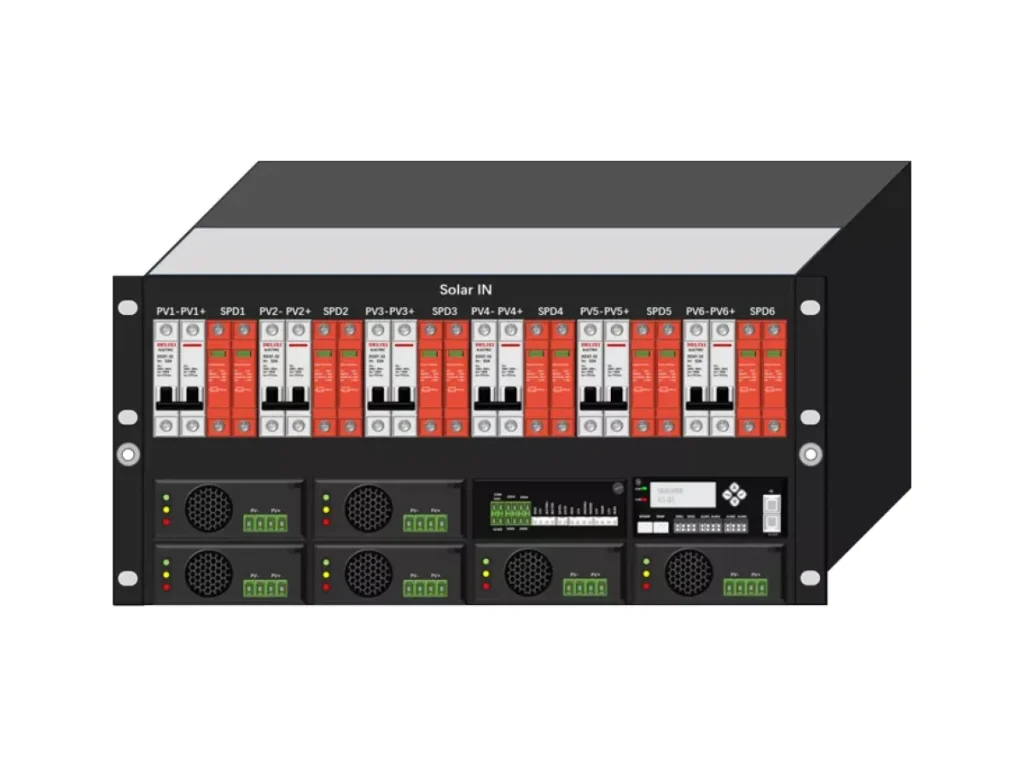
Modular 19-inch telecom power frames coordinating utility, photovoltaic, battery and generator paths with front cable access and configurable source modules.
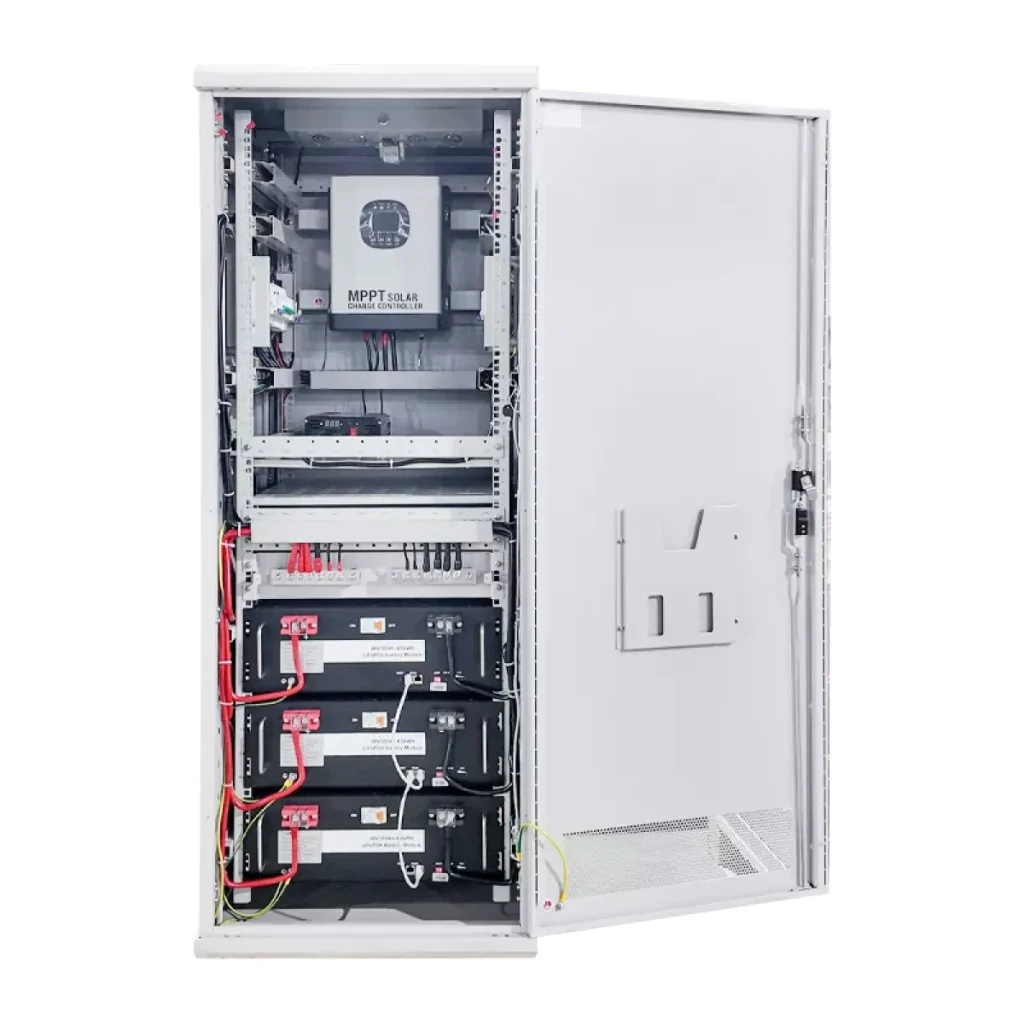
The 4G/5G Multi-Source Hybrid Power System provides a rack framework for coordinating several energy sources at a communications site. Utility supply, PV generation, stored energy and generator input can be arranged around the site’s required outputs and source priorities.
Four HJ-48 frames cover increasing module and current requirements. The useful design starting point is a module schedule: identify which rectifier, MPPT, inverter, battery and distribution functions are actually needed before selecting the frame. A frame model does not by itself define the complete system bill of materials.
Confirm source-module capacity, redundancy, battery current and required output voltages against the site load. Check the actual usable output with the proposed AC service. Allow for module weight, front cable bend radius, breaker format and service access in the host rack.
Huijue Group can assess hybrid-frame OEM labels, private-label configurations and assemblies based on samples or engineering drawings. Module feasibility, front-panel tooling, protection/control tests, order quantity and the boundary between factory supply and site commissioning require confirmation.
Provide DC current and load profile, AC service, PV voltage/power, generator strategy, battery specification, source-module quantities, outputs, rack dimensions and monitoring protocol.
| Model | HJ-48100A-H5D8B2 | HJ-48200A-H5D8B2 | HJ-48400A-H9D8B6 | HJ-48600A-H10D8B6 |
|---|---|---|---|---|
| Frame dimensions | 482 × 365 × 222 mm | 482 × 365 × 222 mm | 482 × 365 × 400 mm | 482 × 365 × 444 mm |
| Installation | 19-inch rack | 19-inch rack | 19-inch rack | 19-inch rack |
| Cable routing | Front in / front out | Front in / front out | Front in / front out | Front in / front out |
| Frame weight | ≤20 kg excluding modules | ≤20 kg excluding modules | ≤20 kg excluding modules | ≤20 kg excluding modules |
| AC input | Three-phase 380 V AC; compatible with single-phase 220 V AC | Three-phase 380 V AC; compatible with single-phase 220 V AC | Three-phase 380 V AC; compatible with single-phase 220 V AC | Three-phase 380 V AC; compatible with single-phase 220 V AC |
Use indoors or inside a protected, environmentally controlled outdoor cabinet. Confirm host cooling, grounding and space after fitting modules and front-routed cables.
Buyer Questions
Answers specific to 4G/5G Multi-Source Hybrid Power System selection, configuration and purchasing.
No. The listed maximum 20 kg frame weight excludes modules. Rack support must be checked using the complete installed system weight.
Compatibility is described, but the final module wiring and usable capacity must be verified for the proposed single-phase service.
Both incoming and outgoing cables route at the front. Connector length, cable bends and service access add to the space needed around the chassis.
Use the deployment context to narrow the configuration before comparing dimensions, capacities and options.
Coordinate DC power, distribution, batteries and monitoring around communications loads.
Use integrated or wall-mounted systems where equipment space is limited.
Match generation, storage and power conversion to load and autonomy requirements.
Combine grid, solar, battery or generator inputs around a defined operating strategy.
Before quotation: confirm capacity, interfaces, installation environment, power conditions, quantity and required options.