
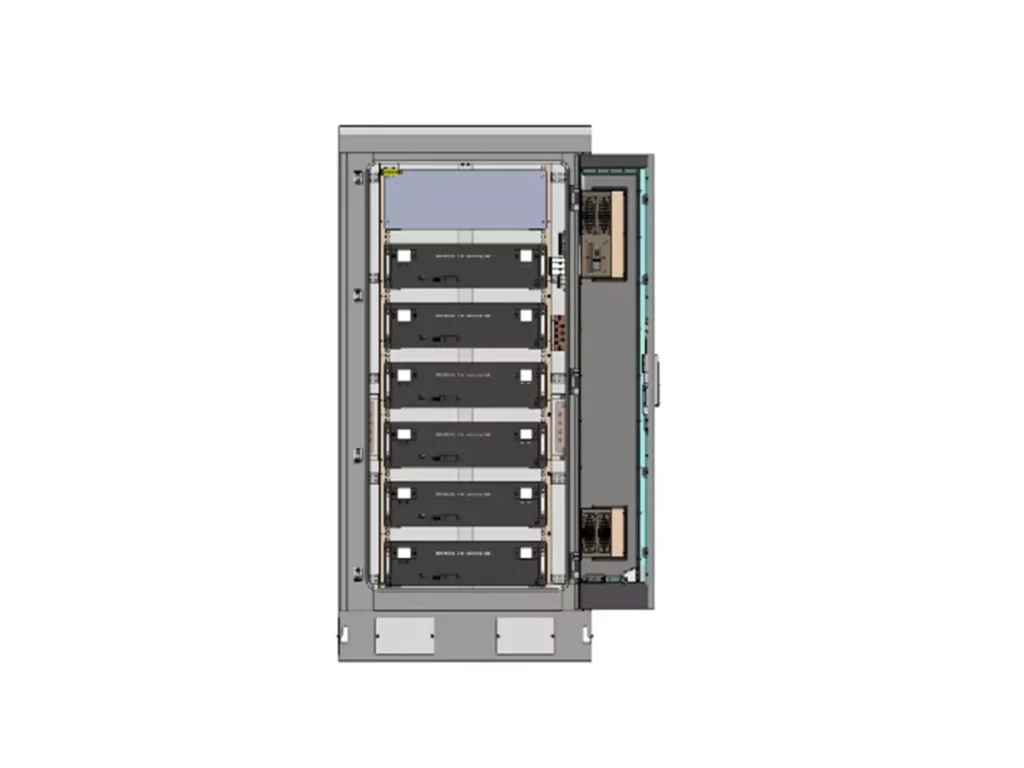
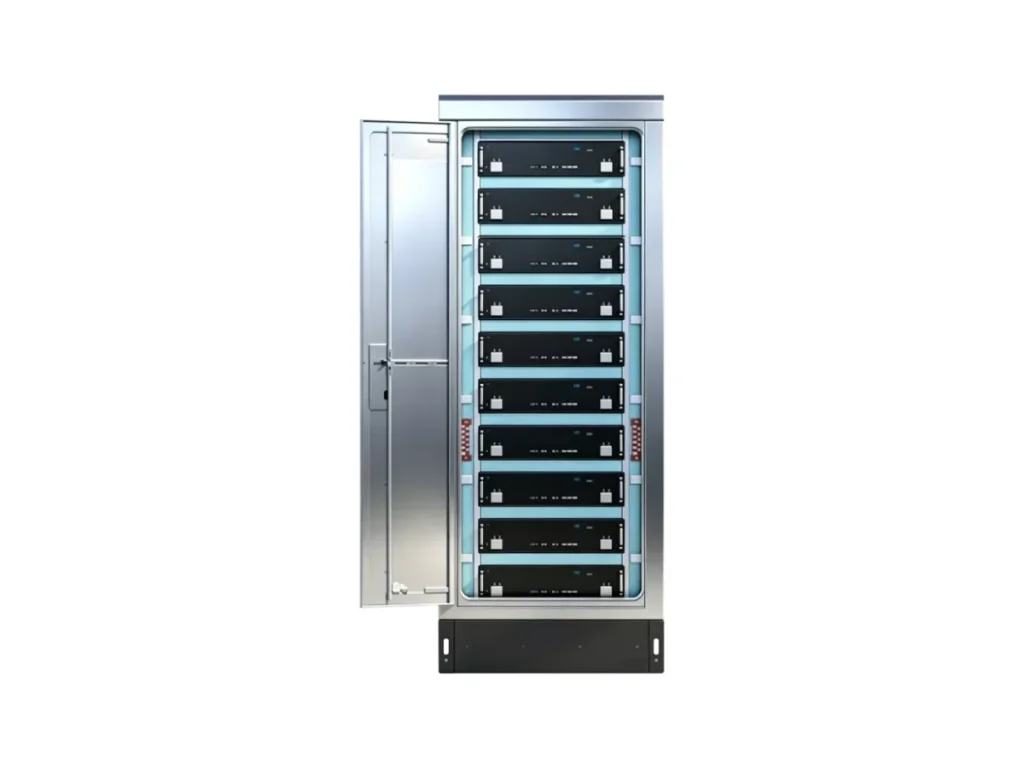
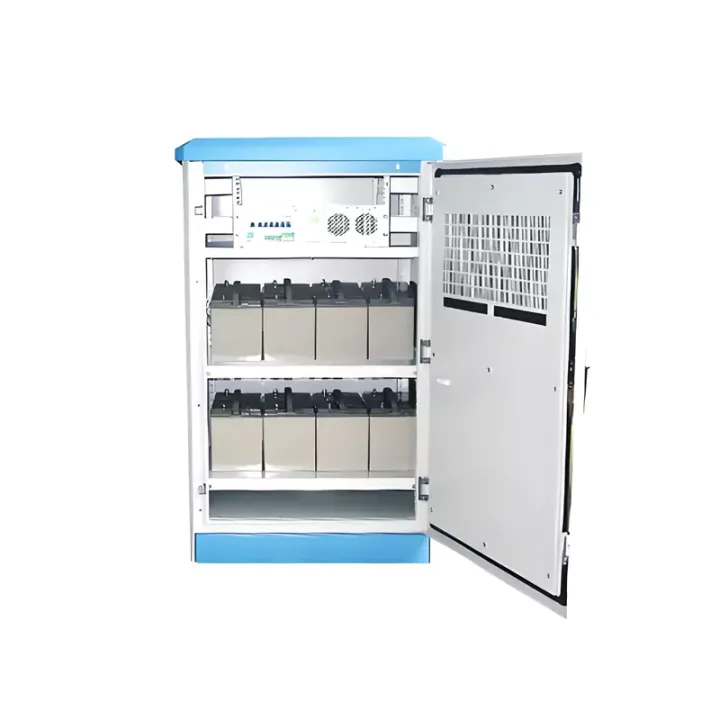
Core equipment rooms
Coordinate DC power, distribution, batteries and monitoring around communications loads.
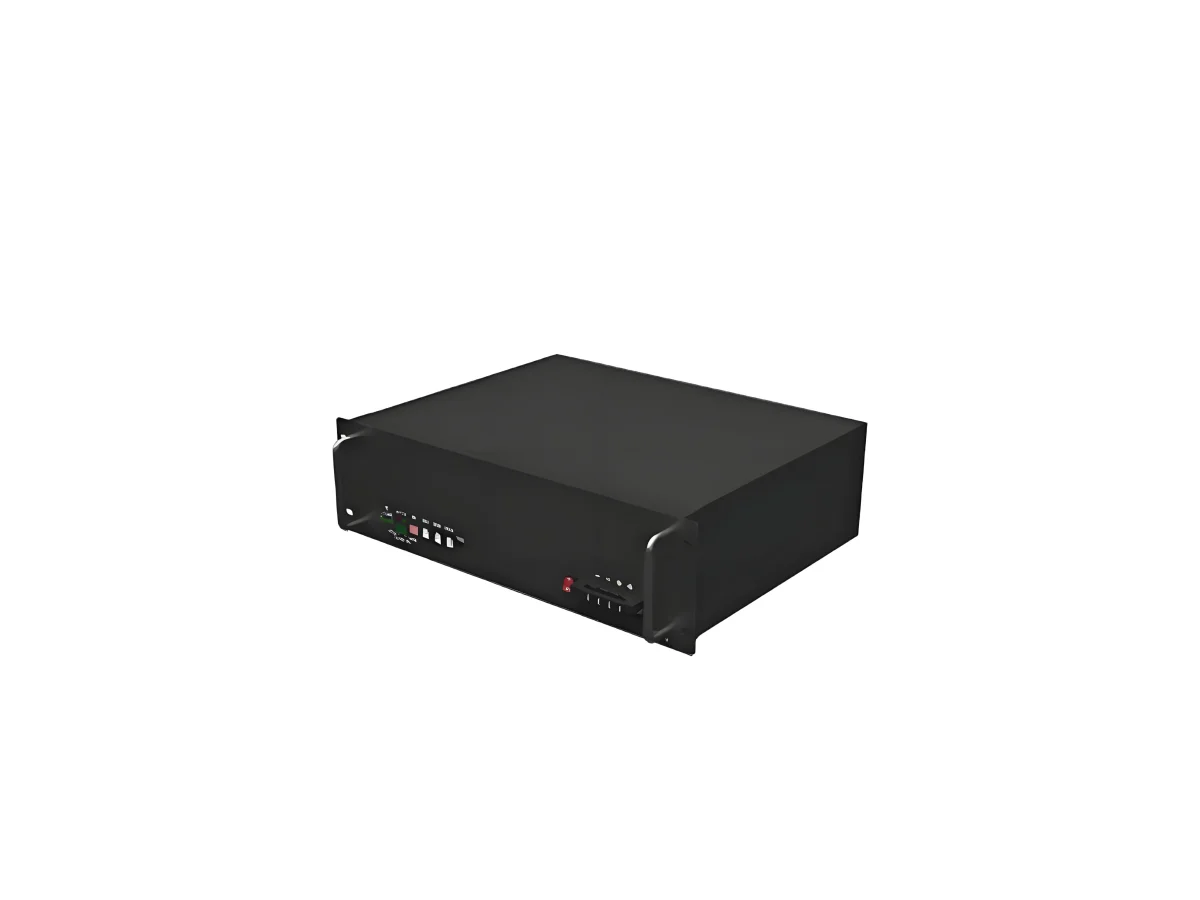
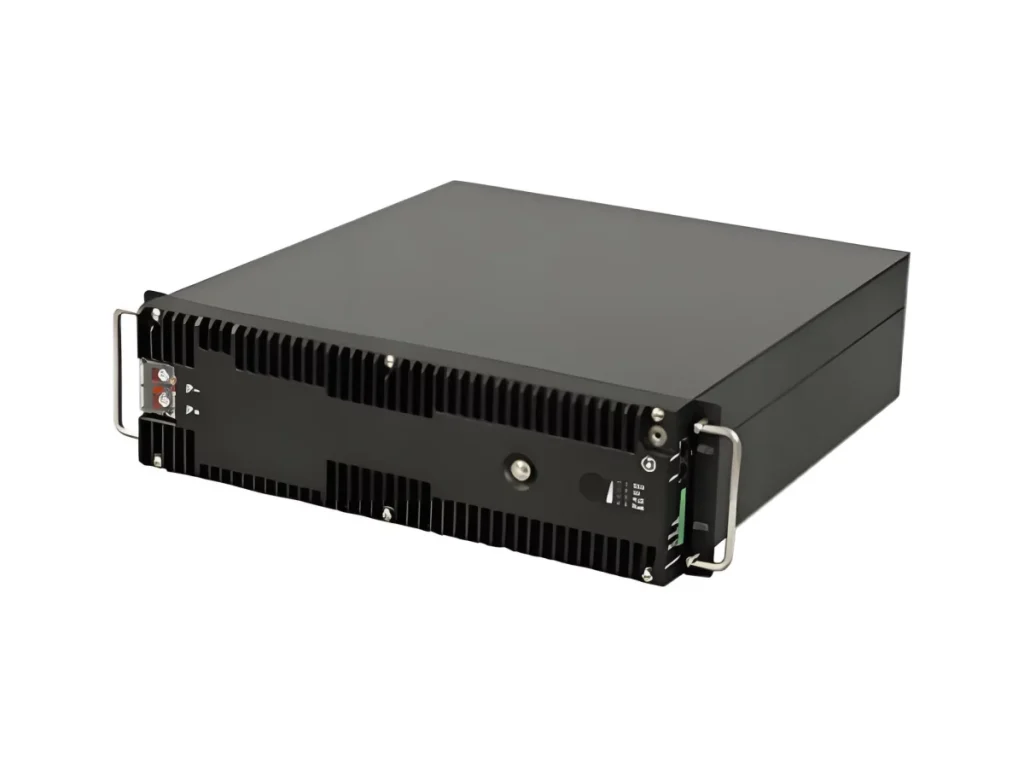
3U LFP backup modules in 48 V or 51.2 V, with 50 Ah and 100 Ah options for rack-based communications battery systems.
The standard telecom LiFePO4 backup battery module provides a rack battery option for 48 V-class communications power plants. Four combinations pair 48 V or 51.2 V nominal voltage with 50 Ah or 100 Ah capacity. All use a 3U chassis, while the higher-capacity versions require more rack depth.
This family is selected as part of the whole backup system. Rectifier charging, battery protection and load-voltage acceptance must be matched to the chosen module rather than treating all 48 V-class batteries as interchangeable.
Choose nominal voltage from the DC plant specification, then calculate capacity from load and backup duration. Check rack strength and depth, cable current, breaker/fuse coordination and the approved parallel architecture. Confirm BMS communication requirements separately; the available record does not identify a universal protocol for these modules.
Huijue Group can assess OEM battery labels, private-label documentation and rack-integration drawings or reference samples. Electrical matching, enclosure/tooling changes, battery tests, order quantity and the delivered cable/accessory scope require engineering confirmation.
Send plant voltage, rectifier charge settings, load/current, backup target, rack dimensions, module count, parallel arrangement, BMS interface and ambient conditions.
| Variant | 48V50Ah | 51.2V50Ah | 48V100Ah | 51.2V100Ah |
|---|---|---|---|---|
| Chemistry | LFP | LFP | LFP | LFP |
| Nominal voltage | 48 V | 51.2 V | 48 V | 51.2 V |
| Nominal capacity | 50 Ah | 50 Ah | 100 Ah | 100 Ah |
| Size | 482 × 350 × 133 mm, 3U | 482 × 350 × 133 mm, 3U | 482 × 480 × 133 mm, 3U | 482 × 480 × 133 mm, 3U |
| Weight | 30 ±1 kg | 32 ±1 kg | 47 ±1 kg | 49 ±1 kg |
| Operating temperature | -20°C to 65°C | -20°C to 65°C | -20°C to 65°C | -20°C to 65°C |
| Charge current | 0–50 A | 0–50 A | 0–100 A | 0–100 A |
| Discharge current | 0–50 A | 0–50 A | 0–100 A | 0–100 A |
The published operating range is −20°C to 65°C. Confirm separate charging limits, temperature-dependent current and the required rack/cabinet conditions before commissioning.
Buyer Questions
Answers specific to Standard Telecom LiFePO4 Backup Battery Module selection, configuration and purchasing.
No. The 50 Ah versions are listed at 350 mm deep and the 100 Ah versions at 480 mm, before allowing for cables and service access.
Do not assume they can. Nominal voltage, charging settings, BMS behavior and parallel operation must be approved for the exact bank design.
It offers more nominal capacity than a corresponding 50 Ah module, but actual runtime also depends on voltage, usable energy, current, temperature and system cut-off settings.
Use the deployment context to narrow the configuration before comparing dimensions, capacities and options.
Coordinate DC power, distribution, batteries and monitoring around communications loads.
Use integrated or wall-mounted systems where equipment space is limited.
Match generation, storage and power conversion to load and autonomy requirements.
Combine grid, solar, battery or generator inputs around a defined operating strategy.
Before quotation: confirm capacity, interfaces, installation environment, power conditions, quantity and required options.