
Core equipment rooms
Coordinate DC power, distribution, batteries and monitoring around communications loads.
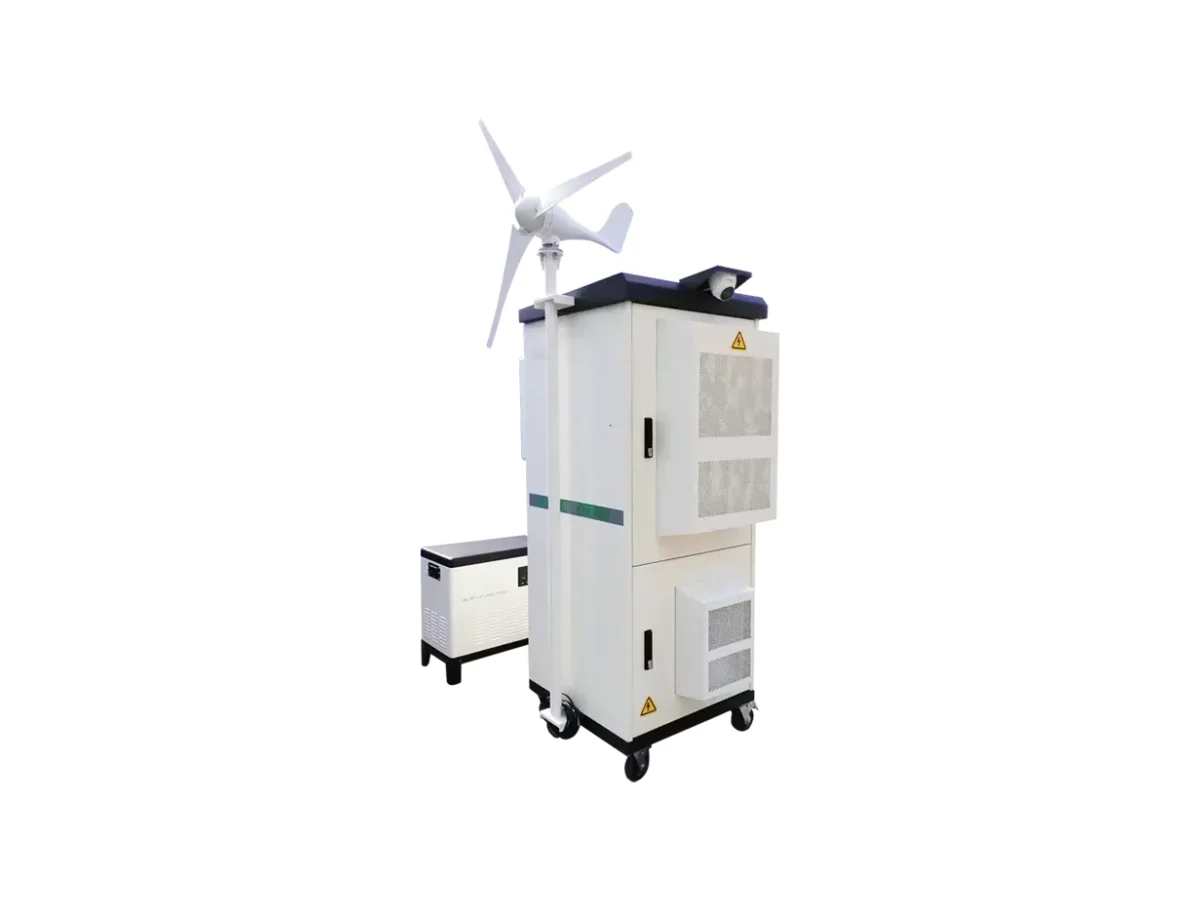
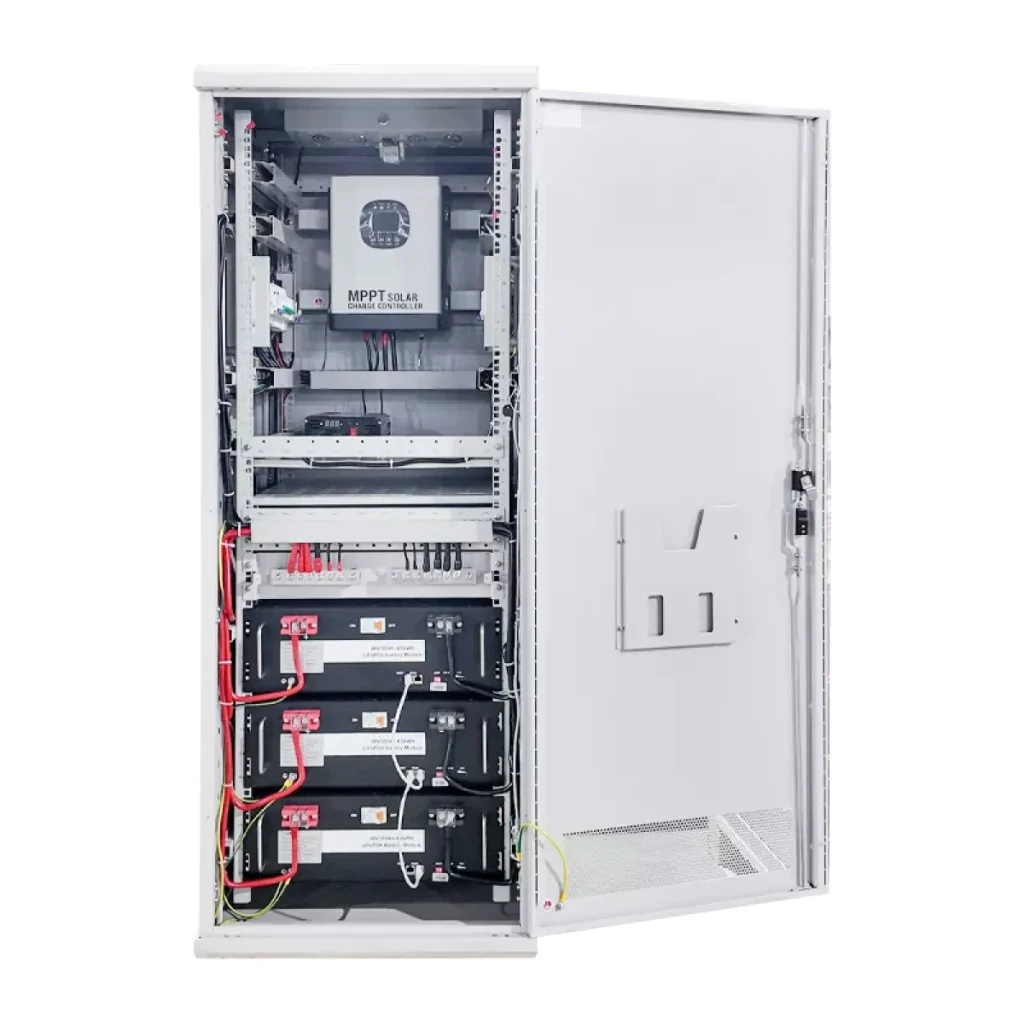
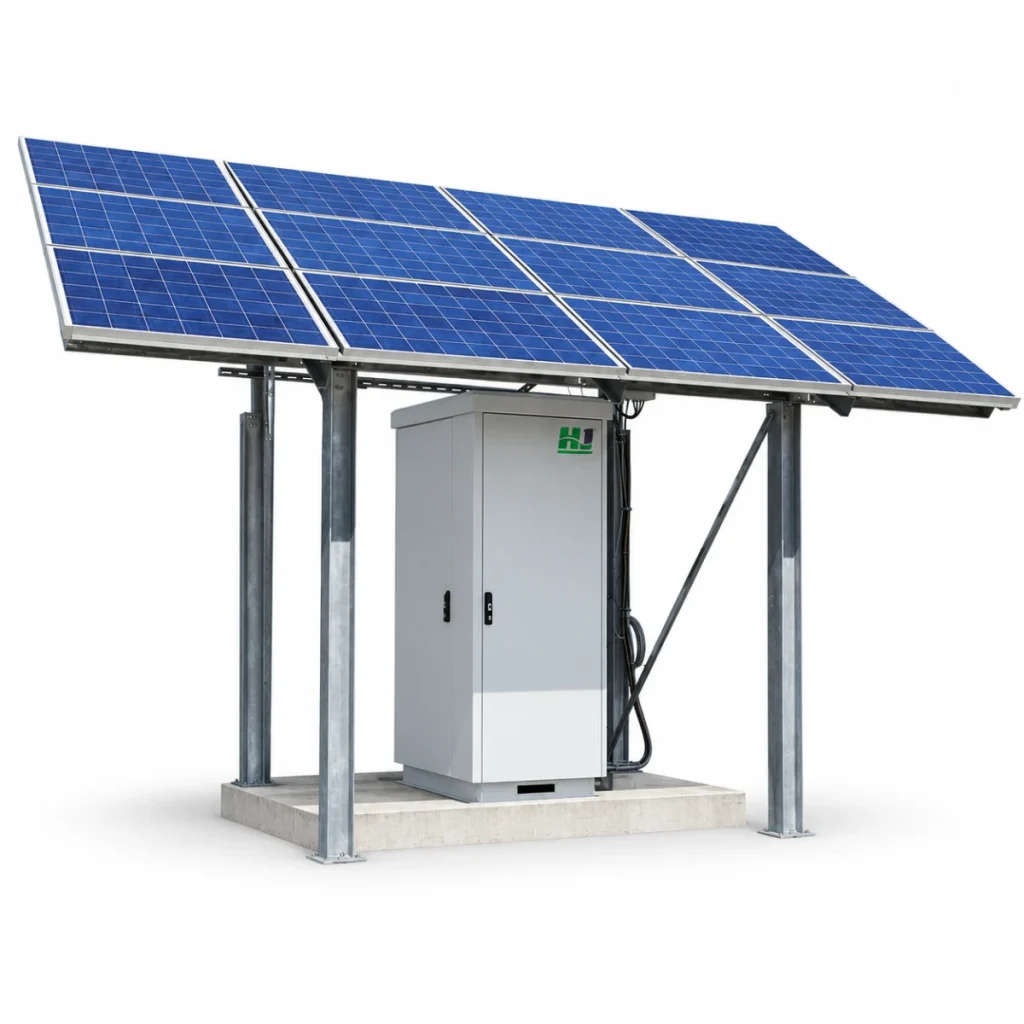
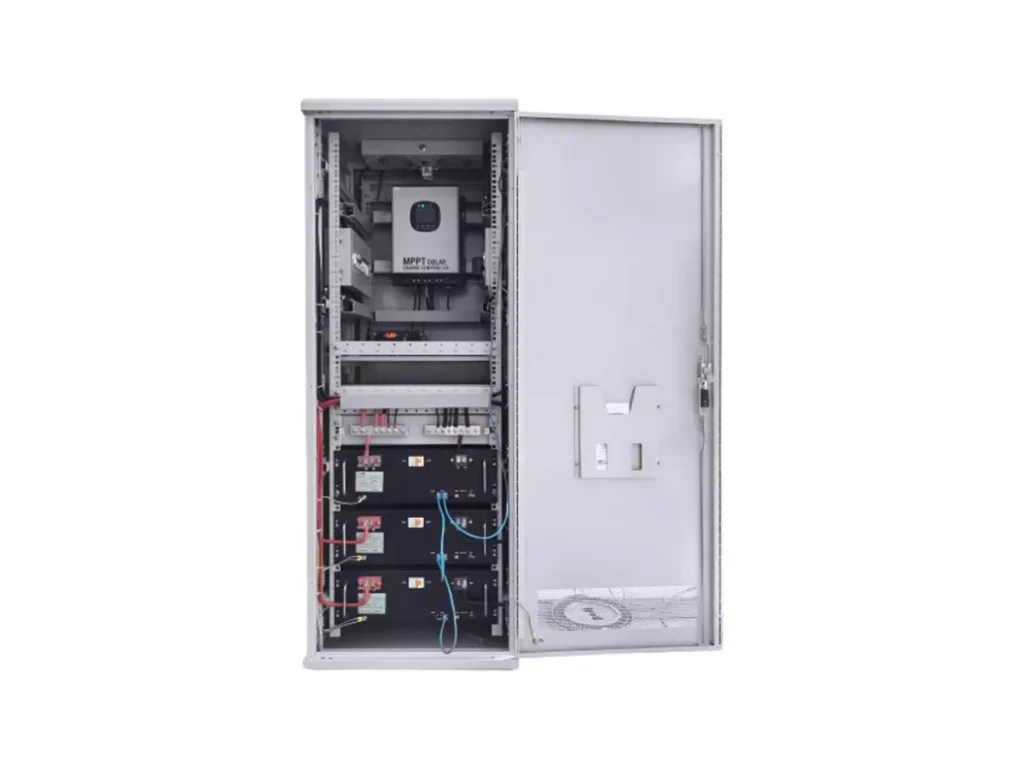
HJ-SG-D02 outdoor energy cabinets combining up to 24 kW −48 V power, PV input and LFP storage in single- or double-compartment formats.
The Outdoor Communication Energy Cabinet combines communications-equipment accommodation with rectification, storage, PV input, thermal control and monitoring. HJ-SG-D02-01 and HJ-SG-D02-02 share the documented maximum 24 kW load output but allocate different amounts of space to equipment and batteries.
The single-compartment D02-01 measures 2100 × 900 × 900 mm with reserved 10U equipment space and up to 20 kWh storage. The double-compartment D02-02 is 2100 × 1750 × 900 mm, lists 40U reserved equipment space and up to 30 kWh. The wider layout is therefore a space and energy choice, rather than an automatic increase in output power.
Start with usable rack space, continuous/peak DC load and backup autonomy. Confirm rectifier population, PV string design, battery current and auxiliary voltages separately. Review cooling and emergency-fan arrangements around the actual installed heat load, and obtain an approved compartment drawing before finalizing equipment placement.
Huijue Group can evaluate OEM identity, private-label delivery and D02 cabinet integration from drawings or reference samples. Partition changes, mounting tooling, electrical/thermal tests, order quantity and delivery scope require engineering confirmation, including which site equipment and energy sources are supplied.
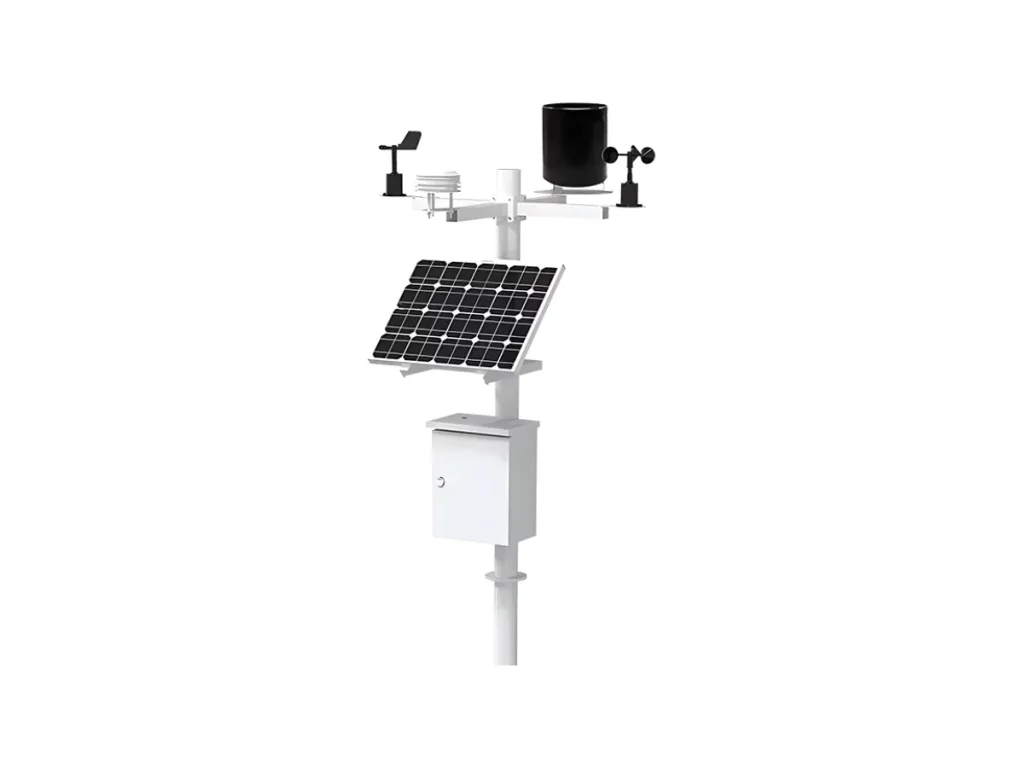
Provide rack equipment and heat load, −48 V demand, autonomy, AC service, PV strings, battery duty, auxiliary outputs, optional generation, cooling strategy, sensors and access-control needs.
| Model | HJ-SG-D02-01 | HJ-SG-D02-02 |
|---|---|---|
| Cabinet format | Single compartment, 40U | Double compartment, 40U |
| Dimensions | 2100 × 900 × 900 mm | 2100 × 1750 × 900 mm |
| Reserved equipment space | 10U × 1 | 40U |
| Weight | <500 kg excluding equipment | <800 kg excluding equipment |
| Maximum PV capacity | 6.6 kW | 6.6 kW |
| Maximum load output | 24 kW | 24 kW |
| Maximum LFP storage | 20 kWh | 30 kWh |
| Protection | IP55 | IP55 |
Documented enclosure protection is IP55, with −40°C to 50°C operation and 5–95% RH non-condensing. Confirm the final installed components, cooling and battery limitations against those cabinet conditions.
Buyer Questions
Answers specific to Outdoor Communication Energy Cabinet selection, configuration and purchasing.
Both variants list a 24 kW maximum output. D02-02 offers more reserved equipment space and up to 30 kWh storage rather than the single version's 20 kWh.
The source distinguishes the 40U cabinet format from reserved equipment space. D02-01 lists 10U × 1 reserved, while D02-02 lists 40U; confirm the approved internal drawing.
The table states weights excluding equipment. Foundation, handling and transport planning must use the complete configured weight.
These are configuration options requiring interface and control review. State the source ratings and include the agreed components in the final bill of materials.
Use the deployment context to narrow the configuration before comparing dimensions, capacities and options.
Coordinate DC power, distribution, batteries and monitoring around communications loads.
Use integrated or wall-mounted systems where equipment space is limited.
Match generation, storage and power conversion to load and autonomy requirements.
Combine grid, solar, battery or generator inputs around a defined operating strategy.
Before quotation: confirm capacity, interfaces, installation environment, power conditions, quantity and required options.