
Core equipment rooms
Coordinate DC power, distribution, batteries and monitoring around communications loads.
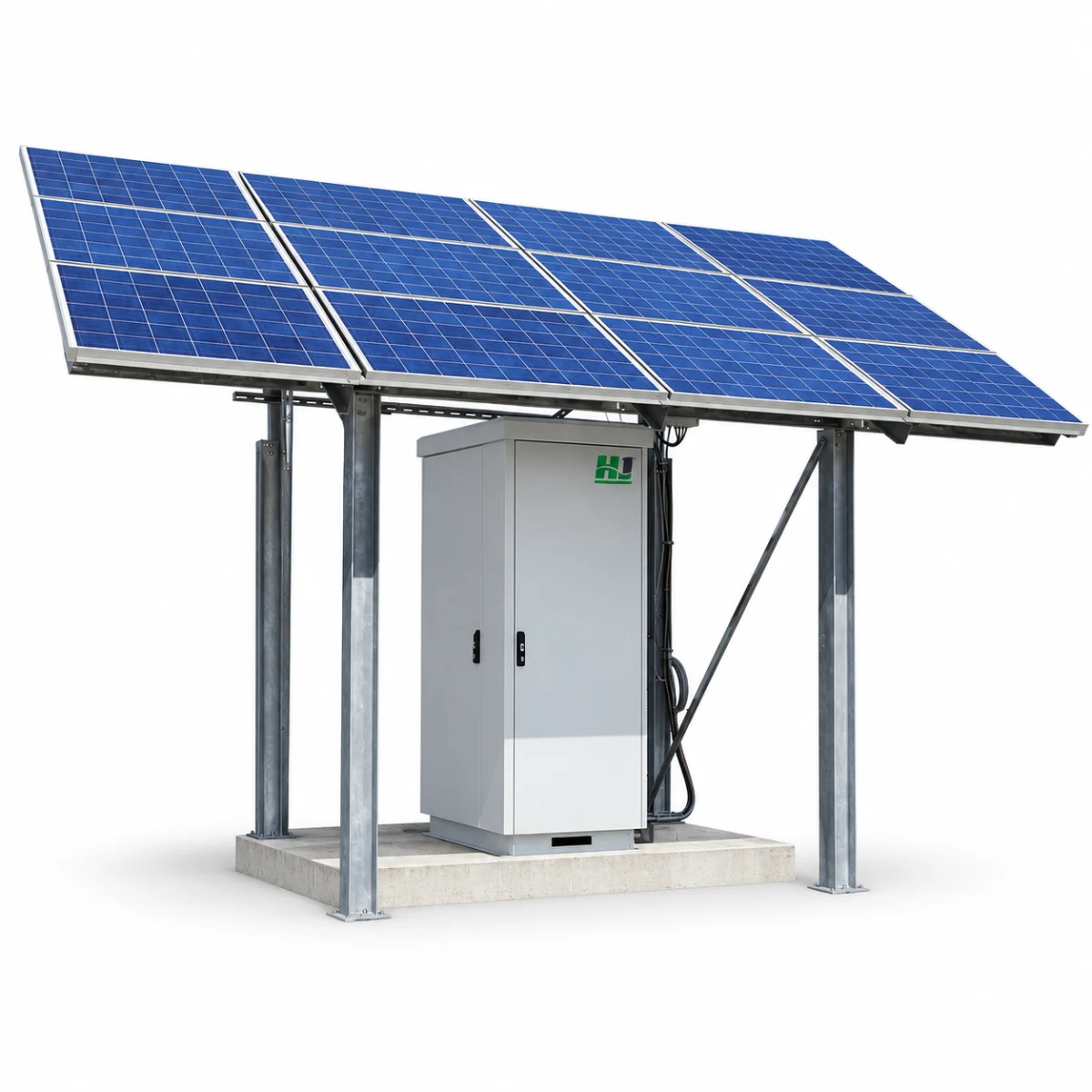
Outdoor floor-standing energy cabinets for grid, photovoltaic and storage integration, with four power classes and single- or dual-chamber layouts.
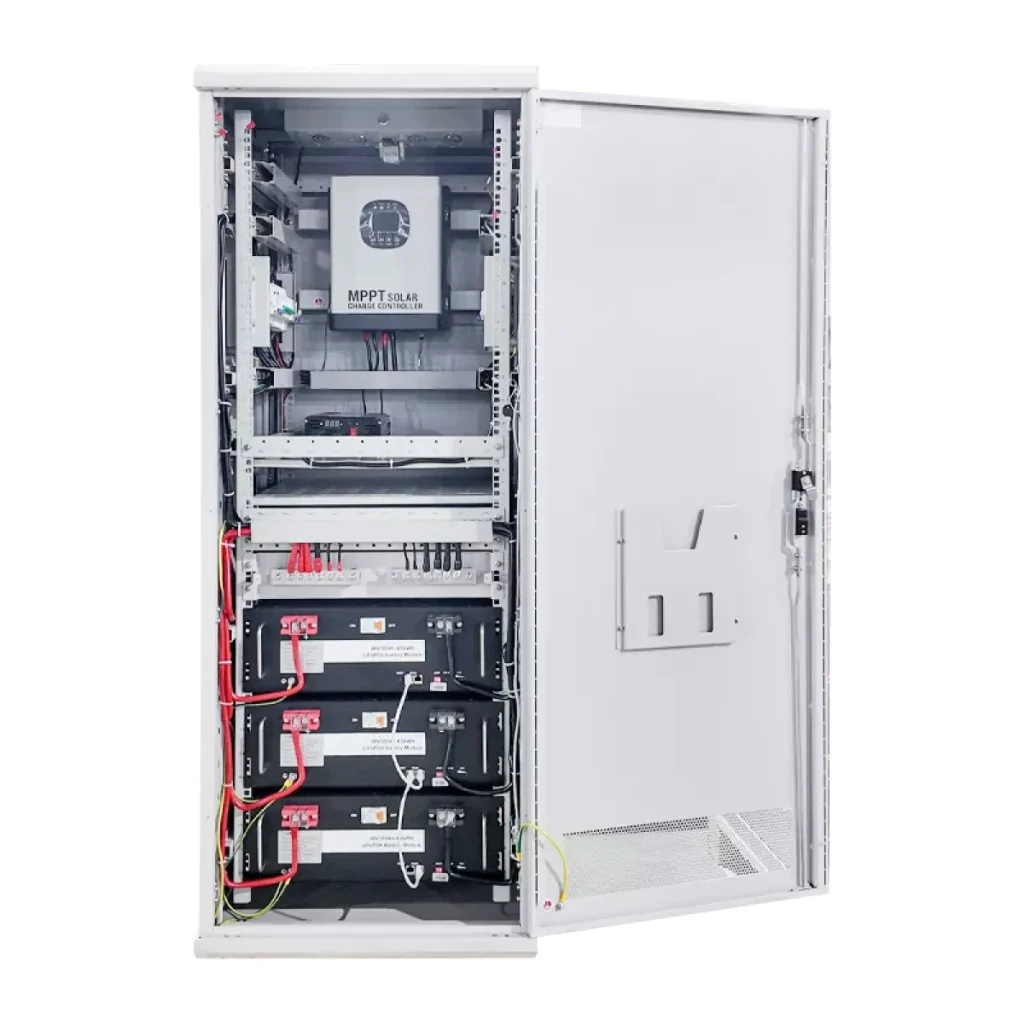
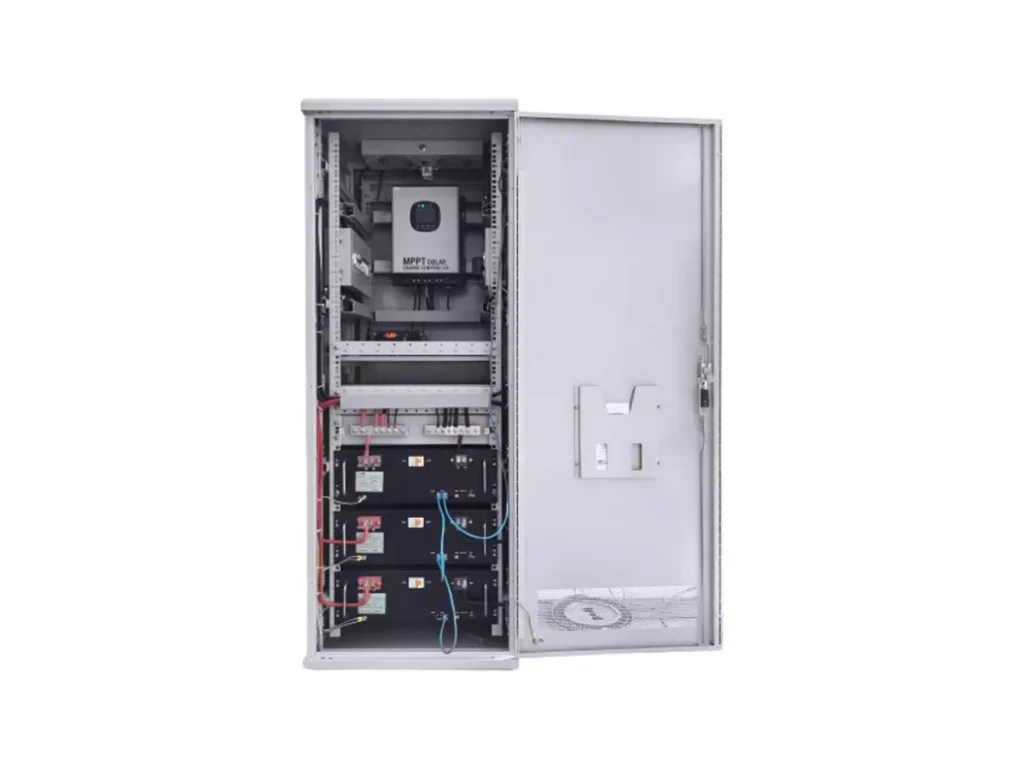
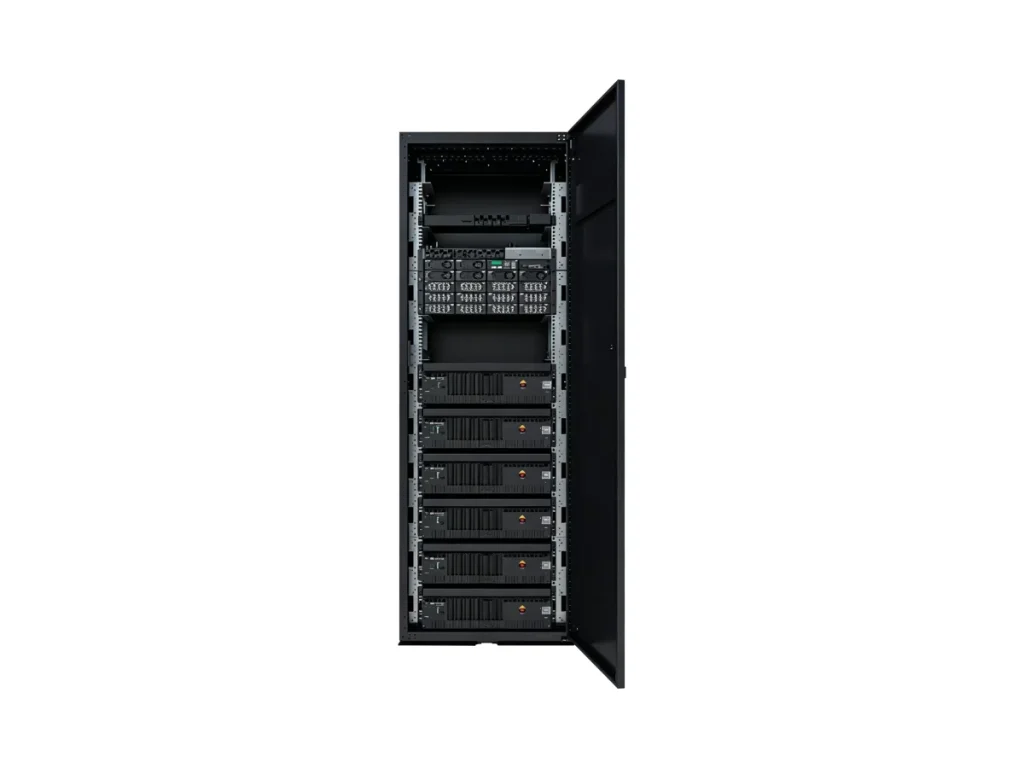
The Outdoor Photovoltaic Energy Cabinet provides a unified outdoor platform for communications sites that must coordinate grid supply, photovoltaic generation and battery storage. Models HJ-Z06-10O through HJ-Z24-40O cover nominal ratings of 6, 12, 18 and 24 kW with maximum storage capacities of 10, 20, 30 and 40 kWh.
The family supports both AC and DC power arrangements and includes outdoor and outdoor dual-chamber formats. Factory-prefabricated construction reduces the amount of field assembly, while monitored thermal management and RS485 data upload can be incorporated into the selected cabinet configuration.
Define whether the cabinet will operate grid-connected, as a renewable-assisted backup system or as part of a hybrid site. Model selection must account for the maximum simultaneous load, storage autonomy, PV and other generation inputs, compartment separation and local service access. Coastal or otherwise corrosive conditions should be declared so the enclosure build and hardware can be reviewed.
As the equipment manufacturer, Huijue Group can review enclosure partitioning, cable interfaces, color/identity treatment and OEM or private-label requirements. Sample-led and drawing-led builds are evaluation routes; engineering must confirm feasibility, tooling, environmental design, prototype tests, quantity and the final supply boundary before production.
| Model | HJ-Z06-10O | HJ-Z12-20O | HJ-Z18-30O | HJ-Z24-40O |
|---|---|---|---|---|
| Power | 6KW (Maximum 9KW) | 12KW (Maximum 24KW) | 18KW (Maximum 36KW) | 24KW (Maximum 48KW) |
| Maximum Energy Storage Capacity | 10KWh | 20KWh | 30KWh | 40KWh |
| Energy Input/Output | Grid Power / Photovoltaic / Energy Storage | |||
| Operating Environment | Outdoor | Outdoor (Dual Chamber) | ||
| Installation Method | Floor-Mounted | |||
| Dimensions | 1200mm*700mm*700mm | 1600mm*700mm*700mm | 2000mm*750mm*750mm | 2000mm*1550mm*800mm |
Outdoor floor-standing installation. Confirm solar exposure, cabinet foundation, drainage, lifting access, grounding, cable-gland positions and the actual ambient/corrosion class. An enclosure material description is not a substitute for a project-specific environmental assessment.
Buyer Questions
Answers specific to Outdoor Photovoltaic Energy Cabinet selection, configuration and purchasing.
They pair 6, 12, 18 or 24 kW nominal power with up to 10, 20, 30 or 40 kWh of storage and use progressively larger cabinets. The correct size depends on load and autonomy rather than cabinet dimensions alone.
The source platform can accept multiple green or auxiliary energy inputs, including wind and diesel arrangements. Interface ratings, controls and changeover logic must be confirmed for the actual site.
Huijue Group can assess private-label and OEM production, including approved drawings or reference samples. Branding, enclosure changes and validation requirements are settled during the technical and commercial review.
Use the deployment context to narrow the configuration before comparing dimensions, capacities and options.
Coordinate DC power, distribution, batteries and monitoring around communications loads.
Use integrated or wall-mounted systems where equipment space is limited.
Match generation, storage and power conversion to load and autonomy requirements.
Combine grid, solar, battery or generator inputs around a defined operating strategy.
Before quotation: confirm capacity, interfaces, installation environment, power conditions, quantity and required options.