
Core equipment rooms
Coordinate DC power, distribution, batteries and monitoring around communications loads.
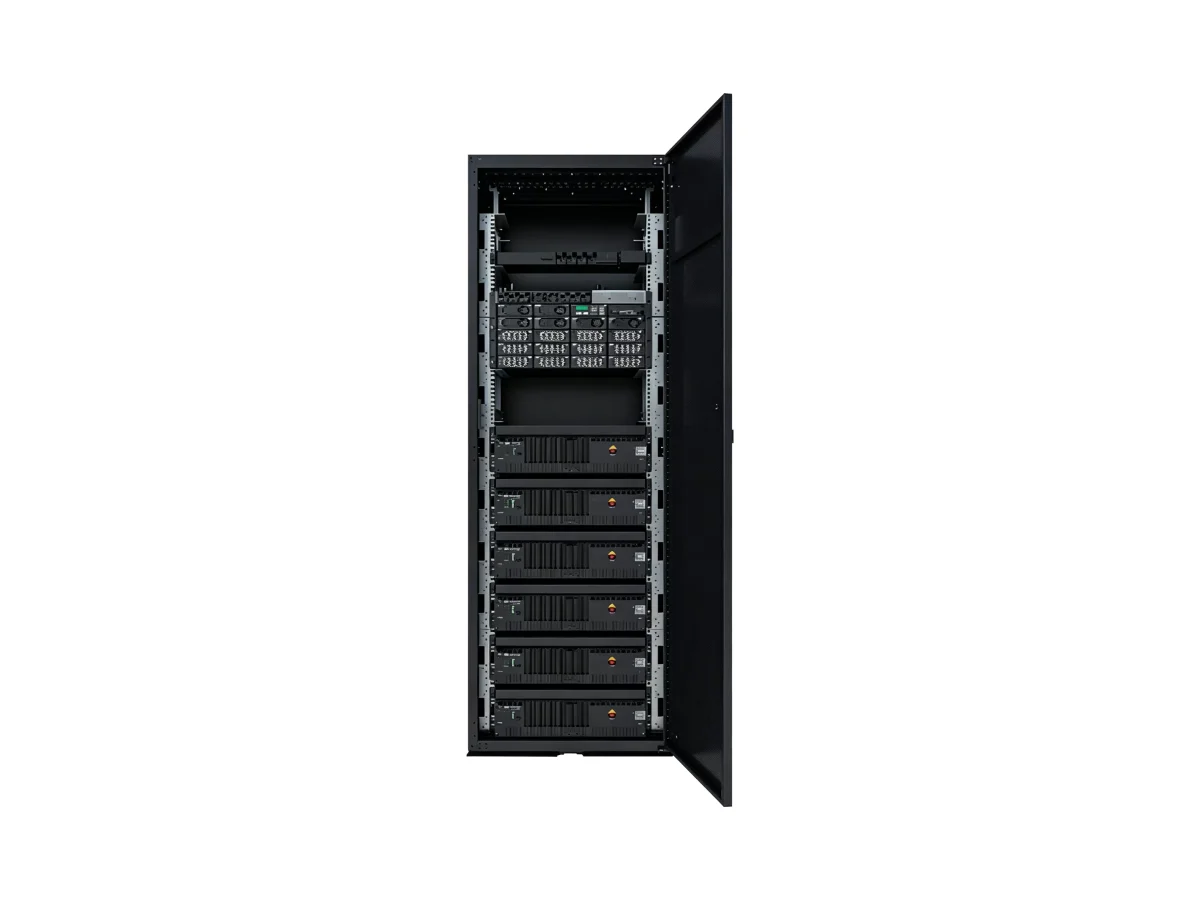
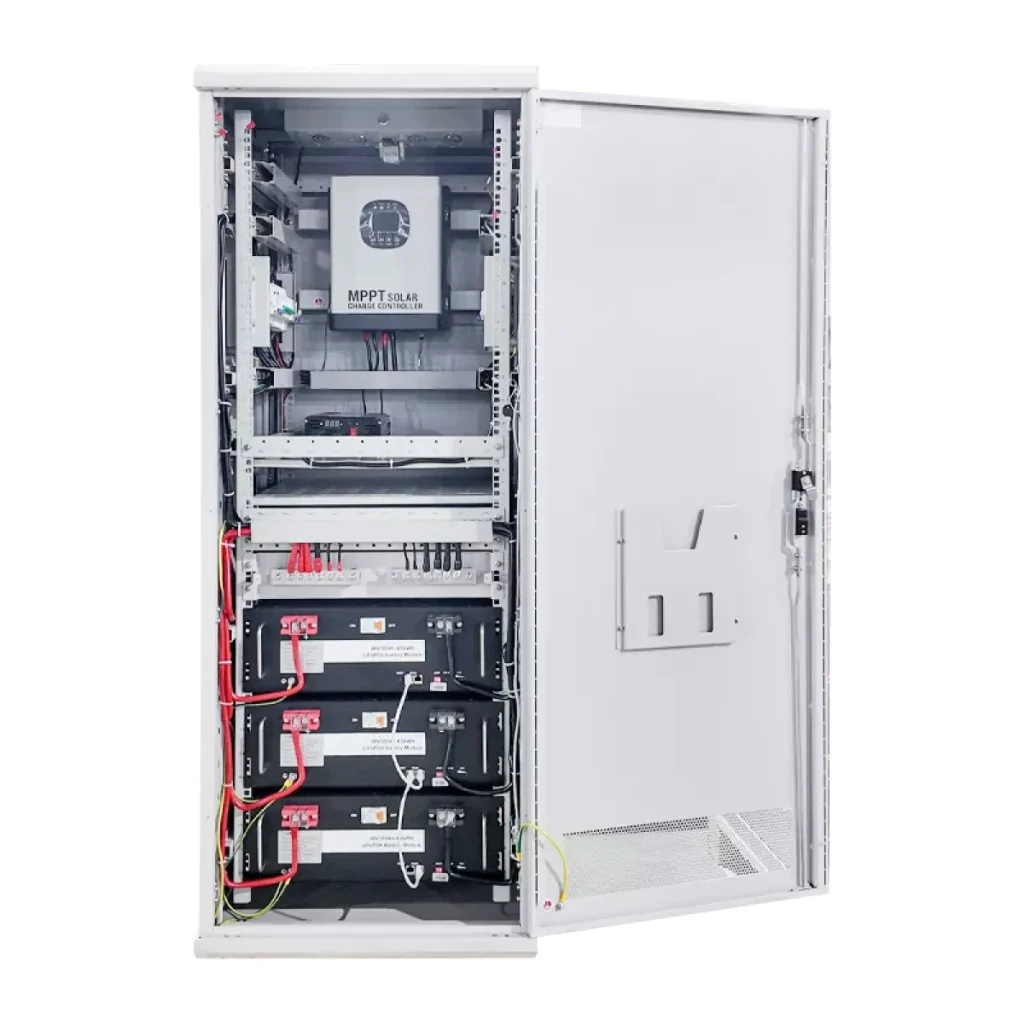
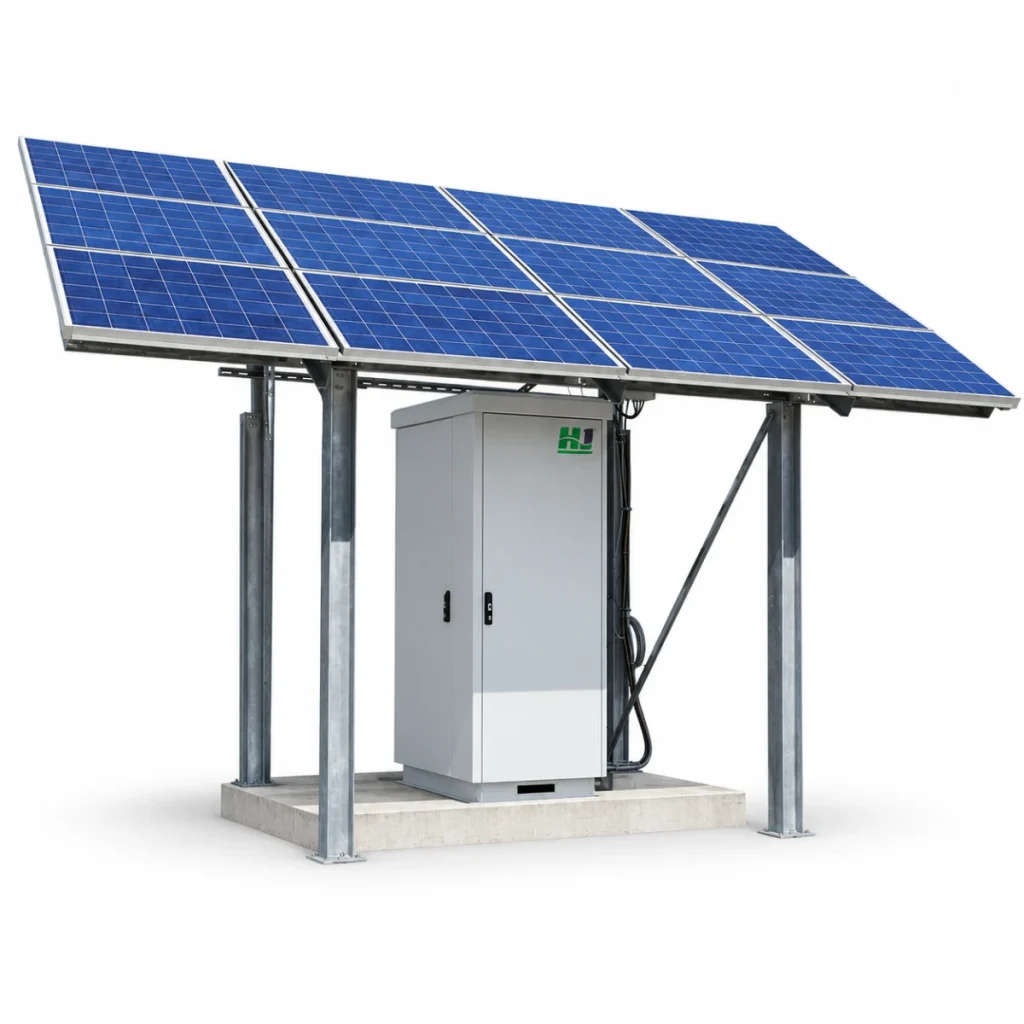
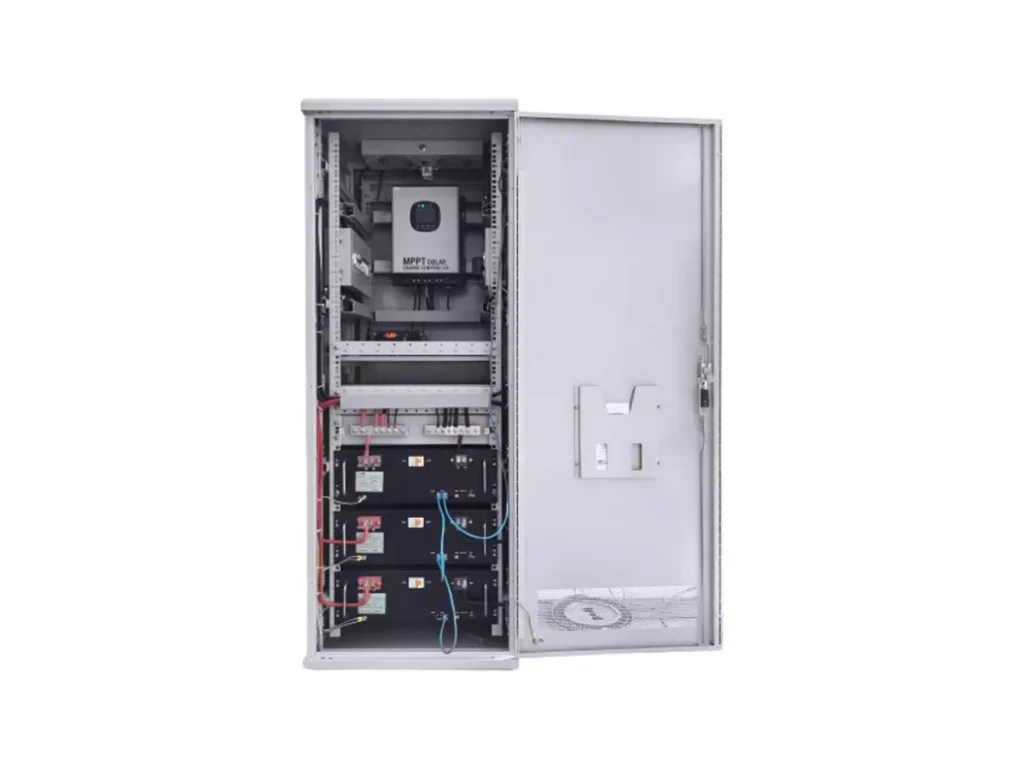
HJ-CHI indoor hybrid cabinets combining grid, renewable input and 48 V-class storage, with 18 kW/30 kWh or 36 kW/40 kWh configurations.
The Indoor Hybrid Telecom Energy Cabinet brings AC/DC conversion, renewable-energy access, storage supervision and load distribution into an indoor floor-standing platform. HJ-CHI-18030-W and HJ-CHI-36040-W provide two different power/storage combinations for communications equipment rooms.
The larger model changes both output capability and installation footprint. The 18 kW/30 kWh configuration measures 1600 × 600 × 600 mm, while the 36 kW/40 kWh configuration is 2200 × 700 × 700 mm. Equipment-room access and battery service space should be considered before ordering the higher-capacity cabinet.
Keep output power and battery current separate in the energy model. The load may be supported by several sources, but backup discharge remains constrained by the selected storage path. Confirm PV string design, incoming service, AC bypass voltage, optional wind input and the required DC feeder currents.
Huijue Group can assess OEM or private-label indoor hybrid cabinets and layouts from supplied drawings or samples. Source-module combinations, battery arrangement and room interfaces need engineering confirmation of feasibility, tooling, test procedures, production quantity and delivery scope.
Send load and growth profile, battery-only duty, required autonomy, PV array data, AC/bypass details, DC branch schedule, room drawing and monitoring protocol.
| Model | HJ-CHI-18030-W | HJ-CHI-36040-W |
|---|---|---|
| Dimensions | 1600 × 600 × 600 mm | 2200 × 700 × 700 mm |
| Maximum PV power | Recommended 9 kW; 3–18 kW optional | Recommended 18 kW; 3–36 kW optional |
| Battery rated voltage | 48 V (40–60 V) | 48 V (40–60 V) |
| Maximum charge/discharge current | 90 A | 180 A |
| Battery capacity | 30 kWh | 40 kWh |
| Rated output power | Maximum 18 kW (300 A) | Maximum 36 kW (600 A) |
| DC output voltage | 43.2–58 V DC; default 53.5 V | 43.2–58 V DC; default 53.5 V |
For indoor floor installation. Check floor support, delivery-route dimensions, room ventilation, temperature, cable entry and clearances around battery service areas.
Buyer Questions
Answers specific to Indoor Hybrid Telecom Energy Cabinet selection, configuration and purchasing.
Do not infer battery-only power from the cabinet output rating. The larger model lists a separate maximum battery charge/discharge current of 180 A, which must be included in the backup calculation.
The documented output is adjustable from 43.2–58 V DC with a 53.5 V default. Check the equipment operating window and battery charging settings.
No. The source distinguishes recommended PV sizes from optional ranges. Actual string voltage, controller capacity and module population require engineering approval.
Use the deployment context to narrow the configuration before comparing dimensions, capacities and options.
Coordinate DC power, distribution, batteries and monitoring around communications loads.
Use integrated or wall-mounted systems where equipment space is limited.
Match generation, storage and power conversion to load and autonomy requirements.
Combine grid, solar, battery or generator inputs around a defined operating strategy.
Before quotation: confirm capacity, interfaces, installation environment, power conditions, quantity and required options.