
Case Study
Shanghai Haiwan Telecom Tower Solar & Storage Integration
A telecom energy upgrade in Shanghai’s Haiwan area used existing tower space for photovoltaic modules, combining on-site generation, storage and remote supervision without relying on an expanded equipment-room footprint.
Documented project
Project overview
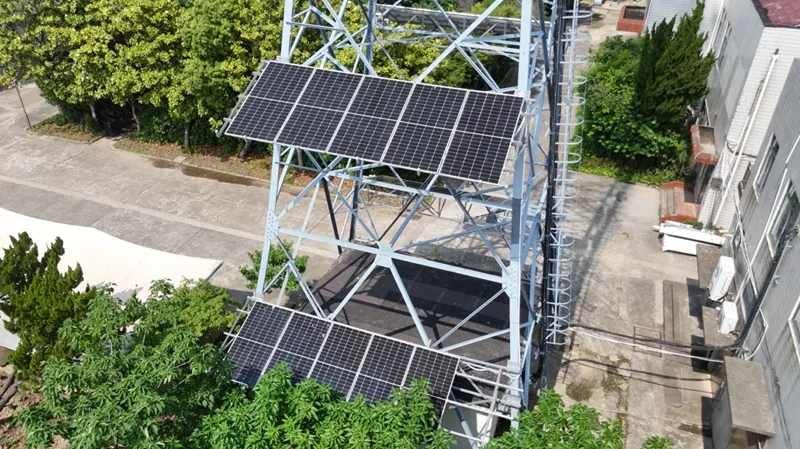
At the Haiwan branch of a telecommunications bureau in Shanghai’s Fengxian district, the solar-and-storage upgrade focused on a different asset from a conventional rooftop project: the existing tower structure. Huijue Group’s project record describes a lightweight tower-mounted photovoltaic arrangement coupled with energy storage and remote monitoring. Its purpose was to introduce on-site generation within a telecom facility where space and ongoing operation already shaped the installation.
Why the mounting surface matters
The visible arrangement places module groups at more than one height, leaving the surrounding facility recognizable as a telecom site rather than a new stand-alone solar field. This is the defining feature of the case. It illustrates a possible installation route when additional ground area or equipment-room roof space is limited.
Reusing tower space does not remove the need for structural engineering. Module area, bracket geometry, wind exposure, attachment loads, corrosion protection and climbing access all affect suitability. For a new location, the tower owner’s approval and a competent structural review are prerequisites; the existence of this project is not evidence that any telecom tower can accept the same layout.
Recorded scope and information boundaries
- Site
- Haiwan telecom bureau branch, Fengxian, Shanghai
- Mounting approach
- Lightweight tower-mounted photovoltaic integration
- Energy functions
- On-site solar generation, energy storage and self-consumption
- Supervision
- Remote equipment-status visibility and automatic fault alarms
- Published capacity
- No project-specific PV or battery capacity is stated in the available record
The project description emphasizes a compact installation and retaining equipment-room space. It also identifies lower purchased electricity and reduced maintenance effort as intended benefits. Without the load trace, generation meter readings and operating history, those objectives should not be turned into a numerical saving, a guaranteed return or a universal zero-interruption installation promise.
A tower retrofit has several separate design boundaries
| Boundary | Key coordination question |
|---|---|
| Tower and antenna estate | Does the proposed array preserve antenna access, feeder routes, climbing clearances and the approved structural envelope? |
| PV and power conversion | Are the string voltage, controller range, cable route, isolators and protection coordinated? |
| Storage and existing supply | How are backup reserve, charging limits and source priorities controlled? |
| Operations platform | Which measurements and alarms are available, and who owns response and remote access? |
From project photograph to a buildable brief
The photograph answers where the modules were placed, but it does not answer how another operator should size its array. A credible new proposal starts with a measured telecom load, the available mounting envelope and a solar assessment that includes shading between module tiers. Generation should then be checked against daytime demand, battery charging opportunities and the reserve held for communication continuity.
- Supply a tower elevation, photographs and the structural information available to the owner.
- Mark antenna zones, feeder ladders, maintenance routes and mounting exclusions.
- Provide the telecom load profile, existing supply topology and battery operating policy.
- Agree monitoring points and permitted commissioning windows before installation planning.
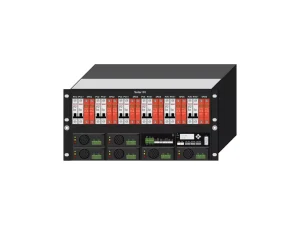
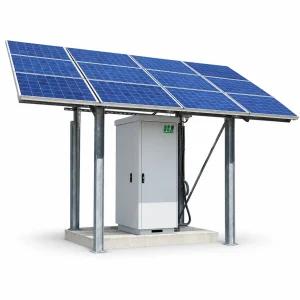
Relevant current families include the 4G/5G multi-source hybrid power system and outdoor photovoltaic energy cabinet. A suitable combination depends on the station’s voltage, load, storage strategy and approved interfaces. Huijue Group can review cabinet layout, cable entries, labels and drawing-based mechanical requirements alongside the power scope. Discuss a tower-space retrofit with the site drawings rather than selecting equipment from the photograph alone.
Product pathways
Relevant product families
Use these products as configuration references. Final model selection depends on the approved project inputs.
Manufacturer support
Review the complete system before fixing the bill of materials
Huijue Group supports OEM, private-label and drawing-based customization subject to engineering review and the confirmed production scope.