
Core equipment rooms
Coordinate DC power, distribution, batteries and monitoring around communications loads.
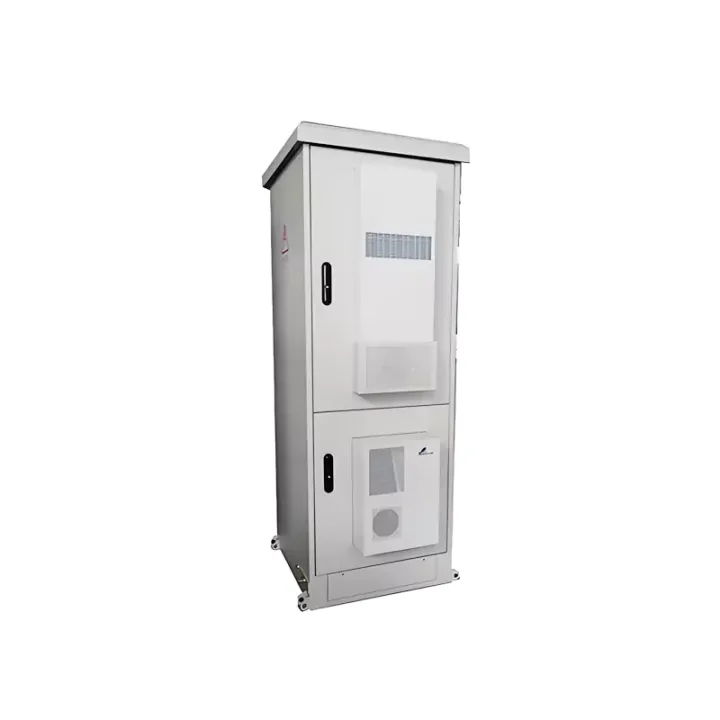
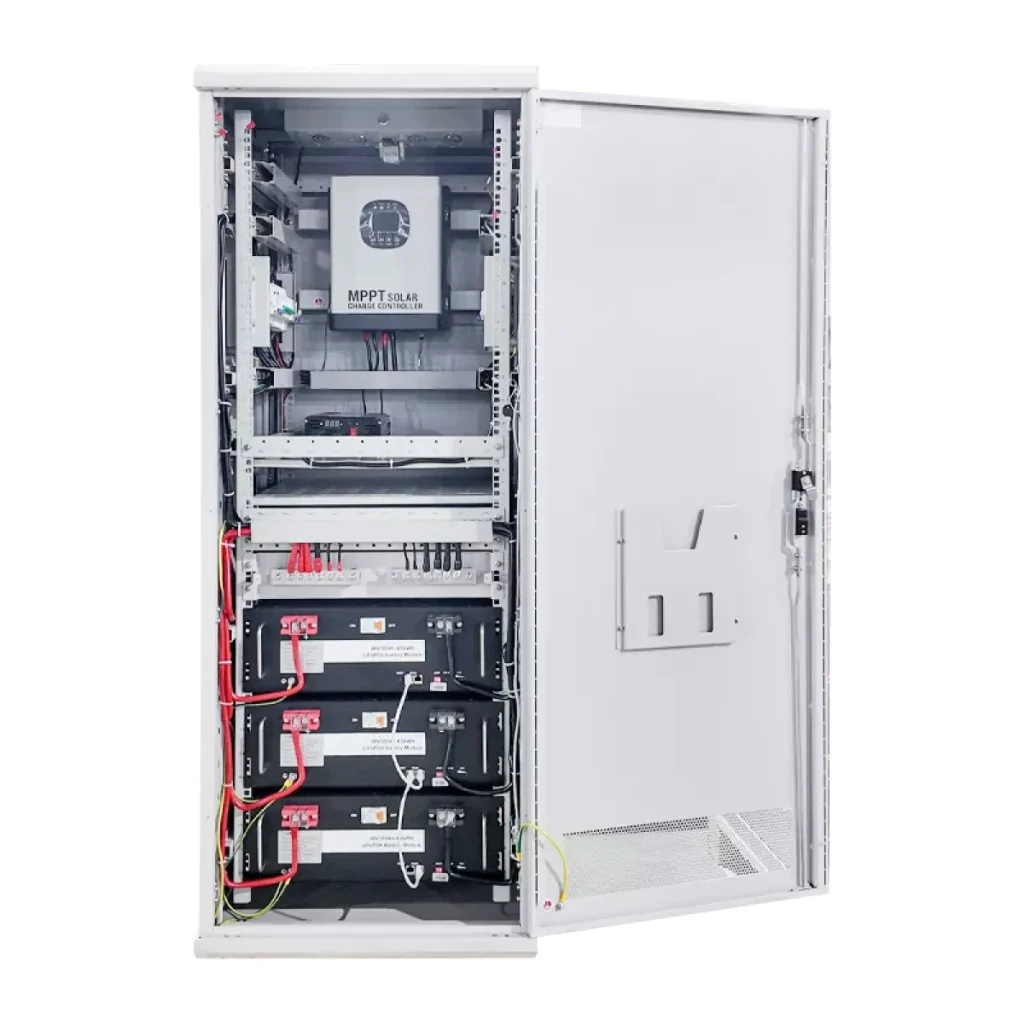
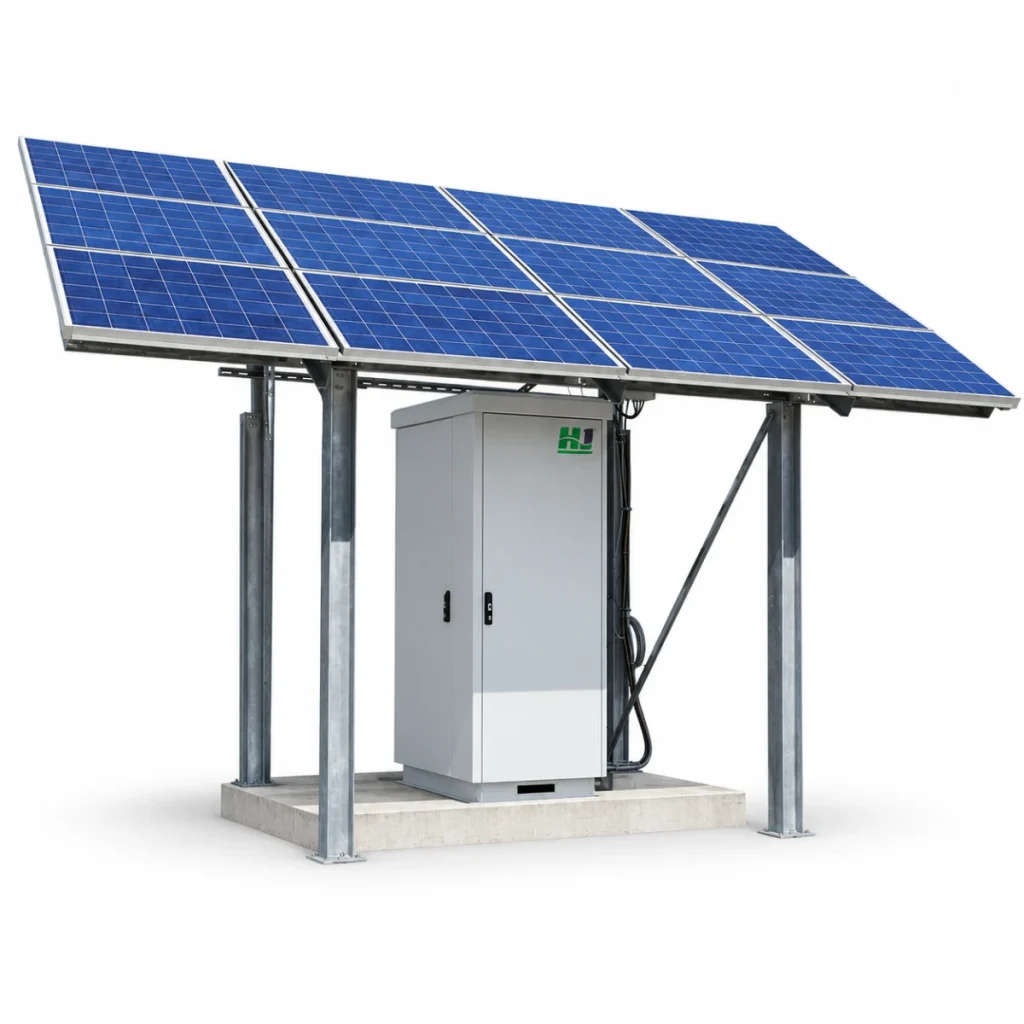
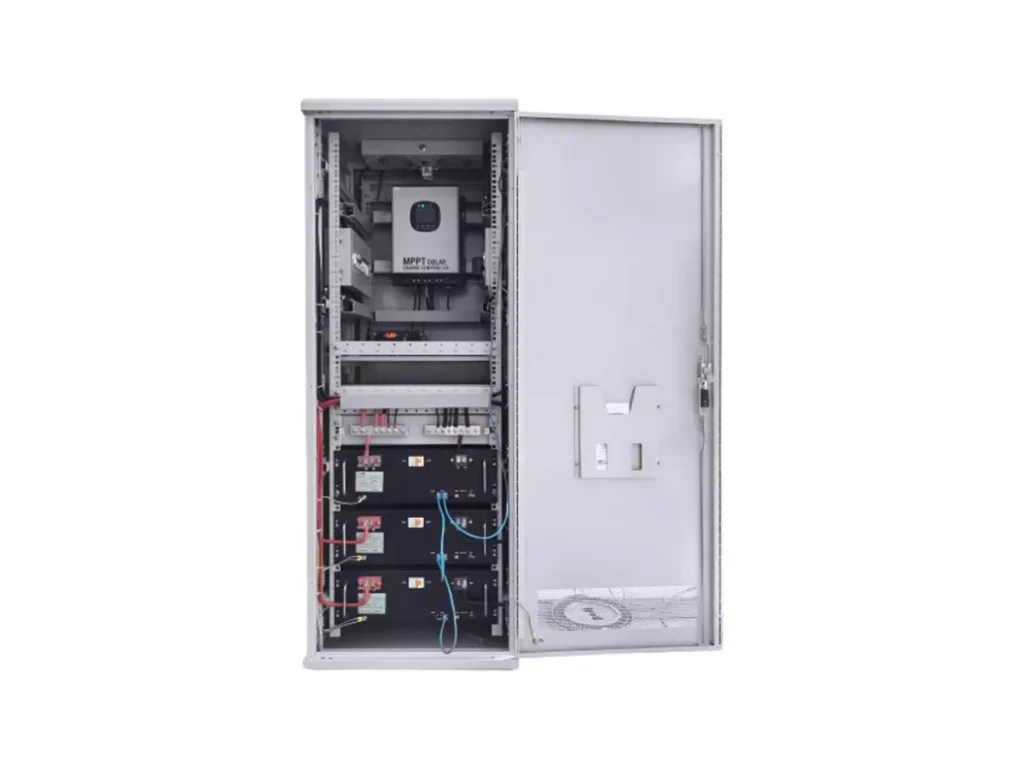
Double-door outdoor telecom power cabinet integrating a battery bay, rectifier section, AC/DC distribution and configurable thermal control.
The Tower Company Outdoor Power Cabinet consolidates a battery compartment, switching rectifier, AC distribution and DC distribution in a 2000 × 700 × 700 mm floor-standing enclosure. The standard source configuration uses a 200 A modular rectifier system built from four 50 A modules and an 80 W/K heat exchanger.
Its flat double-door arrangement and 19-inch internal rack support outdoor base-station equipment while keeping power and battery service areas organized. Air conditioning or intelligent ventilation can be evaluated instead of the standard heat exchanger when the site heat load demands another thermal approach.
Confirm DC load current, rectifier redundancy, battery size, backup time and equipment U-space. The selected thermal system must be based on internal heat, ambient profile and solar load. Also state required enclosure protection, cable entry, grounding, anti-theft features and foundation dimensions.
Huijue Group can assess compartment layout, rack rails and identity for OEM/private-label programs using approved samples or drawings. Engineering must confirm structural and thermal feasibility, fabrication tooling, equipment list, ingress/load tests, production quantity and the delivery/site-installation boundary.
| Category | Sub-item | Technical Specification / Configuration |
|---|---|---|
| Load capacity | Floor-standing cabinet | ≥1 200 kg static load |
| Wall-mounted enclosure | ≥200 kg static load | |
| Protection rating | Indoor type | IP20 (GB 4208) |
| Outdoor ventilated type (standard) | IP4X (GB 4208) | |
| Outdoor heat-exchange / air-conditioned type | IPX5 & IP5X (GB 4208) | |
| Specified model AJN23-PD-200707-Z-80-DLY200A | IP55 (GB 4208) | |
| Material thickness | Indoor cabinet | Columns 2.0 mm Aluzinc sheet; frame/mounting rails 1.5 mm cold-rolled steel; others 1.2 mm cold-rolled steel |
| Outdoor cabinet | Columns 2.0 mm Aluzinc sheet; frame/doors 1.5 mm Aluzinc sheet; remaining parts Aluzinc sheet | |
| Structural features | Frame | Profile welding, 19″ standard rack (IEC 297) |
| Indoor cabinet | Open top/bottom with openable cable covers; removable side and front/rear doors; supports side-by-side ganging | |
| Outdoor cabinet | Independent grounding compartment, carrier-grade lightning protection; embedded door box with multi-point latch; multi-level anti-theft for battery compartment; no exposed screws | |
| Surface treatment | Process | Degreasing → pickling → phosphating → electrostatic powder coating (imported outdoor powder, baked) |
| Coating standard | GB/T 3181-2008; adhesion grade 1 (GB/T 9286-1998) | |
| Lock security | Anti-damage rating | GA/T 73-1994 Class B |
| Lightning protection & grounding | Design specification | YD 5098-2005 |
| Switching rectifier power supply | Chassis | DUMC-48/50H, 15 U, AC/DC distribution, metering instruments, controller, max. 300 A |
| Rectifier modules | Model / configuration | DZY-48/50H 50 A high-efficiency modules |
| Thermal management | Heat exchanger | 80 W/K DC heat exchanger |
| Battery-compartment air conditioner (optional) | 300 W / 220 V AC | |
| Installation requirements | Inclination | ≤5 ‰ |
| Environment | No severe vibration, shock, or corrosion | |
| Seismic resistance | Compliant with national and industry codes | |
| Foundation & fasteners | Foundation channel steel and bolts supplied by customer | |
| Incoming inspection & maintenance | Check items | Intact packaging, paint finish, dry and clean, locks operate smoothly, grounding points reliable |
| Temporary storage | Store under normal conditions; avoid damage |
Outdoor configurations vary by thermal method and model. Declare temperature, humidity, dust, rain, salt/corrosion, solar exposure and seismic/site requirements so the correct enclosure and anchoring design can be reviewed.
Buyer Questions
Answers specific to Tower Company Outdoor Power Cabinet selection, configuration and purchasing.
The source configuration lists a 200 A modular switching power supply with four 50 A rectifier modules, plus AC/DC distribution and an 80 W/K heat exchanger. Confirm the final bill of materials in the quotation.
A 300 W, 220 V AC battery-compartment air conditioner is listed as an option. Suitability depends on battery heat, ambient conditions and enclosure arrangement.
Huijue Group can evaluate OEM/private-label identity and drawing-based compartment changes after confirming mechanical, thermal, electrical and test requirements.
Use the deployment context to narrow the configuration before comparing dimensions, capacities and options.
Coordinate DC power, distribution, batteries and monitoring around communications loads.
Use integrated or wall-mounted systems where equipment space is limited.
Match generation, storage and power conversion to load and autonomy requirements.
Combine grid, solar, battery or generator inputs around a defined operating strategy.
Before quotation: confirm capacity, interfaces, installation environment, power conditions, quantity and required options.