
Core equipment rooms
Coordinate DC power, distribution, batteries and monitoring around communications loads.
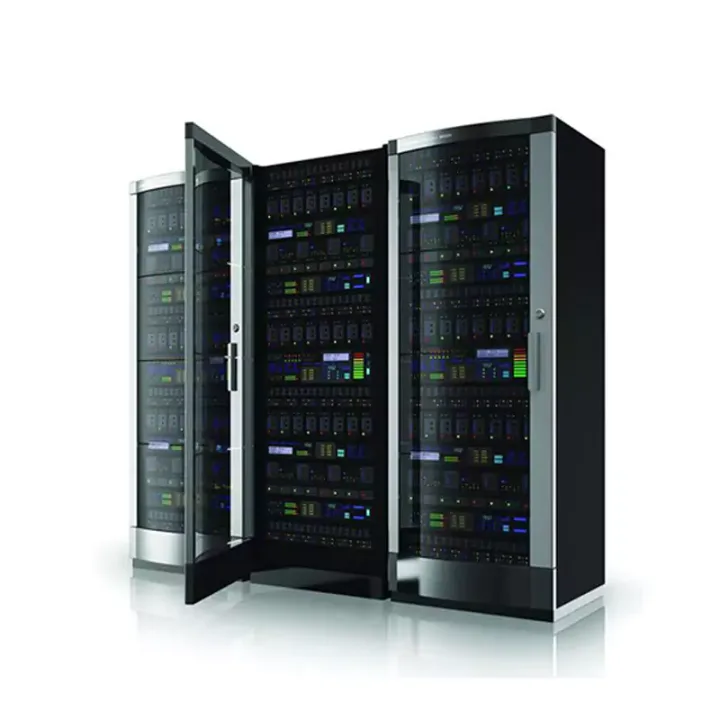
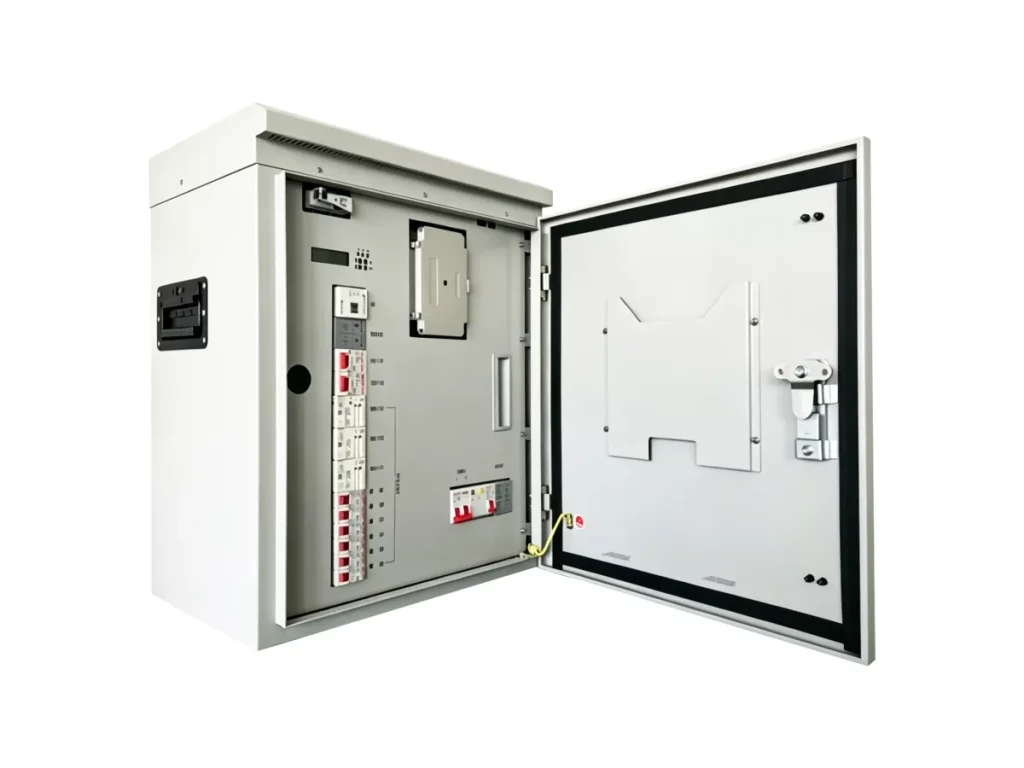
HJ-DYZ-600 cabinet power system combining AC distribution, modular rectification, battery management and monitored DC feeders for communications equipment rooms.
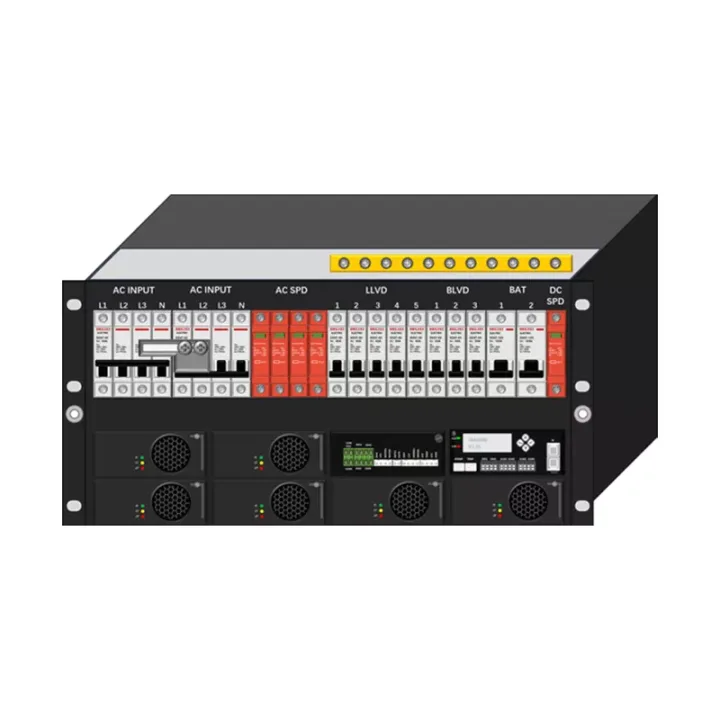
The HJ-DYZ-600 cabinet-type telecom DC power system provides a central DC power plant for communications facilities. Its cabinet brings together AC incoming distribution, a monitoring unit, DC distribution and provision for up to twelve rectifier modules. Battery management is part of the system architecture, enabling the plant to coordinate charging and backup operation rather than simply connect batteries across an unmanaged output.
Low-voltage battery protection is documented, with load disconnect available as an option. The final module count, feeder arrangement and battery configuration should follow the room’s present load, recharge requirement and expansion plan.
Check the rectifier population against both running load and battery recovery current, with any redundancy allowance explicitly identified. The documented environmental schedule includes temperature-dependent derating from 55°C to 65°C and altitude corrections above 2000 m. Have engineering confirm the applicable operating limit for the ordered module and site.
For room-specific cabinet builds, Huijue Group can assess an approved single-line drawing or reference assembly and OEM/private-label requirements. Busbar layout, module compatibility, cable access, tooling, validation tests, order quantity and the boundary between factory wiring and site installation require engineering confirmation.
Provide DC load and growth, redundancy policy, battery type/capacity, recharge target, AC incoming service, feeder ratings, alarm point list, ambient temperature and site altitude.
| Environmental Parameters | Operating conditions | Transport conditions | Storage conditions | Applicable standards | Remarks | |||
|---|---|---|---|---|---|---|---|---|
| Category | Parameter | Unit | ||||||
| Climatic conditions | Temperature | Low temperature | ℃ | -33 | -40 | -40 | YD/T 1058-2000 Clauses 4.1.1 and 4.1.2 | Full-load start at −40℃; linear 20% derating from +55 to +65℃. |
| High temperature | ℃ | 65 | 70 | 70 | ||||
| Temperature change | ℃/min | / | 1 | / | ETS 300 019-2-2 T2.3 | |||
| Operating ambient temperature | ℃ | -33—65 | Full-load extreme operating temperature | |||||
| Storage temperature | ℃ | -40—70 | ||||||
| Humidity | Relative humidity | % | 5-90 | 90 (40±2℃) | / | YD/T 1058-2000 Clause 4.1.3 | Short-term test: 0—95%, max 95%, non-condensing | |
| Condensation | Yes/No | No | No | Yes | ||||
| Atmospheric pressure | Low pressure | kPa | 86 | 70 | 70 | YD/T 1058-2000 Clause 4.1.4 | Module testing only | |
| High pressure | kPa | 106 | 106 | 106 | ||||
| Altitude | m | ≤4000 | Above 2000 m, derate 0.5℃ per additional 100 m |
The source lists an operating ambient range of −33°C to 65°C with qualifications on high-temperature loading. Confirm room ventilation, altitude, humidity and cable/service access before final selection.
Buyer Questions
Answers specific to Cabinet-Type Telecom DC Power System (HJ-DYZ-600) selection, configuration and purchasing.
Twelve is the fully configured module provision. The ordered population must be specified from load, battery charging and redundancy requirements.
Float, equalization and current-limit settings are adjustable through the controller or a reviewed remote system. Battery manufacturer limits and temperature compensation must be checked during commissioning.
The source specifies high-temperature derating between 55°C and 65°C. Engineering must confirm the usable current under the actual thermal and altitude conditions.
Use the deployment context to narrow the configuration before comparing dimensions, capacities and options.
Coordinate DC power, distribution, batteries and monitoring around communications loads.
Use integrated or wall-mounted systems where equipment space is limited.
Match generation, storage and power conversion to load and autonomy requirements.
Combine grid, solar, battery or generator inputs around a defined operating strategy.
Before quotation: confirm capacity, interfaces, installation environment, power conditions, quantity and required options.