
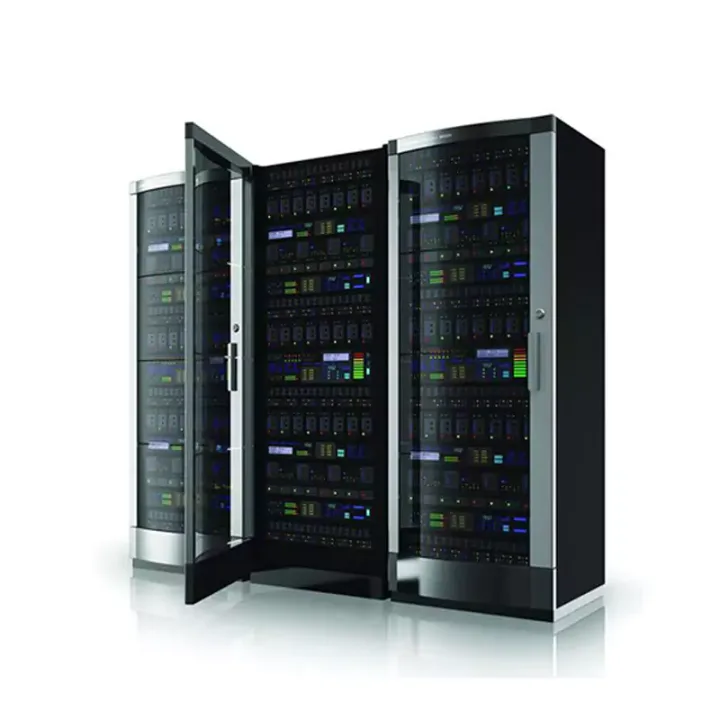
Core equipment rooms
Coordinate DC power, distribution, batteries and monitoring around communications loads.
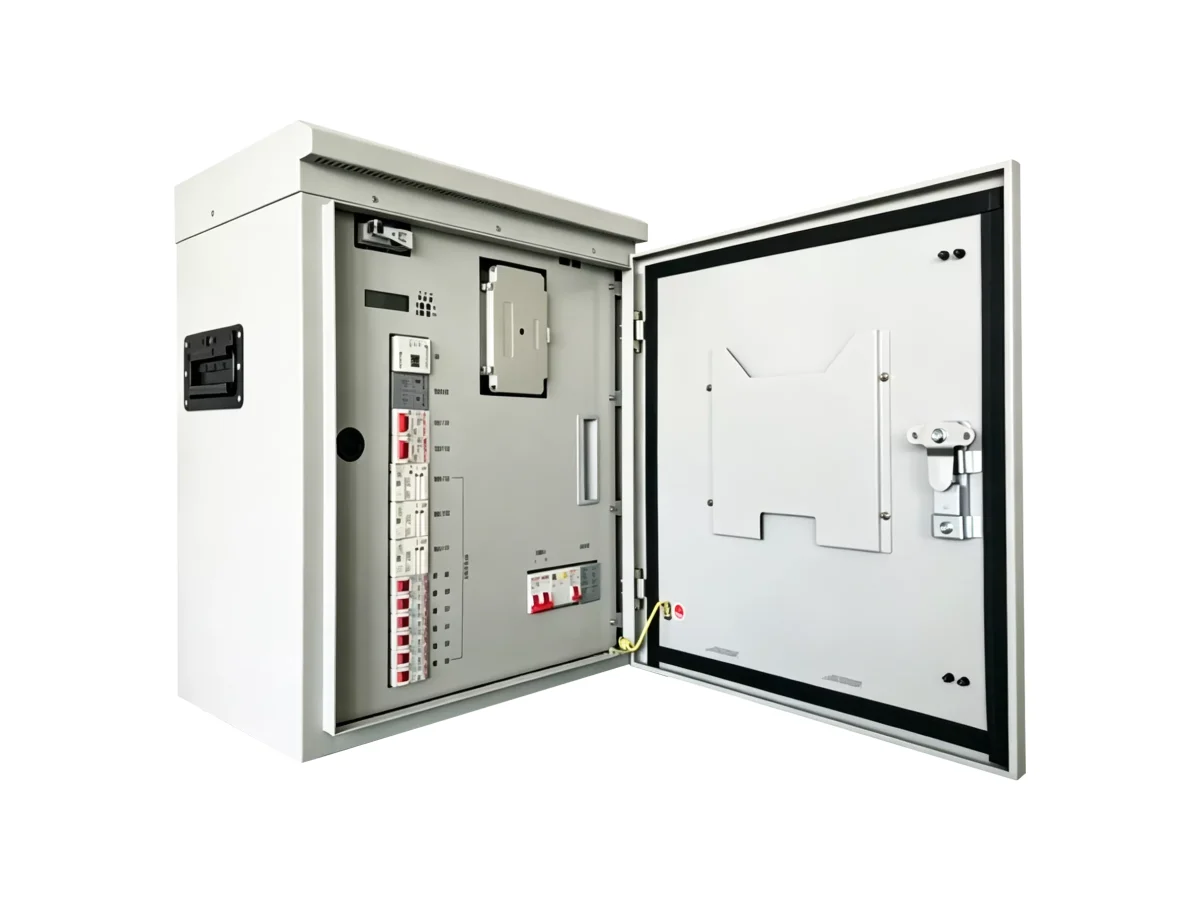
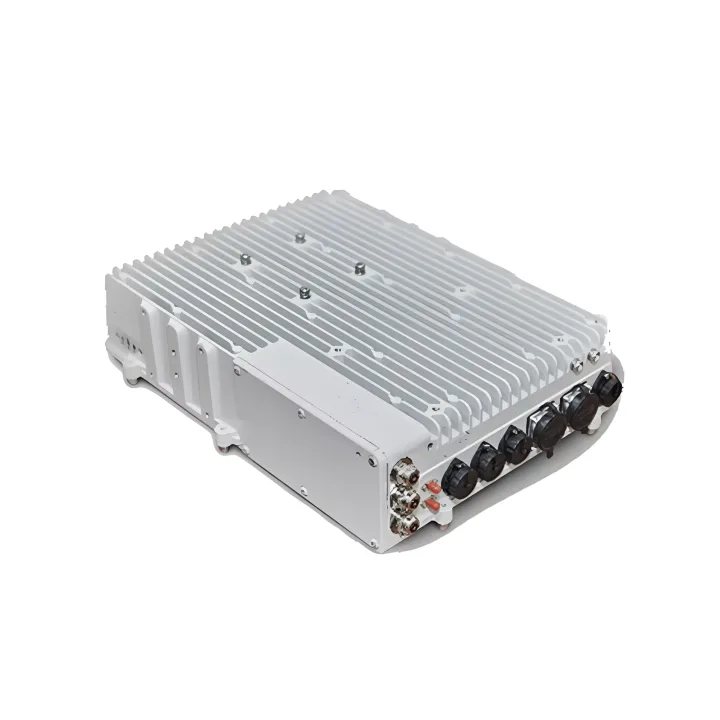
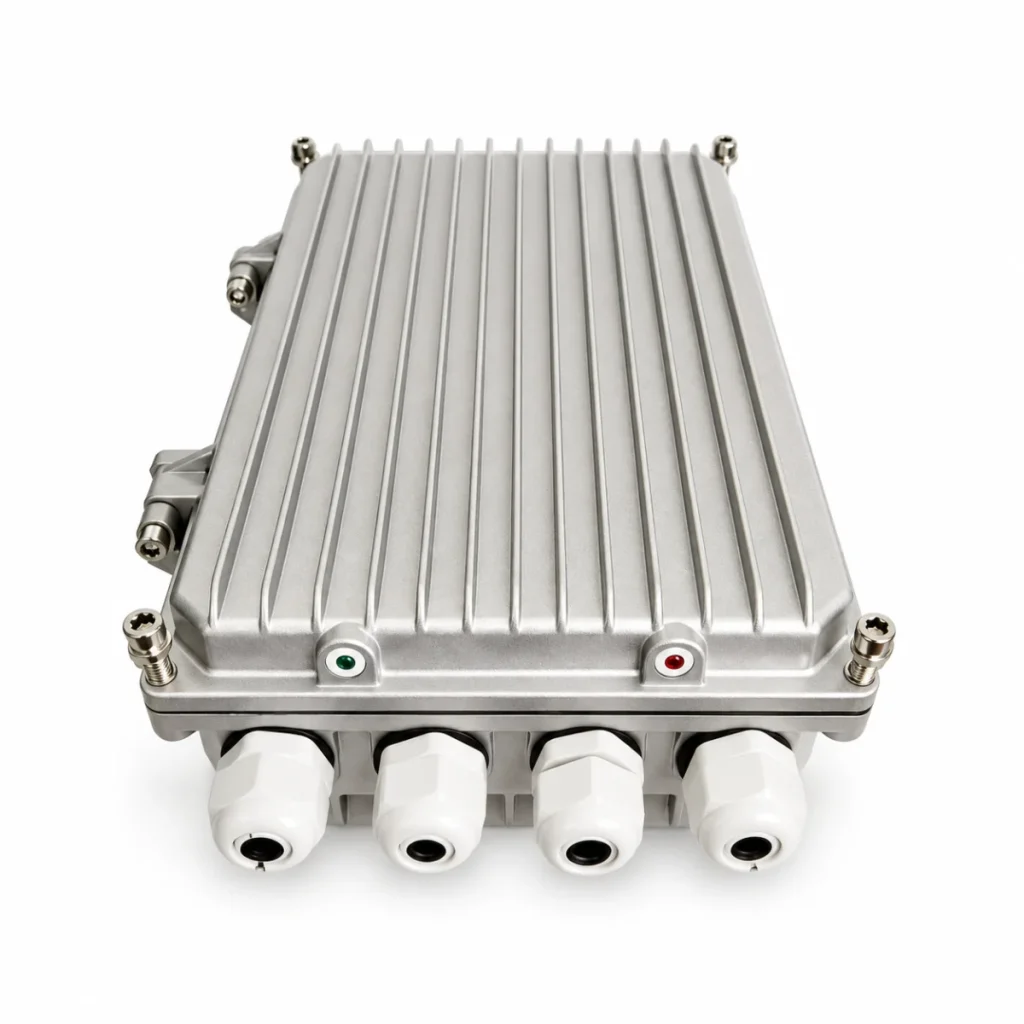
HJDUM01-048 outdoor power box combining rectifiers, monitored AC/DC distribution, battery interfaces and fiber accommodation in a compact IP55 enclosure.
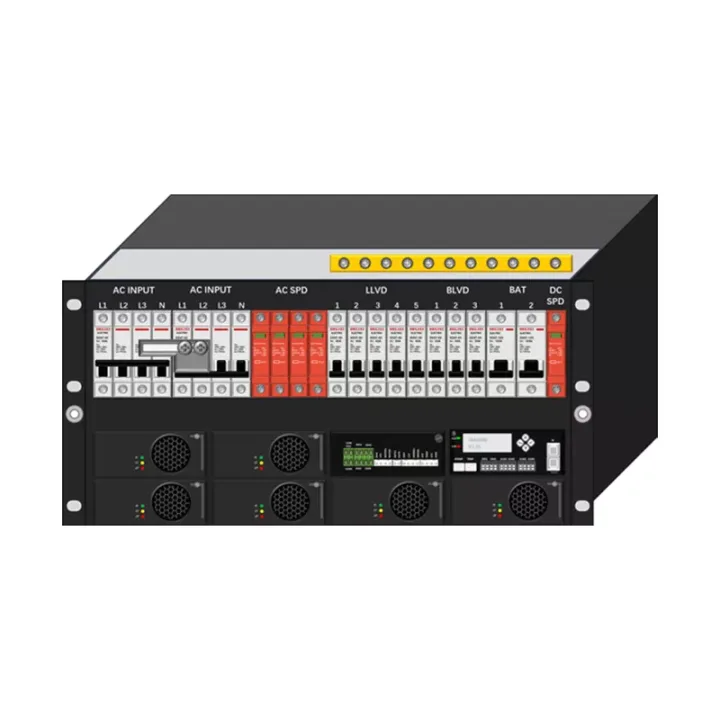
The Compact Outdoor 48 V Telecom Power Box brings several small-site functions into a single enclosure. Its documented architecture includes power modules, AC input, protected DC branches, monitoring, an FSU, battery connections and accommodation for fiber access. It suits installations where these functions must fit near the communications equipment.
The HJDUM01-048 family is listed in 5000 W and 9000 W configurations with different enclosure sizes. Since the source also gives different module populations, the final rated power and fitted modules should be reconciled in the approved project data sheet before procurement.
Specify continuous and peak 48 V load, battery charge demand and required feeder currents. Confirm the module count, system power, input protection and DC branch arrangement as one coordinated schedule. Check whether the battery is internal, external or a combination, and reserve cable/service space for the fiber equipment.
Huijue Group can evaluate an OEM or private-label compact box, including layouts from drawings or reference samples. FSU selection, connector positions and enclosure adaptations require engineering confirmation of feasibility, tooling, thermal/electrical tests, production quantity and the delivered scope.
Provide load/current, required power configuration, AC supply, DC branches, battery capacity and location, fiber parts, NB-IoT/4G requirement and mounting drawing.
| Model | HJDUM01-048 (5000 W) | HJDUM01-048 (9000 W) |
|---|---|---|
| Rated power | 5000 W | 9000 W |
| Power modules | 2 × 48 V / 50 A | 3 × 48 V / 50 A |
| Dimensions | 520 × 390 × 250 mm | 570 × 500 × 330 mm |
| Battery interface | 1 internal + 1 external | 1 internal + 1 external |
| Protection rating | IP55 | IP55 |
The enclosure is listed as IP55. Confirm mounting hardware, solar exposure, temperature-control arrangement, cable sealing and service access for the final site.
Buyer Questions
Answers specific to Compact Outdoor 48 V Telecom Power Box selection, configuration and purchasing.
Both interfaces are listed. Whether they are used separately or together depends on the approved battery and protection design; specify the intended arrangement.
Also confirm fitted rectifier quantity, actual system output and operating conditions on the project data sheet. The source power and module-population entries need to be read together.
Both are listed options. Coverage, platform interface, data points and communication hardware must be confirmed for the ordered box.
Use the deployment context to narrow the configuration before comparing dimensions, capacities and options.
Coordinate DC power, distribution, batteries and monitoring around communications loads.
Use integrated or wall-mounted systems where equipment space is limited.
Match generation, storage and power conversion to load and autonomy requirements.
Combine grid, solar, battery or generator inputs around a defined operating strategy.
Before quotation: confirm capacity, interfaces, installation environment, power conditions, quantity and required options.