
Telecom base stations
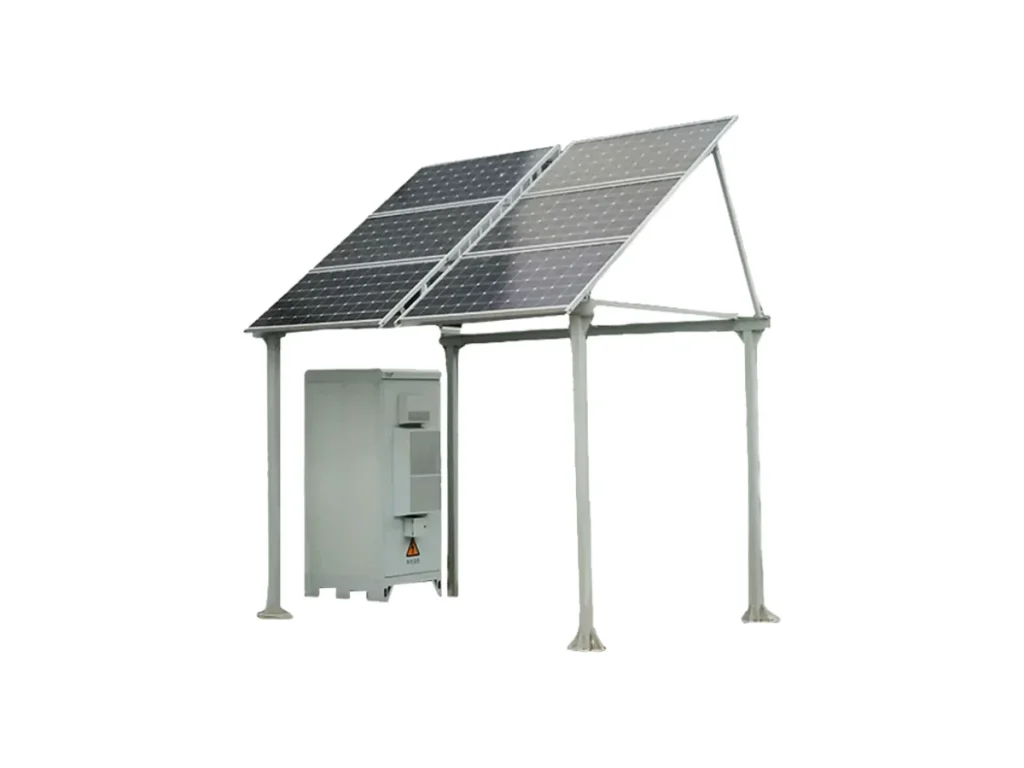
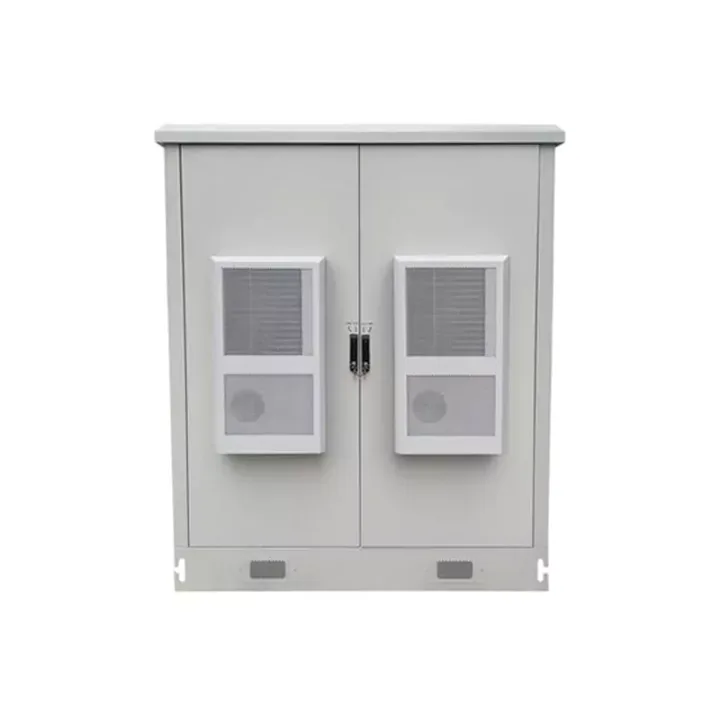
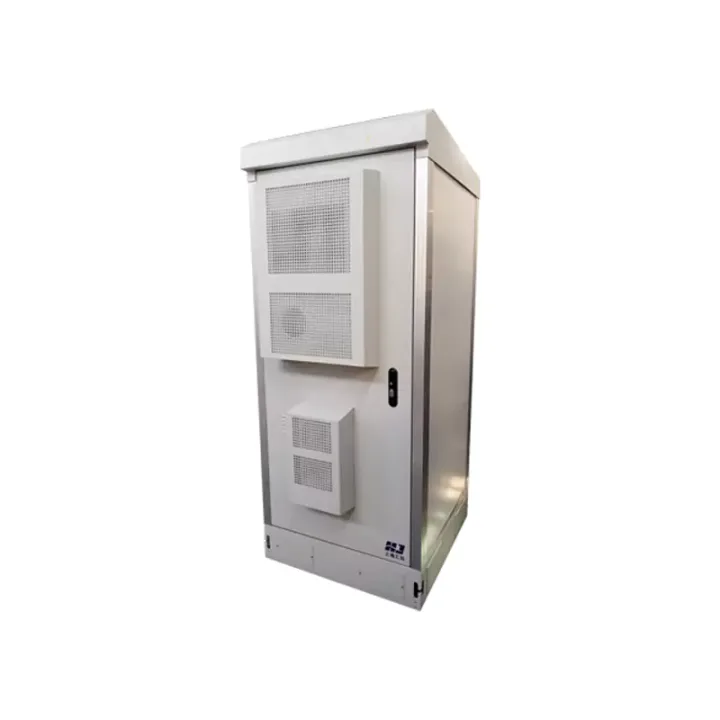
House communications, power and battery equipment in a serviceable outdoor enclosure.
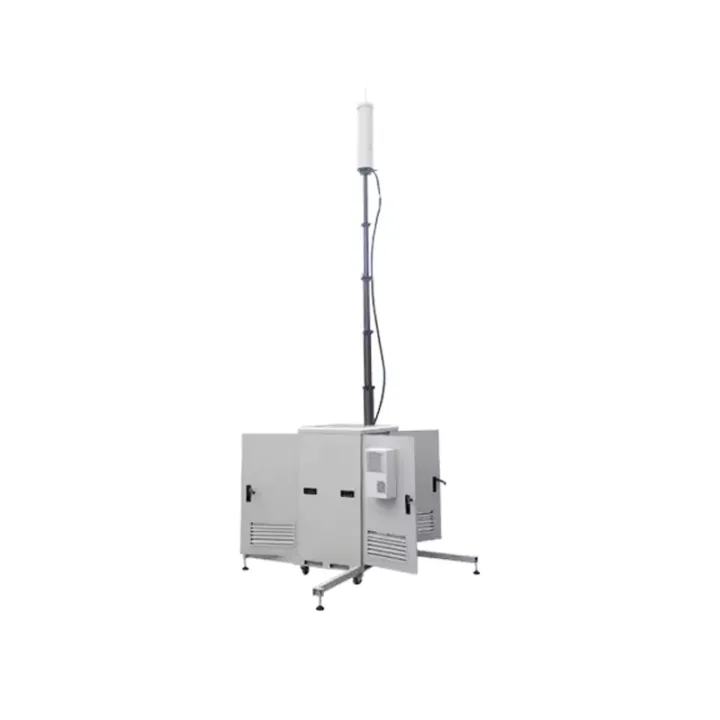
A movable emergency communications cabinet combining casters, stabilizing outriggers and a pneumatic mast, with power, battery and monitoring equipment defined by the deployment plan.
The Mobile Emergency Communications Cabinet brings communications equipment and site support into a transportable assembly for temporary coverage, event traffic and emergency restoration. Its purpose is to reduce the amount of separate equipment that must be positioned and interconnected at the deployment location.
The cabinet measures 1460 × 850 × 650 mm in the listed configuration. Transport planning must cover the loaded assembly, mast, antenna and any handling equipment; the cabinet dimensions alone do not establish vehicle suitability or deployment time.
Build a deployment checklist around payload, antenna wind exposure, mast stabilization, available AC or generator supply and required operating duration. Select optional locks, monitoring and handling equipment explicitly. Mast loading must be assessed with the antenna and accessories installed.
For emergency fleets, Huijue Group can assess manufacturer-supplied OEM configurations, private-label identification and sample- or drawing-based changes to the cabinet and interfaces. Engineering, tooling, verification tests, quantities and delivery responsibilities must be confirmed for the proposed assembly.
| No. | Item | Specification | Unit | Qty | Remarks |
|---|---|---|---|---|---|
| 1 | Emergency Cabinet | Cabinet dimensions: 1460 × 850 × 650 mm (H × W × D). Powder-coated galvanized-steel construction; 1.2 mm enclosure and 2.0 mm base; casters and anti-tip outriggers; moisture-control and dehumidification components; feeder window; grounding spikes and grounding cable. | Set | 1 | Includes generator interface socket (door-mounted) |
| 2 | Telescopic Mast | Pneumatic mast; maximum deployed height 5.0 m; load capacity over 100 kg; supplied with three guy-wire assemblies. | Pc | 1 | Includes self-locking function |
| Air Compressor | AC 220 V; 150 PSI; airflow 160 L/min | Set | 1 | Part of the telescopic-mast system | |
| 3 | Emergency Box | Smart circuit breaker 32A, MT61SR-S; output breakers; generator socket ×1 (32A, single-phase); maintenance socket 10A ×1 | Set | 1 | Optional |
| Optical Fiber Interface | 6-core feeder × 8 m with adapters and DIN connectors | Set | 1 | Cabling for RRU, antenna, and BBU interconnection | |
| 4 | Embedded Power Supply | Full configuration capacity: 48V/120A; AC 32A/2P×2 with interlocking; Class B surge protection; battery breakers ×2 AC output: 16A×1 + socket×1; DC output: 32A×1 + 16A×1 (primary load shedding), 16A×2 (secondary load shedding); | Unit | 1 | |
| 5 | Thermal Control | 600W/AC compressor air conditioner + intelligent variable-speed fan | Unit | 1 | Optional |
| 6 | Environment Monitoring | Monitors temperature/humidity, smoke, water ingress, and door access; integrates air conditioner, battery, power supply, and smart breakers; supports 4G/NB wireless transmission | Set | 1 | Optional |
| 7 | Cluster Antenna | Three-sector cluster antenna, gain 14.5 dBi / 17 dBi, dimensions ≤Φ200*1800 mm. | Set | 1 | Optional |
| 8 | LiFePO4 Battery Pack | Rack-mounted 48V/100AH 4U (with BMS) | Unit | 1 | |
| 9 | Smart Access Lock | NB lock 712, 1-to-3 (1 controller with 3 locks); remote unlock, APP unlock, electronic key unlock; includes GPS module ×1 | Set | 1 | Optional |
| 10 | AAU Offset Bracket | 5 mm steel plate, 100 mm offset from center | Set | 1 | Optional accessory |
| 11 | Manual Hydraulic Stacker | Manual hydraulic type; load capacity ≥500 kg; unit weight 120 kg | Set | 1 | Optional (configured as required) |
Suitable project contexts include temporary coverage gaps, crowded events, disaster-response communications and portable rooftop sites, subject to access and structural review.
Ground conditions, stabilizer support, guy-wire clearance and earthing arrangements need assessment each time the unit moves. Do not extend the mast until the site deployment procedure is approved.
Buyer Questions
Answers specific to Mobile Emergency Communications Cabinet selection, configuration and purchasing.
They are listed as optional. Include the cooling, sensors and wireless transmission requirements in the agreed equipment schedule.
Movement and mast operation require a defined handling procedure. Confirm the transport state, restraints and approved lifting or rolling method for the loaded assembly.
Calculate it from the actual radio, auxiliary and cooling loads, the selected battery configuration and operating conditions. The listed battery capacity alone does not define autonomy.
Use the deployment context to narrow the configuration before comparing dimensions, capacities and options.
House communications, power and battery equipment in a serviceable outdoor enclosure.
Protect distributed equipment while maintaining cable entry and service access.
Coordinate cabinet capacity, thermal management and equipment zoning.
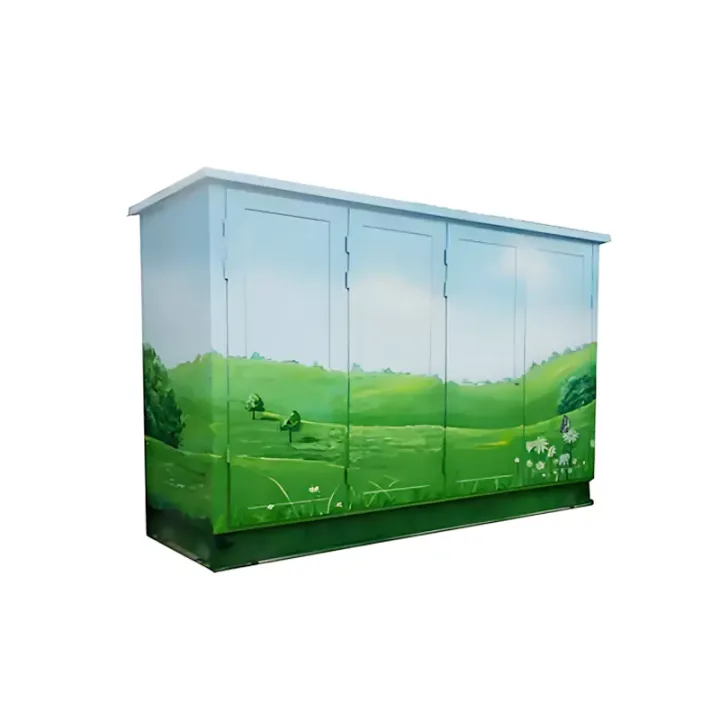
Fit protected infrastructure into space-constrained or visually sensitive locations.
Before quotation: confirm capacity, interfaces, installation environment, power conditions, quantity and required options.