
Core equipment rooms
Coordinate DC power, distribution, batteries and monitoring around communications loads.
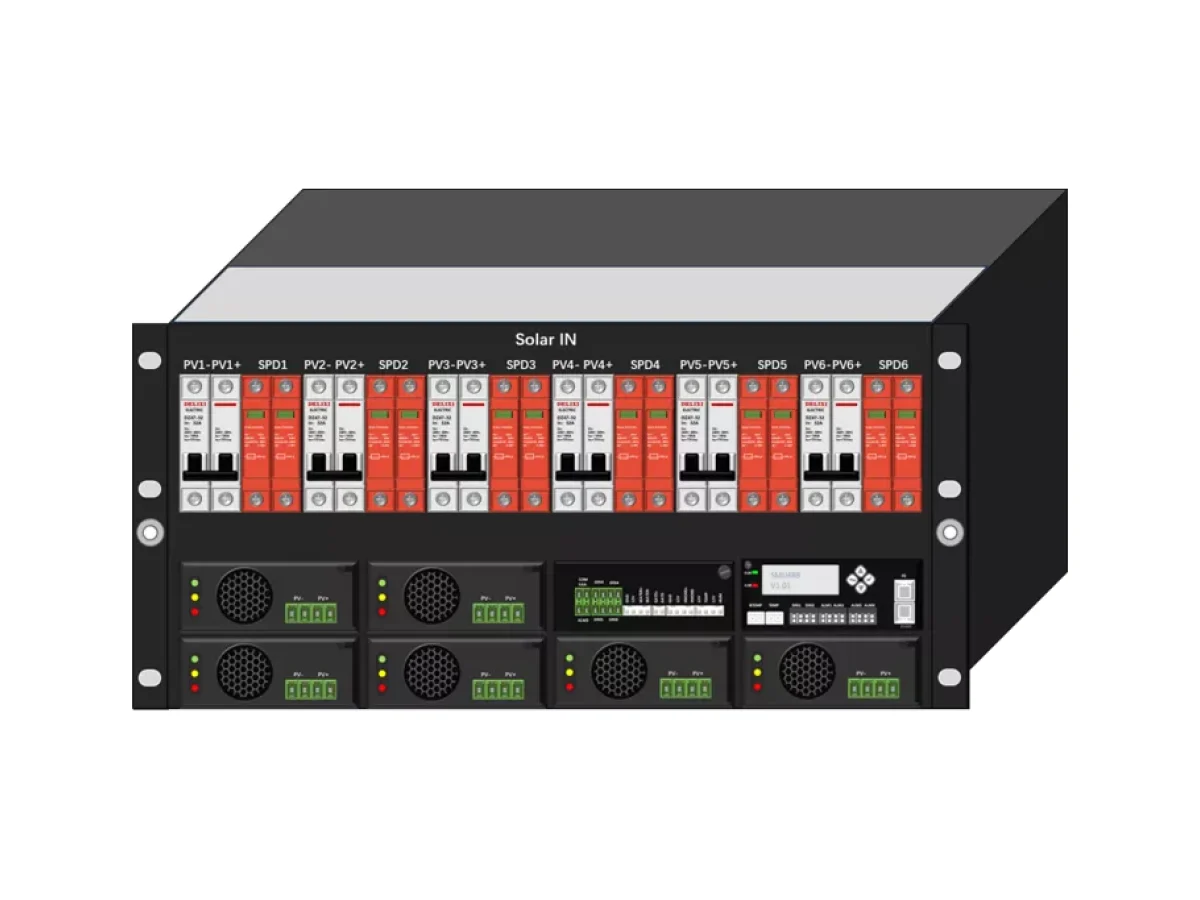
MPPT solar charge controllers for base-station PV retrofits, covering compact wall/pole units and a separate higher-power rack controller for 48 V-class DC systems.
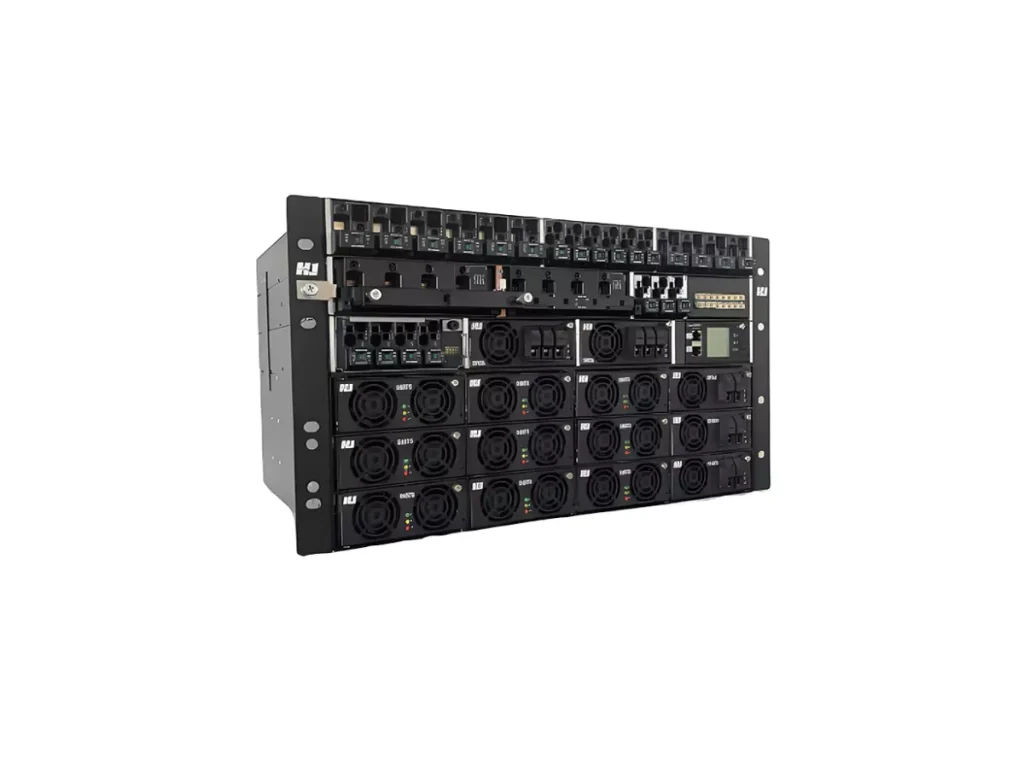
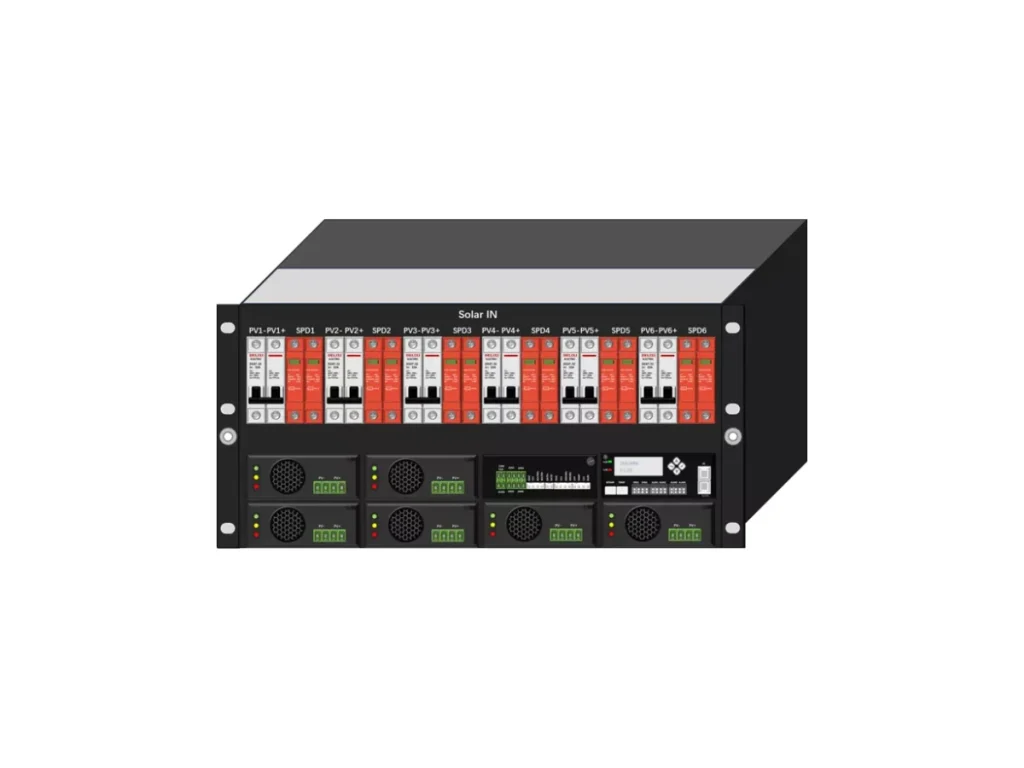
The telecom MPPT solar charge controller connects an added PV array to an existing telecom energy architecture. The family includes three compact HJ-MCJ models and the separate HHYS48300A-H5B6-GB01 rack system. These formats address different array voltages, mounting conditions and power levels.
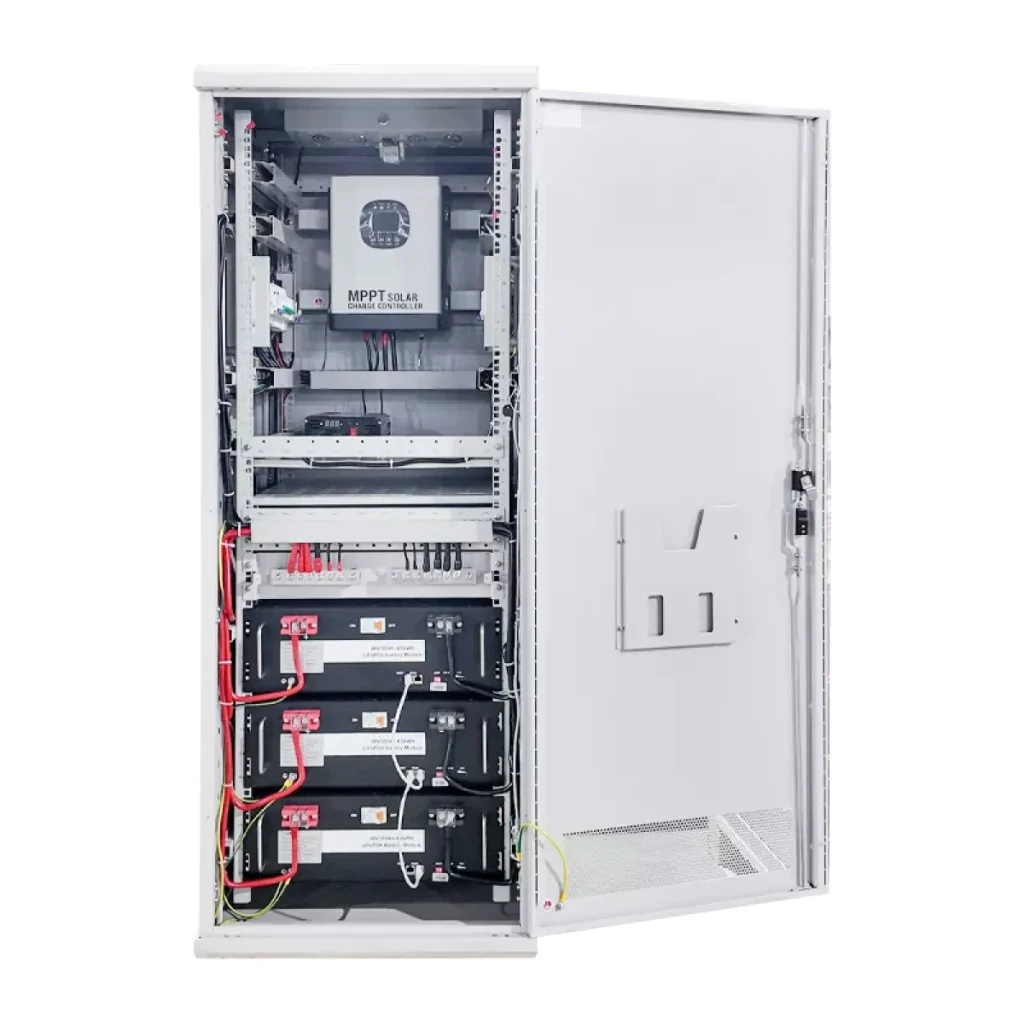
Choose this product when the project needs a solar-control stage rather than a complete battery and power cabinet. Integration still requires a checked battery/DC bus window, coordinated protection and a control strategy that accounts for the existing rectifier plant.
Calculate string operating and open-circuit conditions against the chosen controller's approved input limits. Confirm output settings with the battery and DC equipment, and distinguish rated PV input power from rack-system output power. Do not transfer compact-series communication or efficiency details to the rack unit without checking its own configuration.
Huijue Group can review OEM faceplates, private-label controller packages and installations developed from samples or drawings. Input/output adaptations, enclosure tooling, validation tests, quantity and the scope of site integration require engineering confirmation.
Send PV module/string data, array power, battery/bus range, required charging current, host rectifier model, mounting format and communication point list.
| Model | HJ-MCJ48H60 | HJ-MCJ48H100 | HJ-MCJ48H120 | HHYS48300A-H5B6-GB01 |
|---|---|---|---|---|
| Rated PV input power | 3400 W | 5600 W | 6800 W | — |
| Rated output power | — | — | — | 18000 W |
| PV operating voltage | 65–250 V DC | 65–250 V DC | 65–250 V DC | 100–400 V DC input |
| DC output | 56 V DC default, adjustable | 56 V DC default, adjustable | 56 V DC default, adjustable | 43.2–58 V DC; default 53.5 V |
| Communication | RS485 / Modbus | RS485 / Modbus | RS485 / Modbus | Project-specific |
| Installation | Wall / pole | Wall / pole | Wall / pole | 19-inch rack |
Compact units support wall/pole installation indoors or outdoors. The HHYS unit is rack-mounted and requires an appropriate host enclosure. Confirm the selected model's environmental specification and airflow needs.
Buyer Questions
Answers specific to Telecom MPPT Solar Charge Controller selection, configuration and purchasing.
Their listed PV operating range is 65–250 V DC. A 300 V operating string falls outside that stated range; select and verify another arrangement.
The compact models list 56 V DC, while the rack system lists 53.5 V. Confirm the final setting against the site battery and load requirements.
The source explicitly lists RS485/Modbus for the compact series. The rack controller's communication package is project-specific and must be confirmed separately.
Use the deployment context to narrow the configuration before comparing dimensions, capacities and options.
Coordinate DC power, distribution, batteries and monitoring around communications loads.
Use integrated or wall-mounted systems where equipment space is limited.
Match generation, storage and power conversion to load and autonomy requirements.
Combine grid, solar, battery or generator inputs around a defined operating strategy.
Before quotation: confirm capacity, interfaces, installation environment, power conditions, quantity and required options.