
Core equipment rooms
Coordinate DC power, distribution, batteries and monitoring around communications loads.
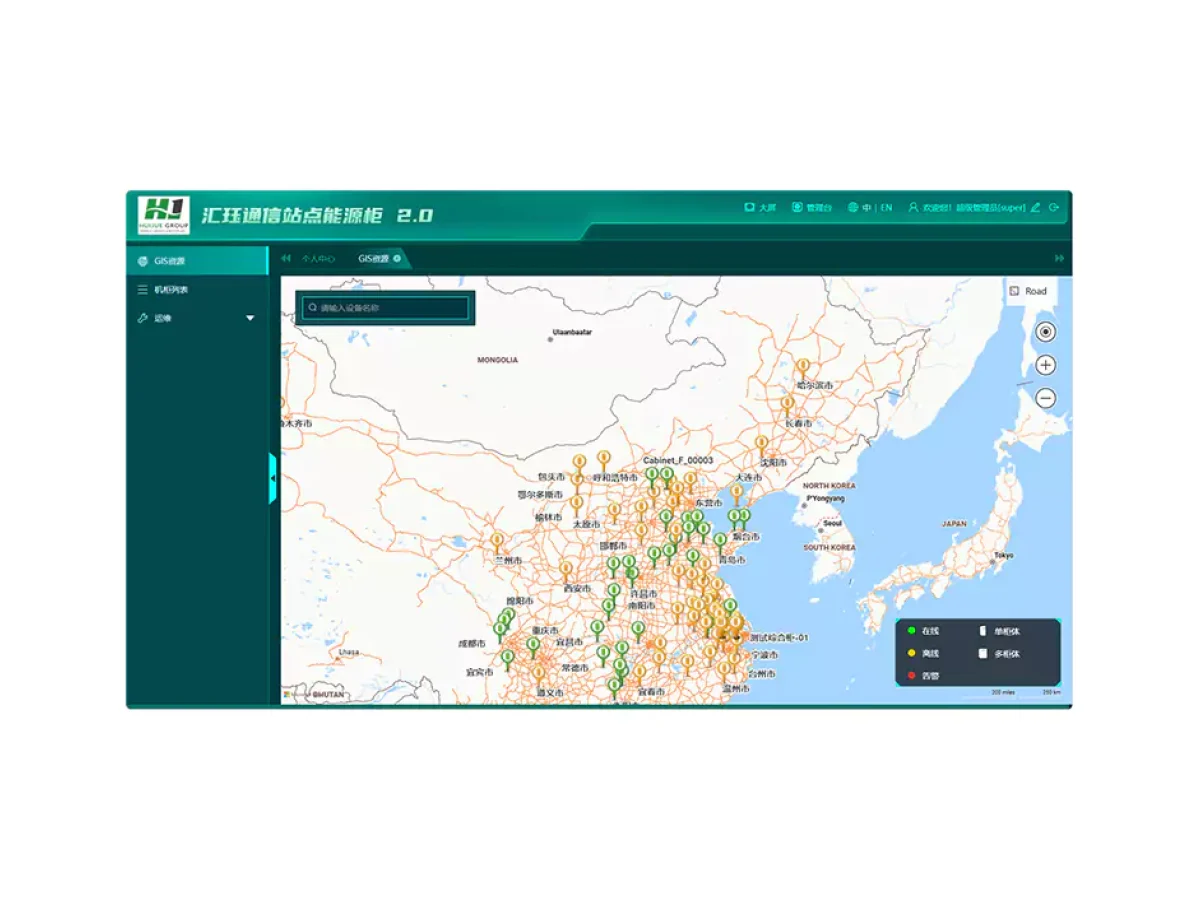
HJ-CS-ECMS V2.0 software for geographic site views, cabinet power status, alarms and maintenance information across integrated communications energy assets.
The telecom site energy management system (EMS) consolidates power and cabinet data from distributed communications locations. HJ-CS-ECMS V2.0 brings geographic status, live operating indicators, alarms and maintenance information into a common management view, helping teams review a fleet of cabinets as well as individual assets.
Managed resources can include UPS equipment, PDUs, batteries, PV, utility supply, security and environmental devices. Integration is a project task: the platform needs agreed protocols, data points and alarm definitions for the actual equipment inventory. Example interface images should be treated as functional illustrations of the platform.
Define sites, cabinets and connected assets before sizing deployment. Agree interface language, user roles, alarm rules, reports and retention needs. Any northbound API or external system connection requires a separately confirmed interface specification; a common physical port alone does not establish protocol compatibility.
Huijue Group can review OEM/private-label presentation and screen requirements from workflow drawings or reference examples. For this software platform, engineering must confirm data-integration feasibility, development or tooling needs, acceptance tests, deployment quantity and the boundary of software, server and commissioning delivery.
Provide site/cabinet counts, equipment inventory, protocol and point lists, alarm workflow, user roles, hosting preference, language, reporting/retention requirements and external interfaces.
| Model | HJ-CS-ECMS V2.0 |
|---|---|
| Product type | EMS software platform |
| Core views | Geographic data / monitoring / alarms / O&M status |
| Managed resources | UPS / PDU / batteries / PV / utility / security / environmental equipment |
Software deployment architecture is project-specific. Confirm cloud, private-cloud or local hosting requirements, connectivity, access control and the site/server responsibilities.
Buyer Questions
Answers specific to Telecom Site Energy Management System (EMS) selection, configuration and purchasing.
No universal device compatibility is established. Integration depends on the equipment protocol, accessible data points and the approved software mapping.
The platform scope includes power, security and environmental resources. Specify the devices and events that should appear together and how alarms should be prioritized.
Interface language and project screens are configuration requirements. Confirm translation scope, labels and acceptance examples before deployment.
A site count and equipment inventory are the starting point, followed by protocols, data volume, alarm rules, user roles, hosting, reports and any external system interfaces.
Use the deployment context to narrow the configuration before comparing dimensions, capacities and options.
Coordinate DC power, distribution, batteries and monitoring around communications loads.
Use integrated or wall-mounted systems where equipment space is limited.
Match generation, storage and power conversion to load and autonomy requirements.
Combine grid, solar, battery or generator inputs around a defined operating strategy.
Before quotation: confirm capacity, interfaces, installation environment, power conditions, quantity and required options.