
Campus and backbone routes
Select indoor, outdoor or armored constructions around fiber count, route length and installation method.
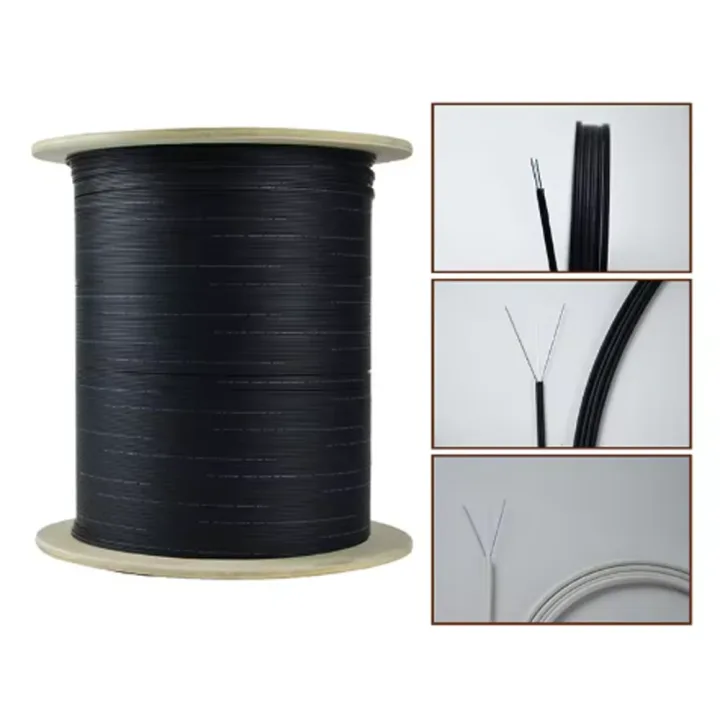
A subscriber-drop cable family with G.657A1 or G.657A2 fiber, selected by route shape, reinforcement and jacket for compact access-network connections to customer premises.
Bend-Insensitive FTTH Drop Cable serves the final connection between an access-network distribution point and the subscriber. That segment often passes through constrained entry points and indoor pathways, making cable shape and bend management important selection factors.
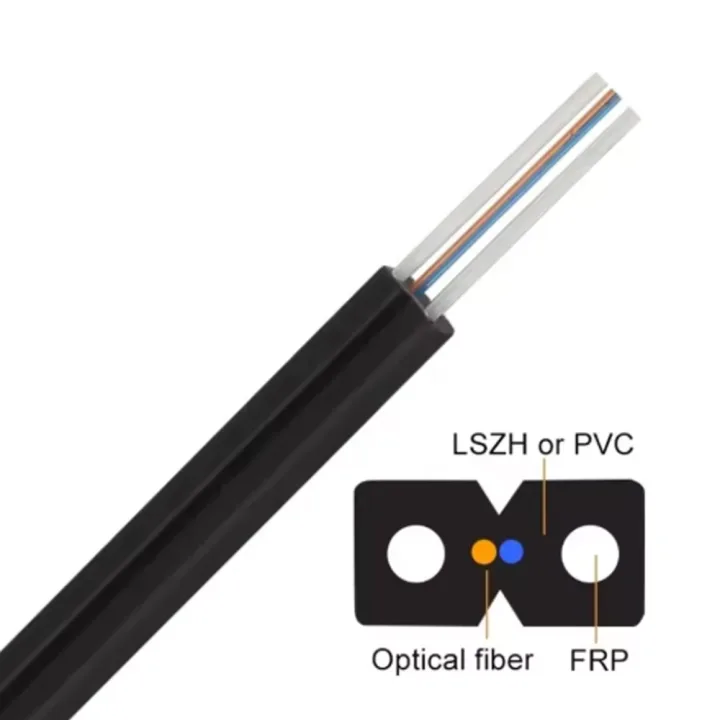
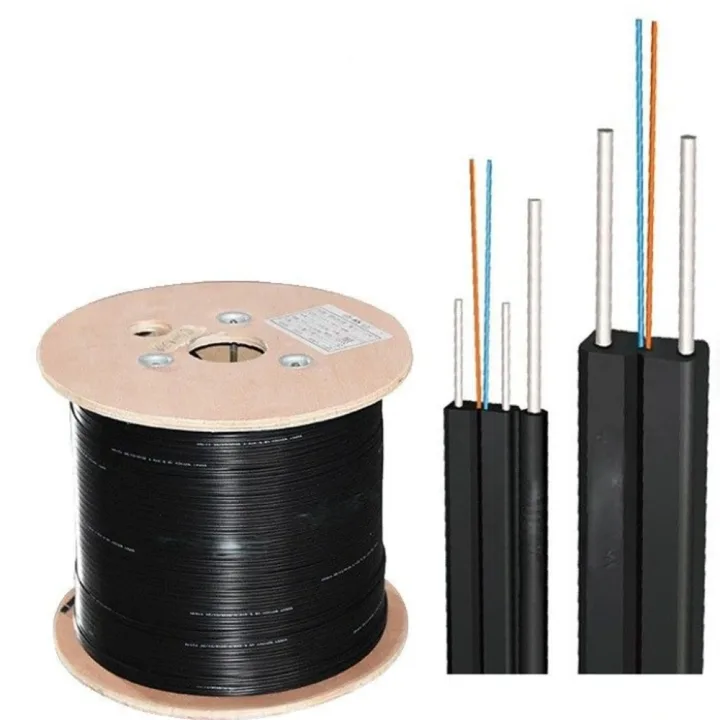
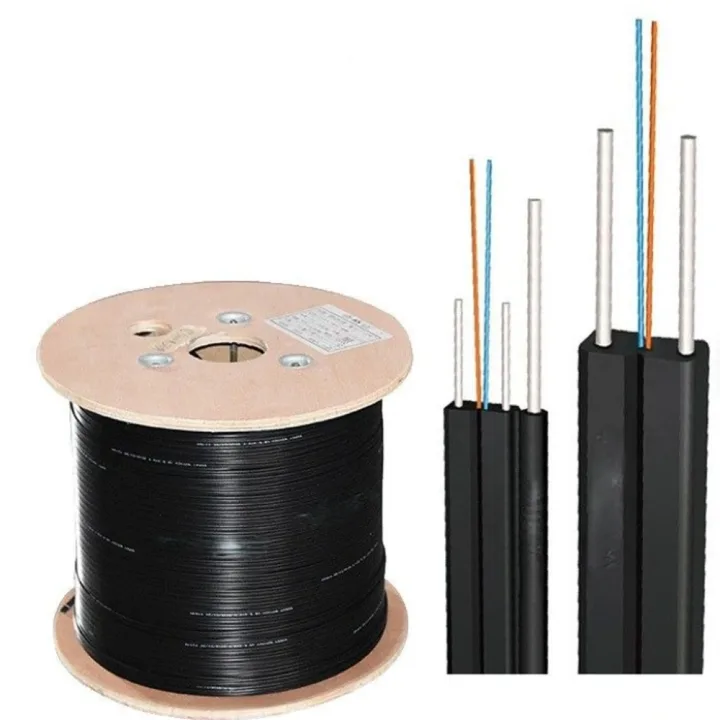
The current product family covers flat, round and self-supporting structures. Each must be specified for its intended route; choosing bend-insensitive fiber does not make every jacket or strength-member arrangement suitable for every indoor or outdoor installation.
Choose the mechanical structure first: identify indoor routing, an exposed outdoor section or a self-supporting span. Then specify fiber grade, count, jacket and termination. Obtain the bend and tensile limits for that exact construction, including the distinction between installation and installed conditions.
As a communications-infrastructure manufacturer, Huijue Group can review OEM or private-label drop cables from route drawings, an existing cable sample or an assembly schedule. Construction changes, tooling, optical/mechanical tests, order quantity and delivery scope need engineering confirmation.
Provide route type, fiber grade and count, cable shape, reinforcement, jacket, lengths, entry constraints, termination needs and any span or pulling conditions.
| Fiber type | Single-mode G.657A1 / G.657A2 |
| Fiber count | 1–4 fibers; custom configurations available |
| Cable structure | Flat / round / self-supporting |
| Strength member | Steel wire / FRP |
| Jacket options | LSZH / PVC / PE |
| Attenuation | ≤0.35 dB/km at 1310 nm; ≤0.21 dB/km at 1550 nm |
| Operating temperature | -40°C to +70°C |
| Installation | Indoor / outdoor / aerial |
The current table lists -40°C to 70°C operation. Confirm jacket suitability for the route and the required indoor fire or outdoor exposure criteria.
Buyer Questions
Answers specific to Bend-Insensitive FTTH Drop Cable selection, configuration and purchasing.
No. The fiber grade and finished cable still have bend limits. Use the approved installation and static limits for the selected construction.
Specify the span, supports and weather conditions for a self-supporting construction review. An indoor flat drop version should not be selected from fiber grade alone.
No. Select the jacket against the building's pathway and fire requirements, and confirm any transition from an outdoor section.
Use the deployment context to narrow the configuration before comparing dimensions, capacities and options.
Select indoor, outdoor or armored constructions around fiber count, route length and installation method.
Coordinate feeder, distribution and drop cables with the building-entry and subscriber topology.
Match tensile, crush, moisture and armor requirements to poles, ducts or direct-buried routes.
Use FTTA or hybrid constructions where optical transmission and site power share a route.
Before quotation: confirm capacity, interfaces, installation environment, power conditions, quantity and required options.