
Core equipment rooms
Coordinate DC power, distribution, batteries and monitoring around communications loads.
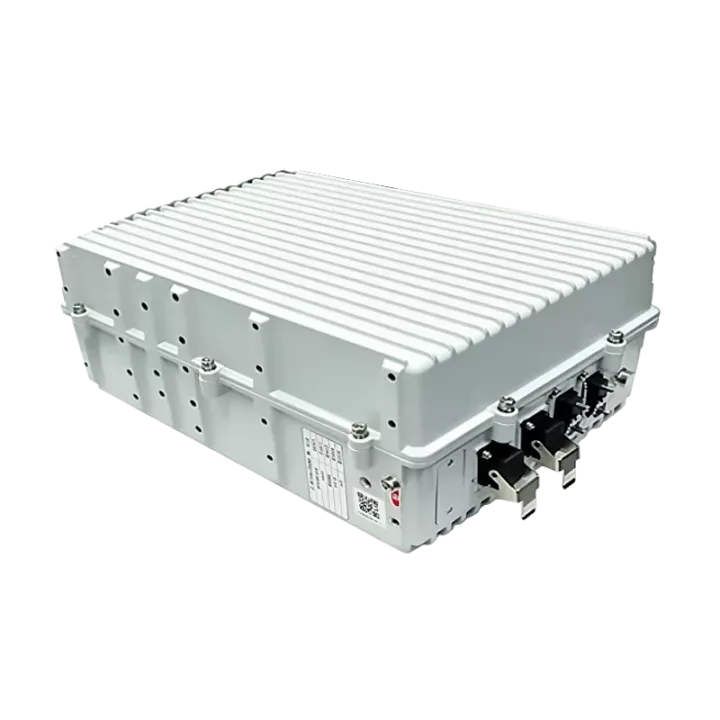
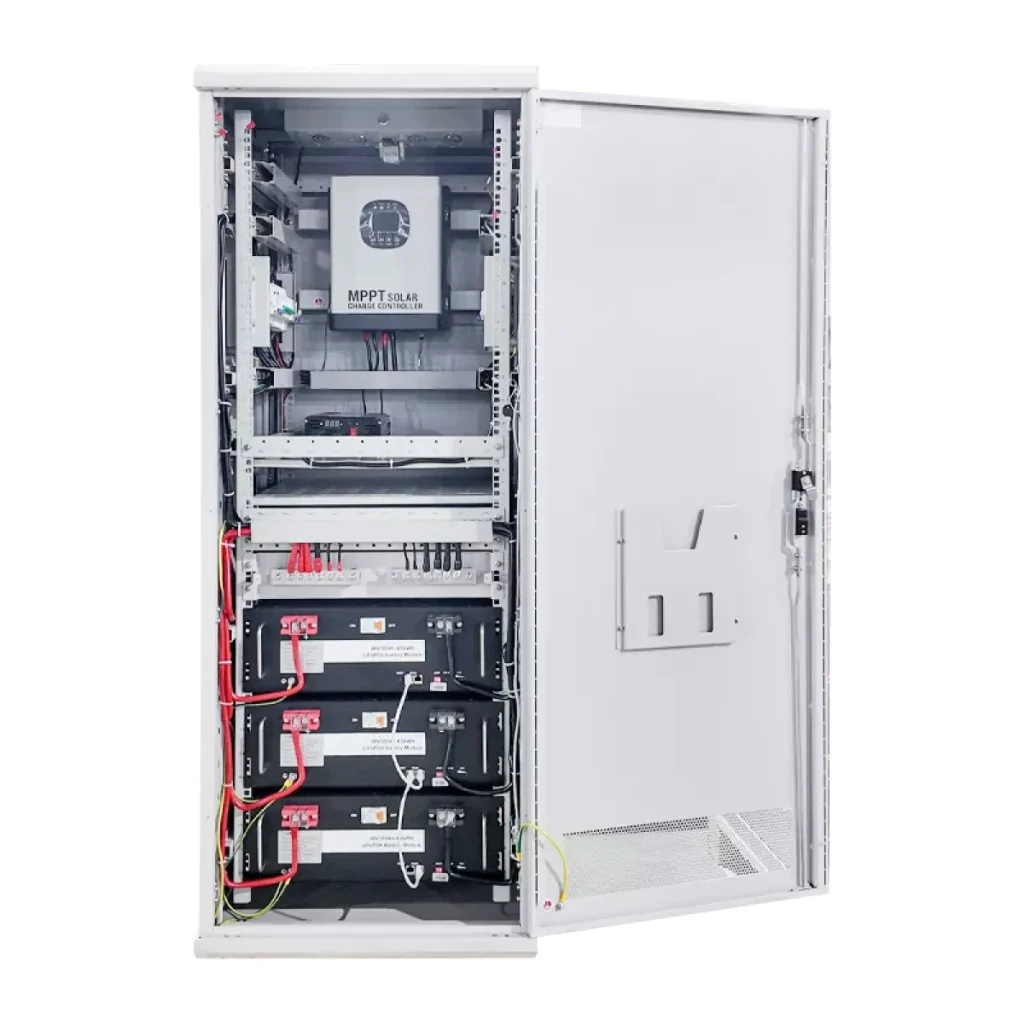
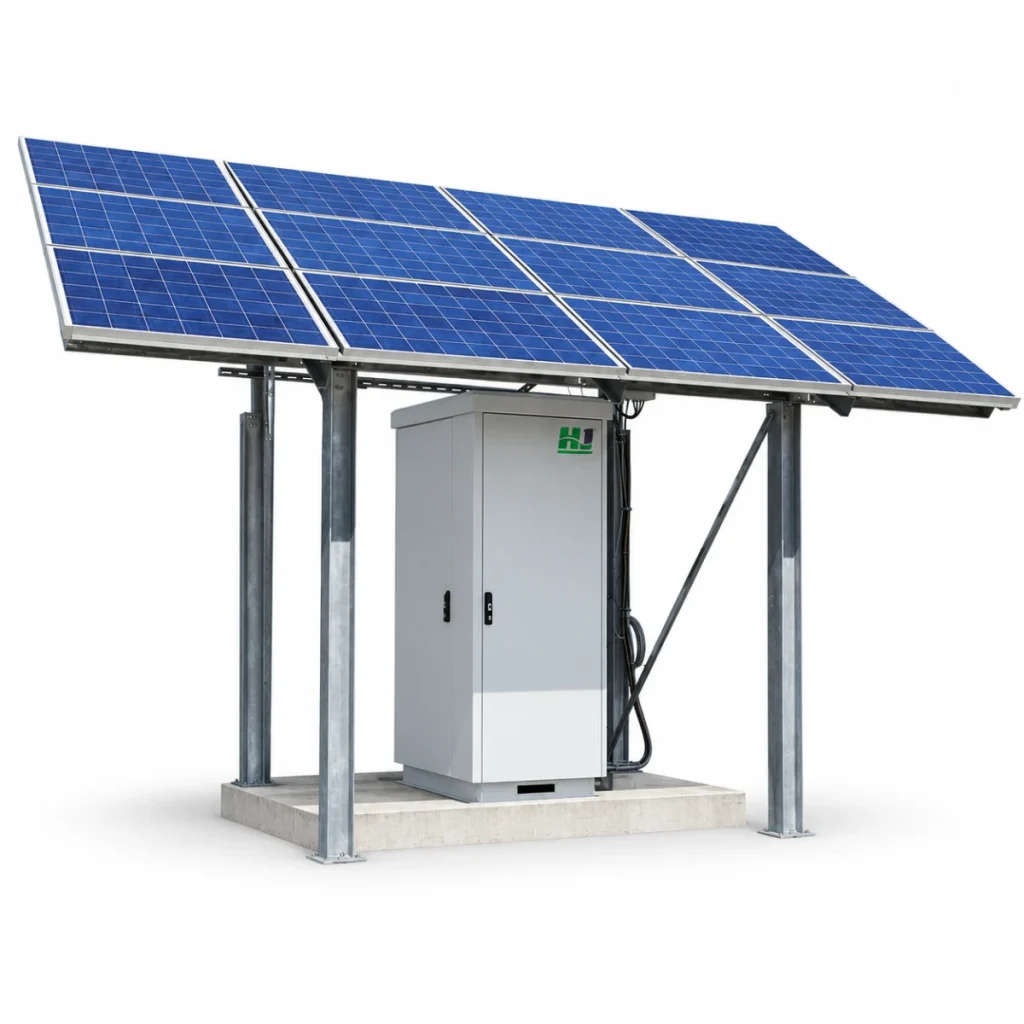
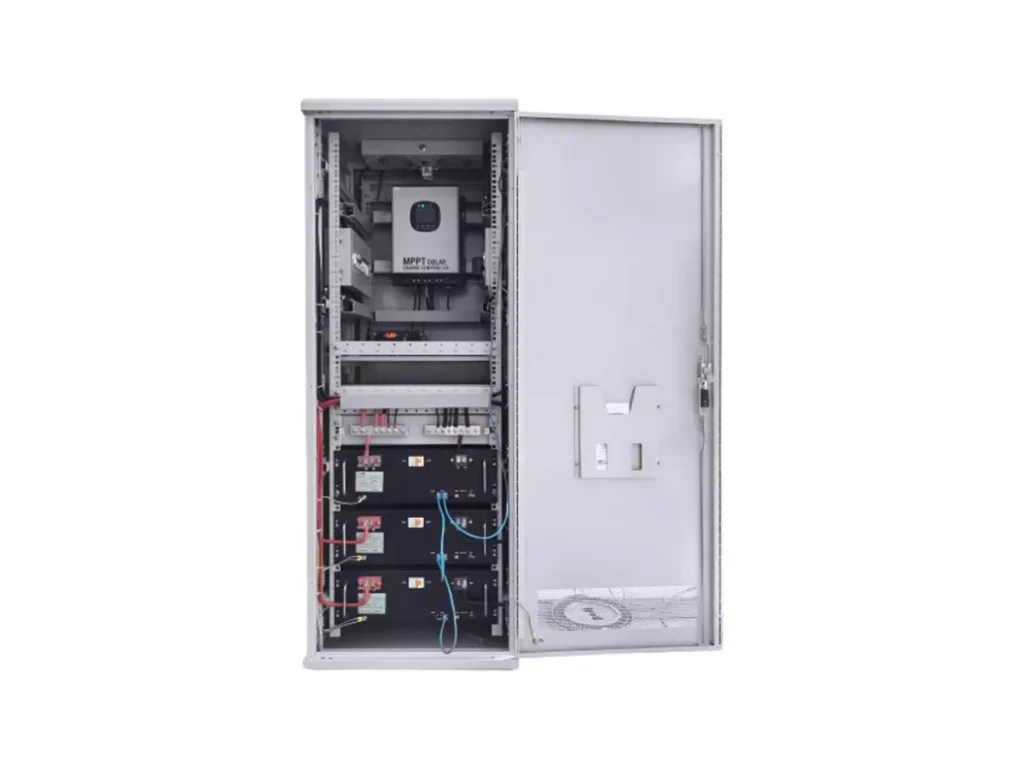
Modular outdoor 48 V site power integrating AC/DC distribution, monitored branches and battery connections in a naturally cooled aluminum enclosure.
The Outdoor Integrated Power Supply brings the DC power plant closer to macro, small and micro base-station equipment. Its architecture combines conversion, AC/DC distribution, surge protection, monitoring and wireless communication in modules that can be assembled for the site’s load and backup requirement.
The source family includes 1 kW, 2 kW, 3 kW and 6 kW supplies plus separate 20 Ah/960 Wh and 50 Ah/2400 Wh battery modules. Because these components have different functions, the project bill of materials should state the power unit and batteries separately.
Match simultaneous radio load, branch count and battery recovery current to the selected supply. The source table combines power units and battery accessories, so confirm dimensions, weight and connectors on the final unit drawing. State the required radio/network reporting method and which remote branch actions the operating team needs.
Huijue Group can assess modular arrangements from drawings or reference samples, including private-label presentation and OEM connection layouts. Engineering reviews physical feasibility, mounting tooling, sealing and thermal tests, order quantity and the scope of supplied batteries and accessories.
Include site load and output voltage, power-unit rating, battery autonomy, DC branch currents, wall/pole dimensions, monitoring service and installation climate.
| Category | Data Parameters | |||||
|---|---|---|---|---|---|---|
| Model | HJ048(1kW) | HJ048(2kW) | HJ048(3kW) | HJ048(6kW) | HJ04820L | HJ04850L |
| Capacity | 1000W | 2000W | 3000W | 6000W | 20Ah/960Wh | 50Ah/2400Wh |
| Dimensions | 367*483*175(mm) | 400*305*75(mm) | 442*342*100(mm) | 425*310*121(mm) | 425*310*170(mm) | |
| Weight | ≤33kg | ≤9kg | ≤16kg | 20Kg | 30Kg | |
| Battery capacity | 20Ah | Used with modular assembled batteries | 1200 cycles (default 5A charge) | 1200 cycles (default 5A charge) | ||
| Output distribution | DC output: 3*40A | DC output: 3*40A battery/parallel port: 1*60A | DC output: 7*40A battery/parallel ports: 2*125A | 2*60A aviation connectors | 2*60A aviation connectors |
IP65 applies to the documented enclosure arrangement. Check complete connector sealing, natural airflow clearance, solar heating and mounting loads for the final assembly.
Buyer Questions
Answers specific to Outdoor Integrated Power Supply selection, configuration and purchasing.
The described intelligent load-management function supports branch disconnect/reclose and branch metering. Specify the number of controlled circuits and the monitoring interface for the ordered version.
They are battery-module capacities. The separate power supplies are selected in watts, and the battery size is selected from the backup-energy requirement.
Pole and wall installation are supported. Confirm bracket design, pole diameter, full assembly weight and cable routing on the project mounting drawing.
Use the deployment context to narrow the configuration before comparing dimensions, capacities and options.
Coordinate DC power, distribution, batteries and monitoring around communications loads.
Use integrated or wall-mounted systems where equipment space is limited.
Match generation, storage and power conversion to load and autonomy requirements.
Combine grid, solar, battery or generator inputs around a defined operating strategy.
Before quotation: confirm capacity, interfaces, installation environment, power conditions, quantity and required options.