
Equipment rooms
Organize racks, pathways and service access around active network equipment.
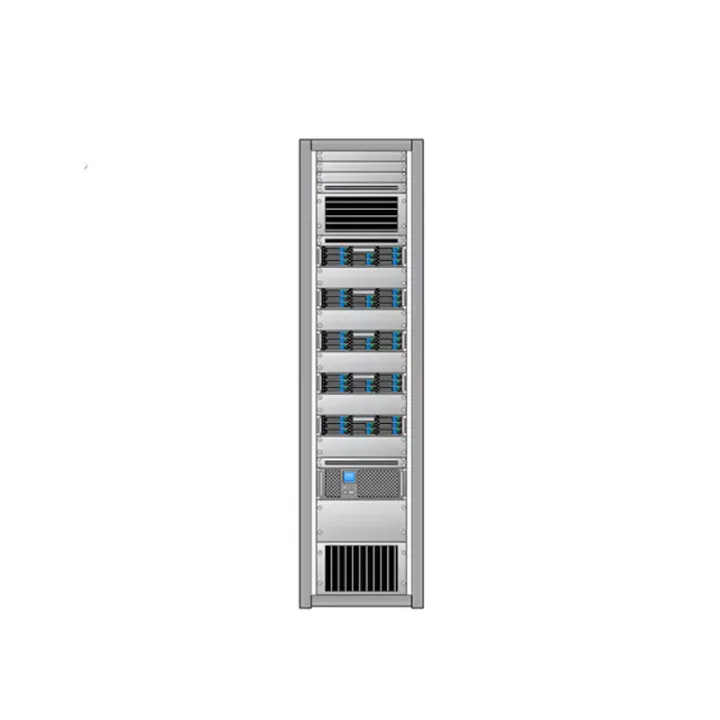
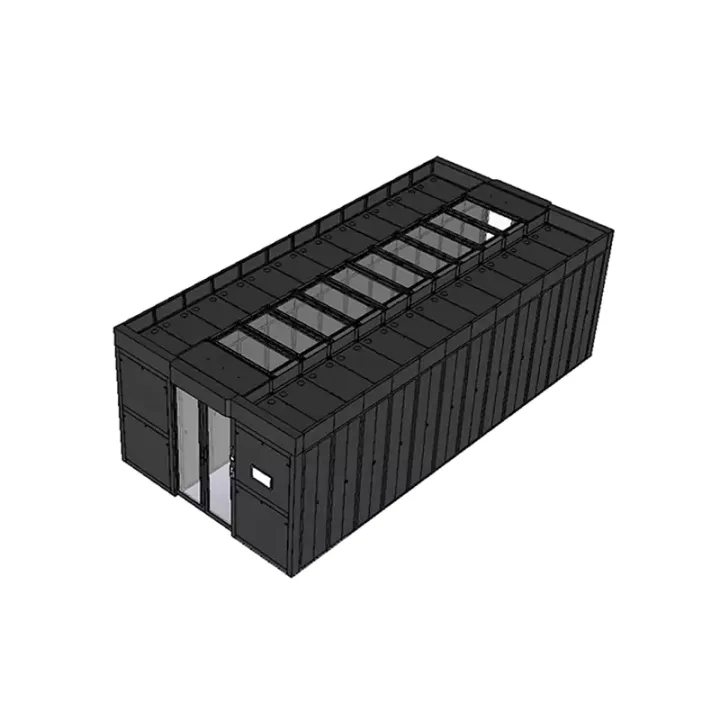
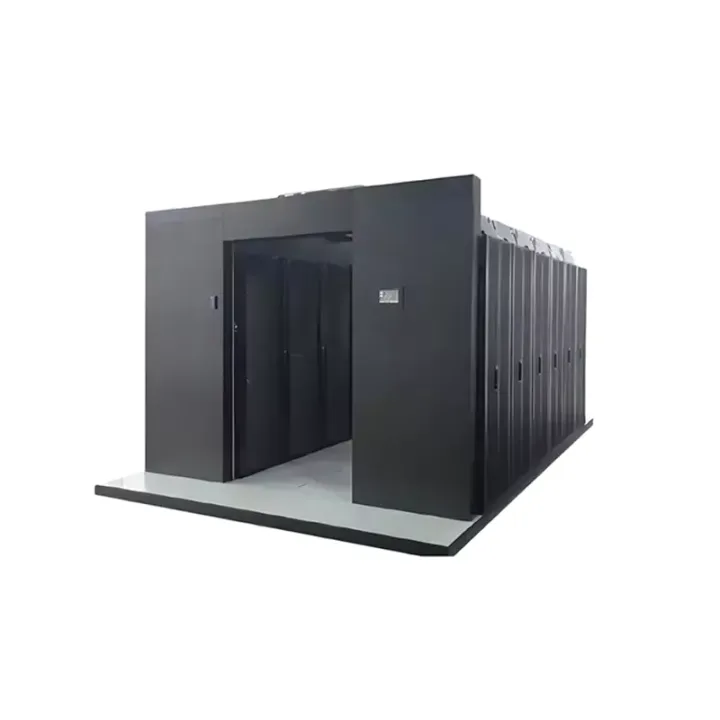
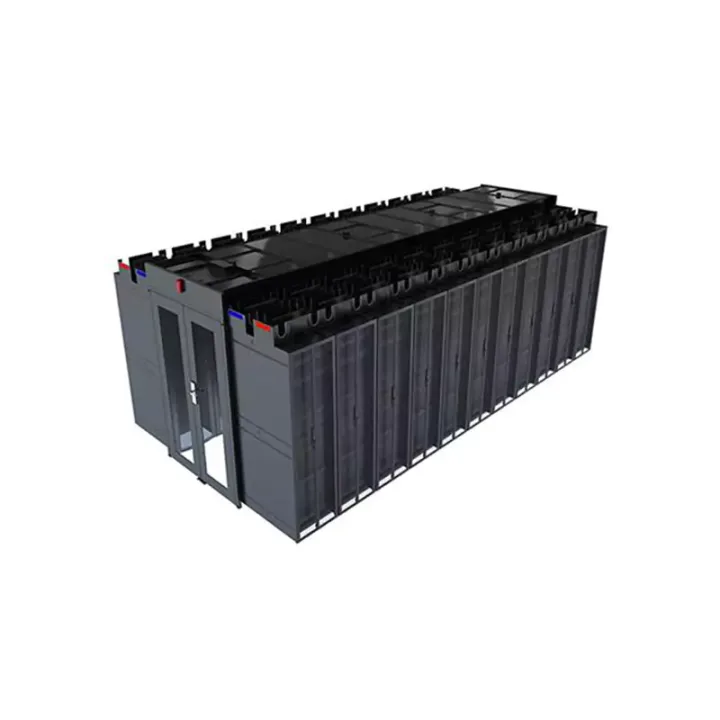
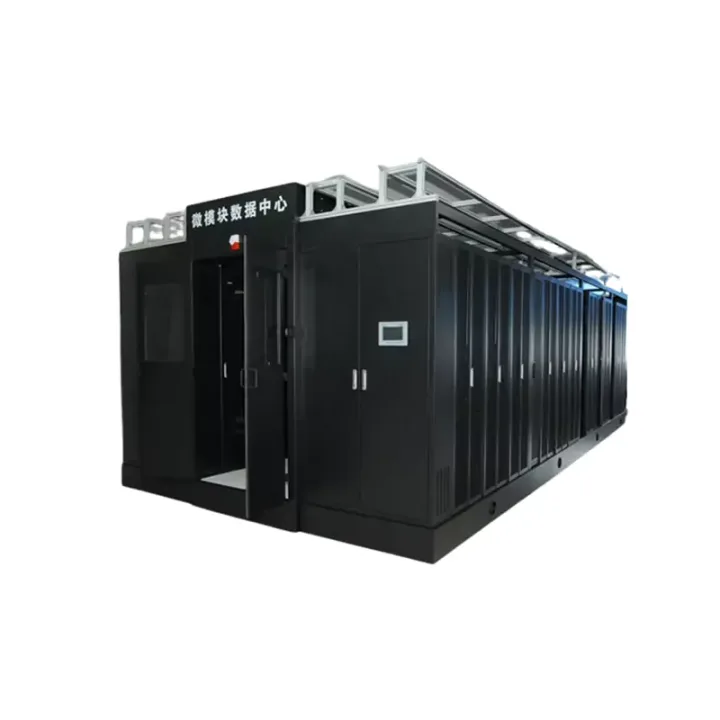
A cabinet-level micro data-center solution integrating rack space, UPS, distribution, cooling and monitoring for small IT installations and documented multi-cabinet arrangements.
The cabinet reference is 2000 or 2200 mm high, 600 mm wide and 1350 mm deep, with 42U or 46U format. The single-cabinet cooling reference is 3.5 kW at L35/L35, using 220 V AC, 50 Hz supply. The source describes rack-mounted cooling, hot/cold airflow separation and local touch-screen operation.
The HR1000 Rack-Based Micro Data Center brings the infrastructure for a small IT installation into a cabinet-based assembly. Rack space, power distribution, UPS, cooling and monitoring are coordinated around the equipment rather than treated as independent room systems.
The source includes a single-cabinet configuration and a separate two- to three-cabinet arrangement. These configurations have different combined cooling and load references, so the desired system boundary must be established before quoting.
Specify usable IT space after infrastructure is installed, device heat loads and supply requirements. Select battery runtime from the actual load rather than assuming the 15–30 minute source reference applies to every order. For a two- or three-cabinet system, confirm shared equipment, the stated 10 kW combined IT-load reference and how redundancy is implemented.
For HR1000 deployments, Huijue Group can review private-label identification, OEM assembly drawings and sample-based mechanical interfaces. Engineering review must establish the feasible configuration, tooling, system tests, quantity and delivery scope.
Include the single- or multi-cabinet preference, equipment schedule, IT load, autonomy, feed arrangement, required alarms, room dimensions and cooling service requirements.
| Single cabinet configuration table | |||
|---|---|---|---|
| Cabinet system | |||
| Dimensions (H x W x D MM) | 2000(2200)X 600X 1350 | ||
| Capacity | 42U(46U) | ||
| Protection Rating | IP30 | ||
| Operating Temperature | -20℃~45℃ | ||
| Installation | Concrete floor, raised floor | ||
| Maximum load per cabinet | 6KW | ||
| IT cabinet bearing requirements | Static load 1500kg, dynamic load 1000kg | ||
| Cooling System | |||
| Rated AC input power supply | 220V AC 50Hz | ||
| Cooling capacity (L35/L35) | 3.5KW | ||
| Rated Input Power | 1270W | ||
| Rated current | 8A | ||
| Heating Capacity | 1000W | ||
| Refrigerant | R410A | ||
| Sensible Heat Ratio (SHR) | ≥0.99 | ||
| Energy Efficiency Ratio | ≥3.2 | ||
| Air distribution | Front air supply, rear air return | ||
| Installation | Rack mounting | ||
| • Distribution System | |||
| Lightning protection level | Class C, In 20ka, Imax40ka | ||
| Power Input | Single and dual channels optional | ||
| Dual Power Switching System | Optional for 2-way input | ||
| UPS Capacity | 6KVA / 10KVA | ||
| UPS Architecture | N、N+1、2N | ||
| Input Voltage | 220V Single Phase 380V Three Phase | ||
| Output voltage | 220V~240V AC 50Hz 380V~400V AC 50Hz | ||
| Output power factor | 0.9 | ||
| Battery Configuration | Rack-mounted lithium batteries, lithium battery cabinets | ||
| Backup time | 15~30min | ||
| Maintenance Bypass | Standard | ||
| Monitoring system | |||
| Monitoring system | Support remote web interface access | ||
| Local Interface | Standard 10-inch touch screen | ||
| Mobile O&M | Mobile App, SMS Alerts | ||
| Smoke detector | Optional | ||
| Water Leak Detection | Optional | ||
| Temperature and humidity | Optional | ||
| Door Lock | Optional | ||
| Video monitoring | Optional | ||
| Multi-cabinet configuration table | |||
| Cabinet system | Cooling System | ||
| Dimensions (H x W x D MM) | 2000(2200)X 600X 1350 | Rated AC input power supply | 220V AC 50Hz |
| System Layout / Configuration | Multiple cabinets | Cooling capacity (L35/L35) | 3.5KW*2 |
| Number of single cabinets | 2-3 units | Rated Input Power | 1270W*2 |
| Capacity | 42U (46U) * number of cabinets | Rated current | 8A |
| Protection Rating | IP30 | Heating Capacity | 1000W*2 |
| Operating Temperature | -20℃~45℃ | Refrigerant | R410A |
| Installation | Concrete floor, raised floor | Sensible Heat Ratio (SHR) | ≥0.99 |
| Maximum load per cabinet | 6KW | Energy Efficiency Ratio | ≥3.2 |
| Supports maximum power consumption of IT load | 10KW | Air distribution | Front air supply, rear air return |
| IT cabinet bearing requirements | Static load 1500kg, dynamic load 1000kg | Installation | Rack mounting |
| • Distribution System | Monitoring system | ||
| Lightning protection level | Class C, In 20ka, Imax40ka | Monitoring system | Support remote web interface access |
| Power Input | Single and dual channels optional | Local Interface | Standard 10-inch touch screen |
| Dual Power Switching System | Optional for 2-way input | Mobile O&M | Mobile App, SMS Alerts |
| UPS Capacity | 10KVA | Smoke detector | Optional |
| UPS Architecture | N、N+1、2N | Water Leak Detection | Optional |
| Input Voltage | 220V Single Phase 380V Three Phase | Temperature and humidity | Optional |
Applicable to small IT rooms, cabinet-based edge installations and compact projects requiring coordinated power and cooling.
IP30 and -20°C to 45°C operation are listed, with concrete-floor or raised-floor installation. Confirm service space, room heat rejection and electrical connection conditions.
Buyer Questions
Answers specific to HR1000 Rack-Based Micro Data Center selection, configuration and purchasing.
Infrastructure may occupy part of the enclosure. Request a rack elevation showing the usable equipment space in the selected configuration.
Several sensor types are optional in the source. Agree an itemized sensor and alarm list, together with local and remote monitoring requirements.
A two- to three-cabinet arrangement is documented. Its power, cooling and shared infrastructure must be selected from that arrangement rather than extrapolated from one cabinet.
No project installation duration or PUE is established here. Both depend on site readiness, actual load, cooling conditions and the agreed scope.
Use the deployment context to narrow the configuration before comparing dimensions, capacities and options.
Organize racks, pathways and service access around active network equipment.
Coordinate cabinet capacity, cable routes, airflow and planned expansion.
Package network equipment within compact distributed infrastructure sites.
Add capacity while accounting for existing racks, routes and maintenance space.
Before quotation: confirm capacity, interfaces, installation environment, power conditions, quantity and required options.