
Telecom base stations
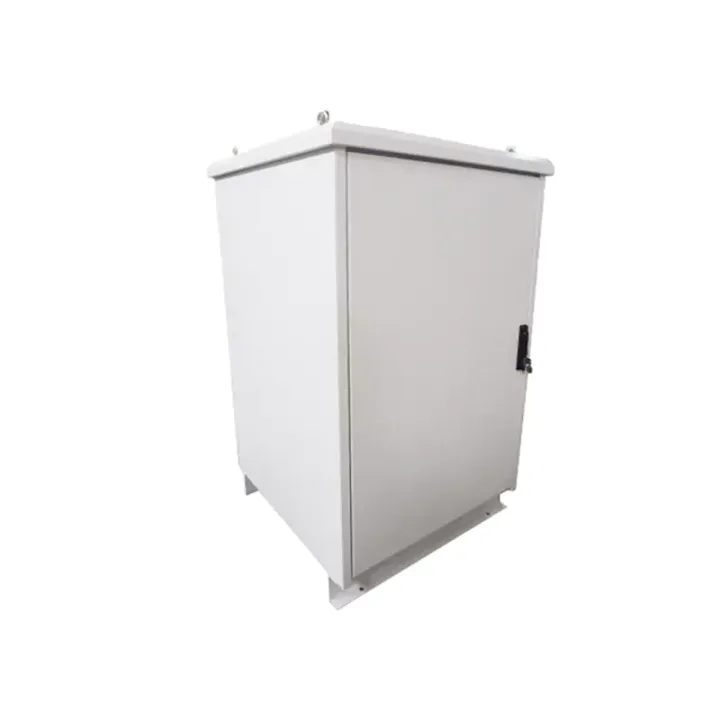
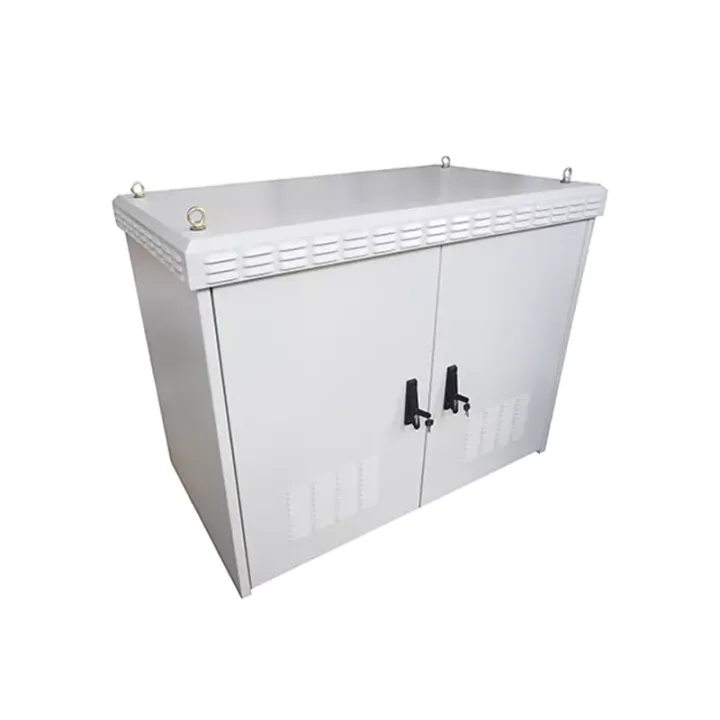
House communications, power and battery equipment in a serviceable outdoor enclosure.
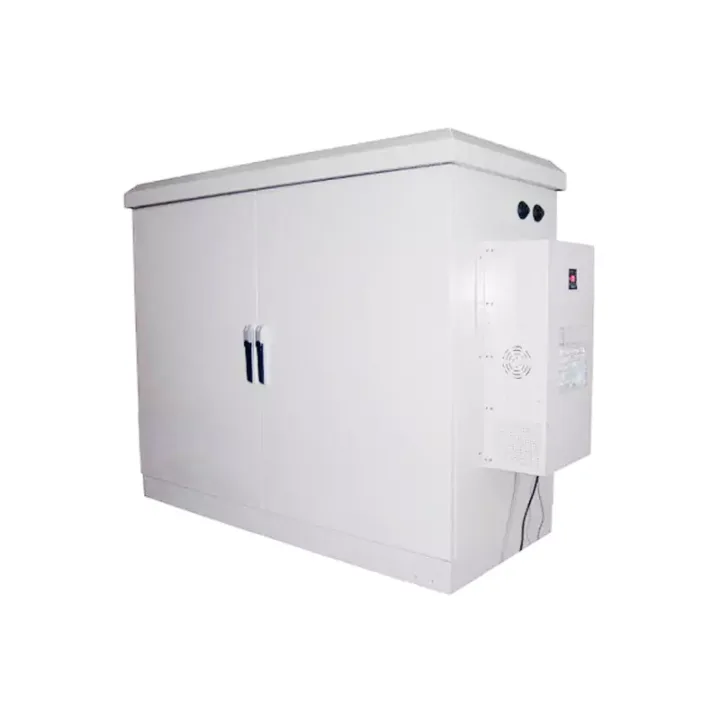
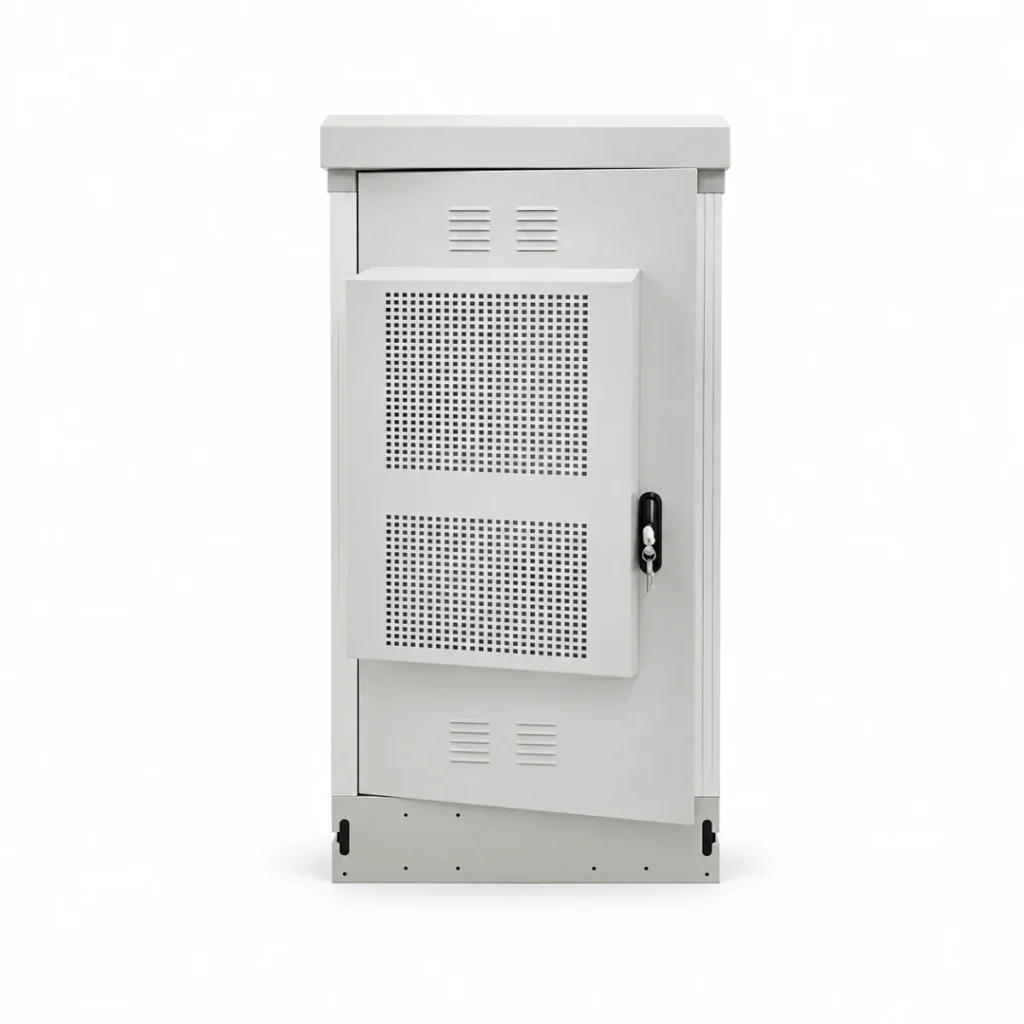
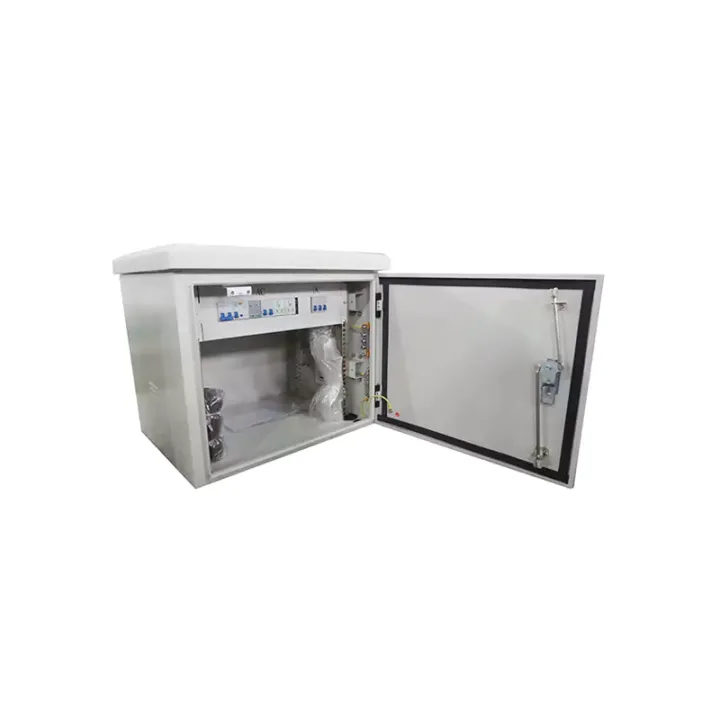
An insulated cabinet for local battery temperature control, with indoor and outdoor enclosure variants, serviceable doors and battery ventilation provisions for communications-site power systems.
All six enclosure faces include insulation. Doors can open or be removed for servicing, with a source-described maintenance depth within 800 mm. Equipotential bonding covers the enclosure and internal structures, and battery racks provide a protective earth terminal.
The documented variants use IP45 for indoor cabinets and IP55 for outdoor cabinets. Select the appropriate construction explicitly.
The Battery Thermostatic Cabinet creates a locally controlled environment around batteries rather than conditioning an entire equipment room to the battery requirement. It is intended to let the battery enclosure be selected around the temperature needs of the installed battery system.
The source includes provisions associated with stationary VRLA batteries, including hydrogen venting. Battery chemistry, charging behavior and ventilation must be reviewed together; this information does not establish suitability for every battery pack.
Huijue Group can review OEM battery enclosures, private-label identification and rack changes based on samples or drawings. Battery compatibility, tooling, safety and thermal testing, order quantity and delivery scope require engineering confirmation.
Send battery datasheets, rack arrangement, temperature targets, indoor/outdoor location, charging information and the maintenance procedure.
| Operating temperature | -5℃~55℃ |
|---|---|
| Storage temperature | -20℃~+55℃ |
| Operating relative humidity | ≤80% (at +30℃) |
| Storage relative humidity | ≤90%~96% (40℃±2℃) |
| Atmospheric pressure | 65~110 kPa |
Battery installations in communications equipment rooms and outdoor base stations where localized temperature control is required.
The published operating range is −5°C to +55°C, with operating relative humidity up to 80% at +30°C and atmospheric pressure 65–110 kPa. Confirm limits for the installed batteries and control equipment as well.
Buyer Questions
Answers specific to Battery Thermostatic Cabinet selection, configuration and purchasing.
Indoor IP45 and outdoor IP55 variants are documented. Order the variant appropriate to the installation environment.
A change of chemistry requires review of dimensions, BMS interfaces, heat generation and safety provisions. It is not an automatic substitution.
The stated test uses defined ambient conditions and no internal heat source. Real battery and charging loads require a separate thermal assessment.
Use the deployment context to narrow the configuration before comparing dimensions, capacities and options.
House communications, power and battery equipment in a serviceable outdoor enclosure.
Protect distributed equipment while maintaining cable entry and service access.
Coordinate cabinet capacity, thermal management and equipment zoning.
Fit protected infrastructure into space-constrained or visually sensitive locations.
Before quotation: confirm capacity, interfaces, installation environment, power conditions, quantity and required options.