
Core equipment rooms
Coordinate DC power, distribution, batteries and monitoring around communications loads.
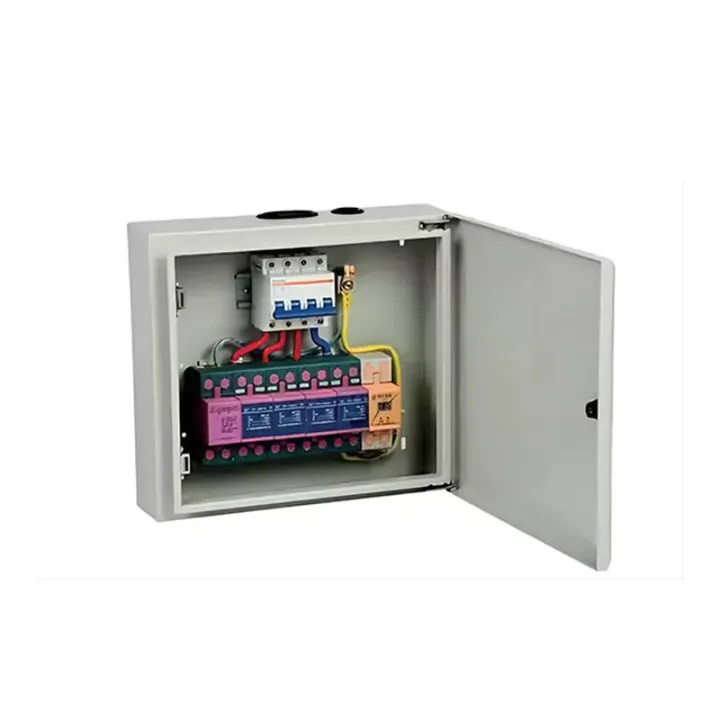
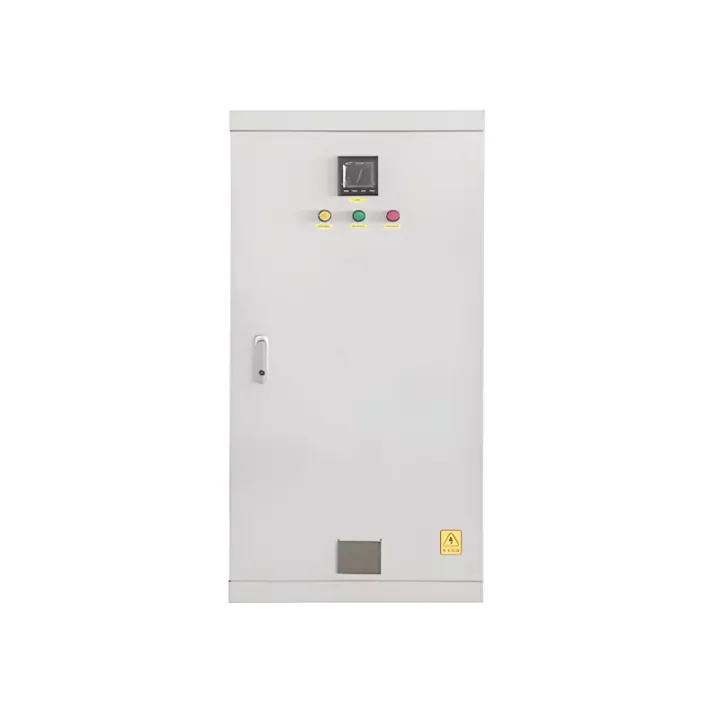
Power-line surge protection enclosure with status indication, degradation alarm, optional remote contacts and configurable dimensions.
The enclosed surge protective device (SPD) is installed at a power entry or distribution point to limit lightning-related overvoltage reaching downstream communications, transport, utility or control equipment. It combines the selected surge-protection arrangement with visible operating and failure status so maintenance personnel can identify degraded protection.
Available functions include independent supply indication, degradation alarm, automatic lightning-event counting and an optional remote interface for main-switch status. Dual-source layouts and top/bottom cable-entry arrangements can be reviewed when required by the incoming-power scheme.
Protection selection starts with supply topology, nominal voltage, earthing system, installation point and upstream/downstream coordination. State whether the box is the main incoming stage or a downstream stage, along with required poles, remote contacts and cable sizes. Published operating conditions are −5°C to 55°C and up to 80% RH at 30°C; verify the actual location against these values.
Huijue Group can assess an OEM or private-label surge-protection enclosure, including the component schedule, terminal layout and enclosure size. Drawings or reference samples are reviewed by engineering for feasibility, tooling, electrical clearances, protective-device coordination, test method, volume and delivery boundary before acceptance.
| Operating Temperature | -5℃~55℃ |
|---|---|
| Storage Temperature | -20℃~+55℃ |
| Operating Relative Humidity | Not more than 80% (at +30°C) |
| Storage Relative Humidity | ≤90%~96%(40℃±2℃) |
| Atmospheric Pressure | 65~110kpa |
| Product Dimensions | Customizable |
Listed operating range is −5°C to 55°C, with storage from −20°C to 55°C and atmospheric pressure from 65 to 110 kPa. Enclosure placement, moisture exposure and grounding conductor route must be confirmed for the site.
Buyer Questions
Answers specific to Enclosed Surge Protective Device (SPD) selection, configuration and purchasing.
No. The box depends on a correctly designed low-impedance grounding and bonding path. Provide the earthing scheme so lead length and protection coordination can be reviewed.
Degradation/failure indication is documented, while the listed remote option concerns main-switch status. Request a specific surge-failure alarm contact and have engineering confirm whether that function is included in the proposed build.
Yes, dimensions are project-configurable. Huijue Group checks device spacing, heat, cable bending radius and safe clearances before releasing a custom drawing.
Use the deployment context to narrow the configuration before comparing dimensions, capacities and options.
Coordinate DC power, distribution, batteries and monitoring around communications loads.
Use integrated or wall-mounted systems where equipment space is limited.
Match generation, storage and power conversion to load and autonomy requirements.
Combine grid, solar, battery or generator inputs around a defined operating strategy.
Before quotation: confirm capacity, interfaces, installation environment, power conditions, quantity and required options.