
Direct answer
Telecom site energy efficiency should be measured from a declared boundary and synchronized energy data, not inferred from one utility bill or a short power snapshot. Separate the energy used by ICT equipment from rectifier losses, cooling, lighting and other site-support loads, while documenting local renewable generation and the operating period being compared. Meter locations, data intervals, accuracy, missing-data rules and site conditions must remain consistent before trends or site rankings are interpreted. Traffic, ambient temperature, outages and maintenance events can change the result and should be retained with the energy record. ITU-T L.1350 and L.1351 provide site metrics and measurement methodology; they do not establish a universal efficiency target for every deployment or prove savings from a proposed product. Use the baseline to identify a testable improvement, then verify it over a comparable period.
Within the broader Integrated Telecom Site Energy workflow, this article focuses on telecom site energy efficiency: create a repeatable measurement boundary for telecom equipment and supporting-site energy use. Confirm site electrical boundary and the evidence for the offered product before final engineering approval.
Inputs required before any calculation
Create a repeatable measurement boundary for telecom equipment and supporting-site energy use. Start with the operating requirement and installation boundary, then separate system requirements from product claims so each supplier knows which evidence must accompany the offered configuration.
- Define the physical and electrical boundary of the measured telecom site.
- Separate ICT energy from power conversion, cooling and other supporting loads.
- Set meter locations, intervals, accuracy and missing-data treatment before collection.
Define the physical and electrical boundary of the measured telecom site
Capture Site electrical boundary, then use Whole-site baseline as a practical comparison point: A utility or main input meter defines total site energy. Before approval, verify this point: Boundary, local generation and missing data.
Separate ICT energy from power conversion, cooling and other supporting loads
Capture Meter and sensor inventory, then use Subsystem metering as a practical comparison point: ICT, rectifier, cooling and auxiliaries can be separated. Before approval, verify this point: Meter accuracy, synchronization and double counting.
Set meter locations, intervals, accuracy and missing-data treatment before collection
Capture ICT and support-load breakdown, then use Before-and-after verification as a practical comparison point: A specific efficiency change is being evaluated. Before approval, verify this point: Comparable duty, weather and configuration records.
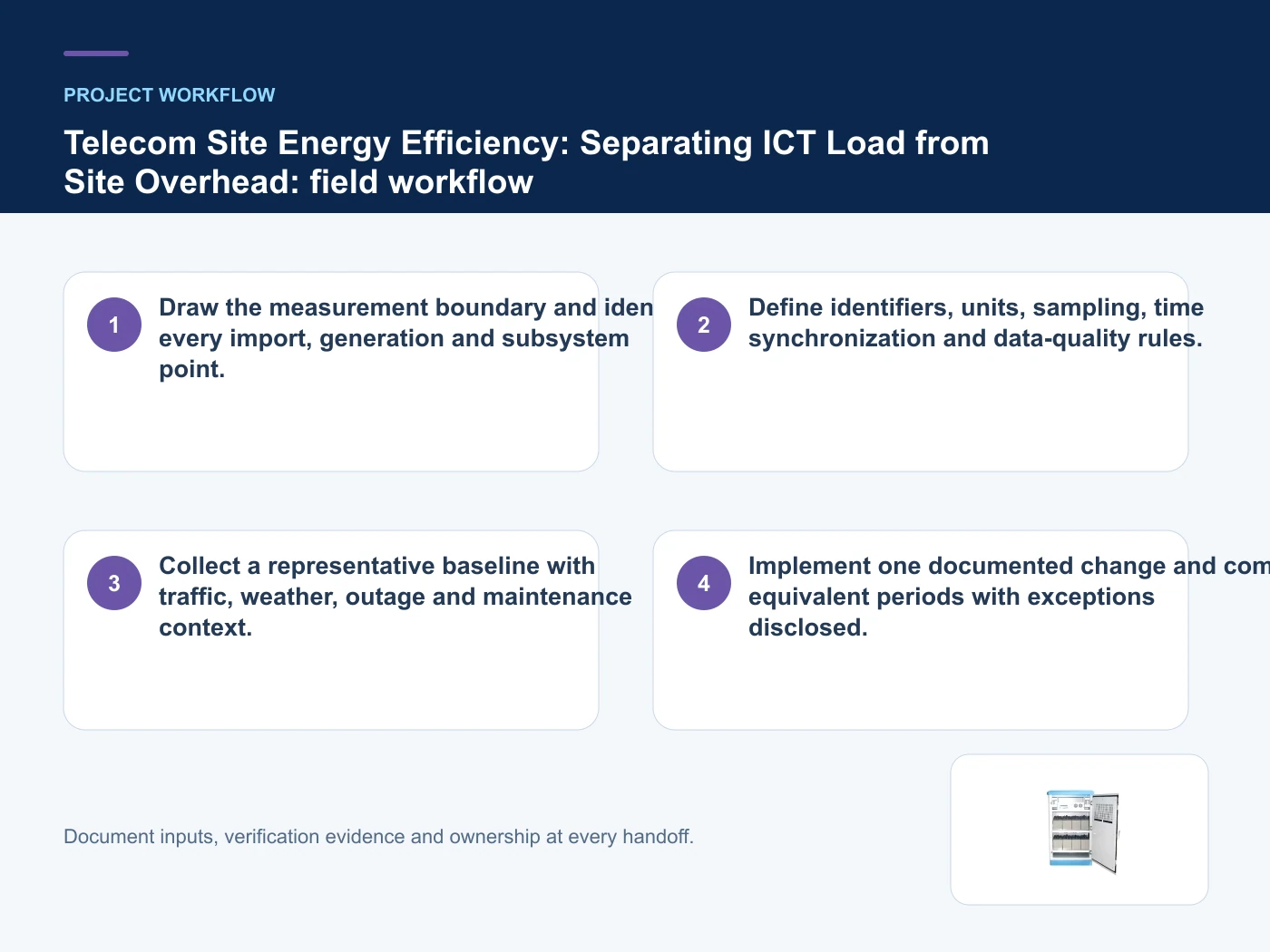
A traceable sizing and verification workflow
- Step 1: Draw the measurement boundary and identify every import, generation and subsystem point. Record Site electrical boundary as an explicit input. Boundary, local generation and missing data.
- Step 2: Define identifiers, units, sampling, time synchronization and data-quality rules. Record Meter and sensor inventory as an explicit input. Meter accuracy, synchronization and double counting.
- Step 3: Collect a representative baseline with traffic, weather, outage and maintenance context. Record ICT and support-load breakdown as an explicit input. Comparable duty, weather and configuration records.
Calculation boundaries and acceptance limits
This table connects integrated site architecture, hybrid energy, batteries, BMS, monitoring, energy metrics and FAT/SAT handover to the decision on telecom site energy efficiency. It is a decision aid rather than a universal performance table: exact capacity, environmental class, electrical or optical limits and certifications must come from the selected model, applicable project documents and verifiable test evidence.
| Option or input | When it fits | What must be verified |
|---|---|---|
| Whole-site baseline | A utility or main input meter defines total site energy | Boundary, local generation and missing data |
| Subsystem metering | ICT, rectifier, cooling and auxiliaries can be separated | Meter accuracy, synchronization and double counting |
Reference point: ITU-T L.1350: Energy efficiency metrics and measurement for telecommunication facilities and ITU-T L.1351: Energy efficiency metrics and measurement methods for telecommunication network infrastructure frame the terminology or method used for this telecom site energy efficiency comparison. They do not approve a product configuration; apply the edition named by the contract and local authority.
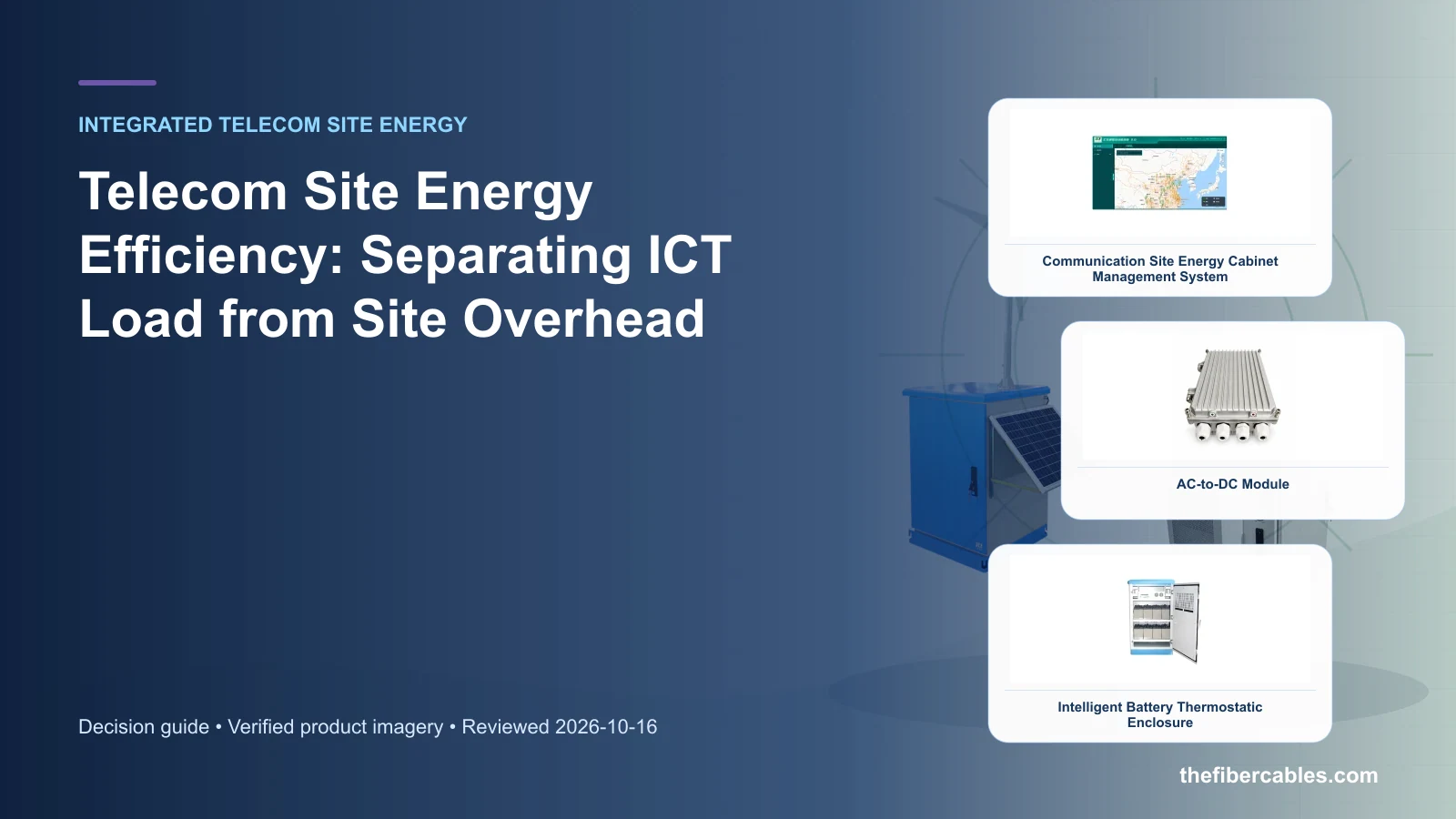
Relevant products from our communications portfolio
The products below connect the telecom site energy efficiency decision to real catalogue families and verified site photography. They are starting points, not a claim that every configuration described here is a standard stock item; confirm model, interface, rating, drawing and testing scope with the project team.
- Telecom Site Energy Management System (EMS) — use this product page as a configuration reference when you define the physical and electrical boundary of the measured telecom site. Confirm the offered model, interfaces, drawings and available evidence before quotation.
- Outdoor Telecom AC/DC Power Supply Module — use this product page as a configuration reference when you separate ICT energy from power conversion, cooling and other supporting loads. Confirm the offered model, interfaces, drawings and available evidence before quotation.
- Intelligent Battery Thermostatic Enclosure — use this product page as a configuration reference when you set meter locations, intervals, accuracy and missing-data treatment before collection. Confirm the offered model, interfaces, drawings and available evidence before quotation.
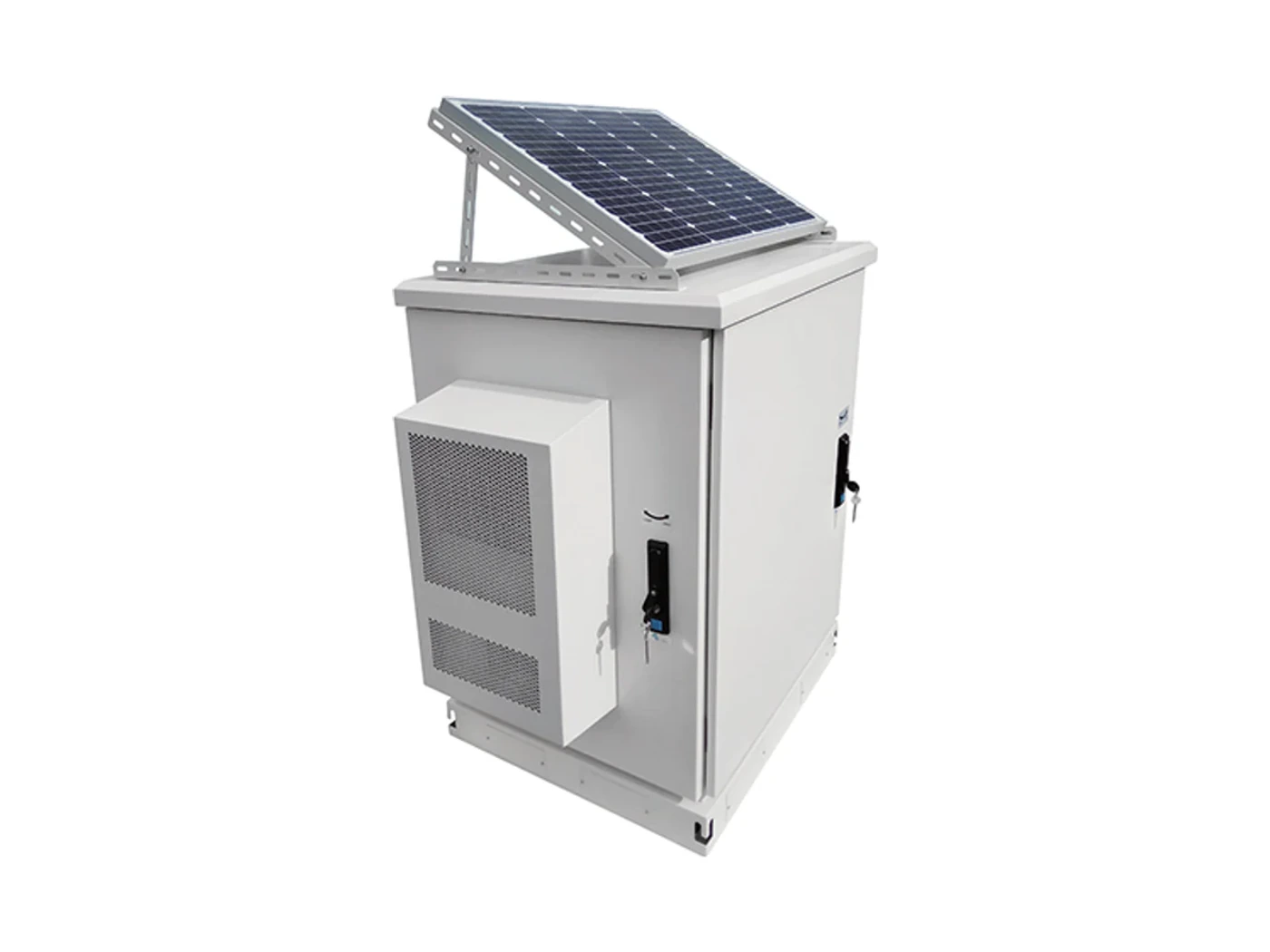
- Outdoor Integrated Power Supply — use this product page as a configuration reference when you choose comparison periods that account for traffic, weather, outages and configuration changes. Confirm the offered model, interfaces, drawings and available evidence before quotation.
For adjacent configurations, browse Telecom Power & Site Energy and compare those options against the telecom site energy efficiency inputs above, including site electrical boundary.
What to include in the RFQ or design input
For telecom site energy efficiency, a complete request reduces back-and-forth and prevents a catalogue image from being mistaken for a verified configuration. Record the following fields, identify which values are mandatory or provisional and attach route, interface or layout drawings where relevant.
- Site electrical boundary
- Meter and sensor inventory
- ICT and support-load breakdown
- Sampling interval
- Accuracy requirement
- Local generation treatment
- Traffic and environmental data
Common mistakes to avoid
- Comparing sites whose electrical and measurement boundaries are not equivalent.
- Treating a brief power reading as an energy-efficiency baseline.
Questions engineers and buyers ask
How should whole-site baseline be evaluated for telecom site energy efficiency?
Use a utility or main input meter defines total site energy as the operating context, record site electrical boundary, and verify boundary, local generation and missing data for the exact offered configuration.
Which project input can change the telecom site energy efficiency decision?
Define the physical and electrical boundary of the measured telecom site. Recheck that decision when meter and sensor inventory or ict and support-load breakdown changes.
Sources and standards
The references below define terminology, scope or test methods relevant to telecom site energy efficiency. They do not certify an offered product; confirm the edition adopted by the contract and destination authority.
- ITU-T L.1350: Energy efficiency metrics and measurement for telecommunication facilities (In force; reviewed 2026-10-16). Use it to verify the terminology and scope relevant to telecom site energy efficiency; the source does not certify a specific offered product.
- ITU-T L.1351: Energy efficiency metrics and measurement methods for telecommunication network infrastructure (In force; reviewed 2026-10-16). Use it to verify the terminology and scope relevant to telecom site energy efficiency; the source does not certify a specific offered product.
- ITU-T L.1395: Monitoring and control interface for power, cooling and building environment systems in telecommunication networks (2025 edition). Use it to verify the terminology and scope relevant to telecom site energy efficiency; the source does not certify a specific offered product.
Source review: Links and cited editions for telecom site energy efficiency were checked on 2026-10-16. Confirm the edition adopted by the project contract and the authority having jurisdiction.
Related guidance
Weak-Grid vs Off-Grid Telecom Power: Choosing Grid, PV, Battery and Generator Roles • Multi-Vendor Telecom Site Monitoring: Alarms, Timestamps, Protocols and NOC Mapping • Telecom Site Energy FAT and SAT Checklist: Power, Battery, Controls and Handover
Prepare a telecom site energy efficiency configuration for review
Send site electrical boundary, meter and sensor inventory, ict and support-load breakdown, sampling interval, quantity and delivery destination. Huijue Group can review the configuration boundary and identify the drawings or evidence needed for a factory quotation.
——END——