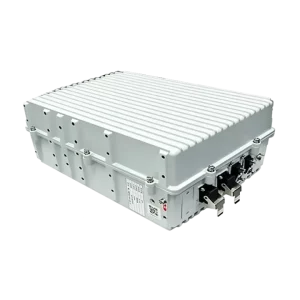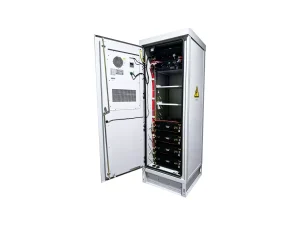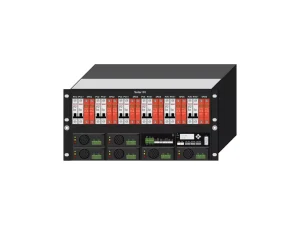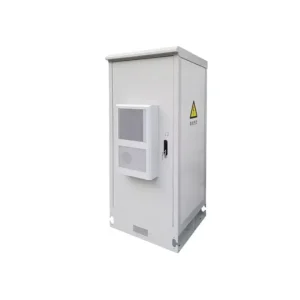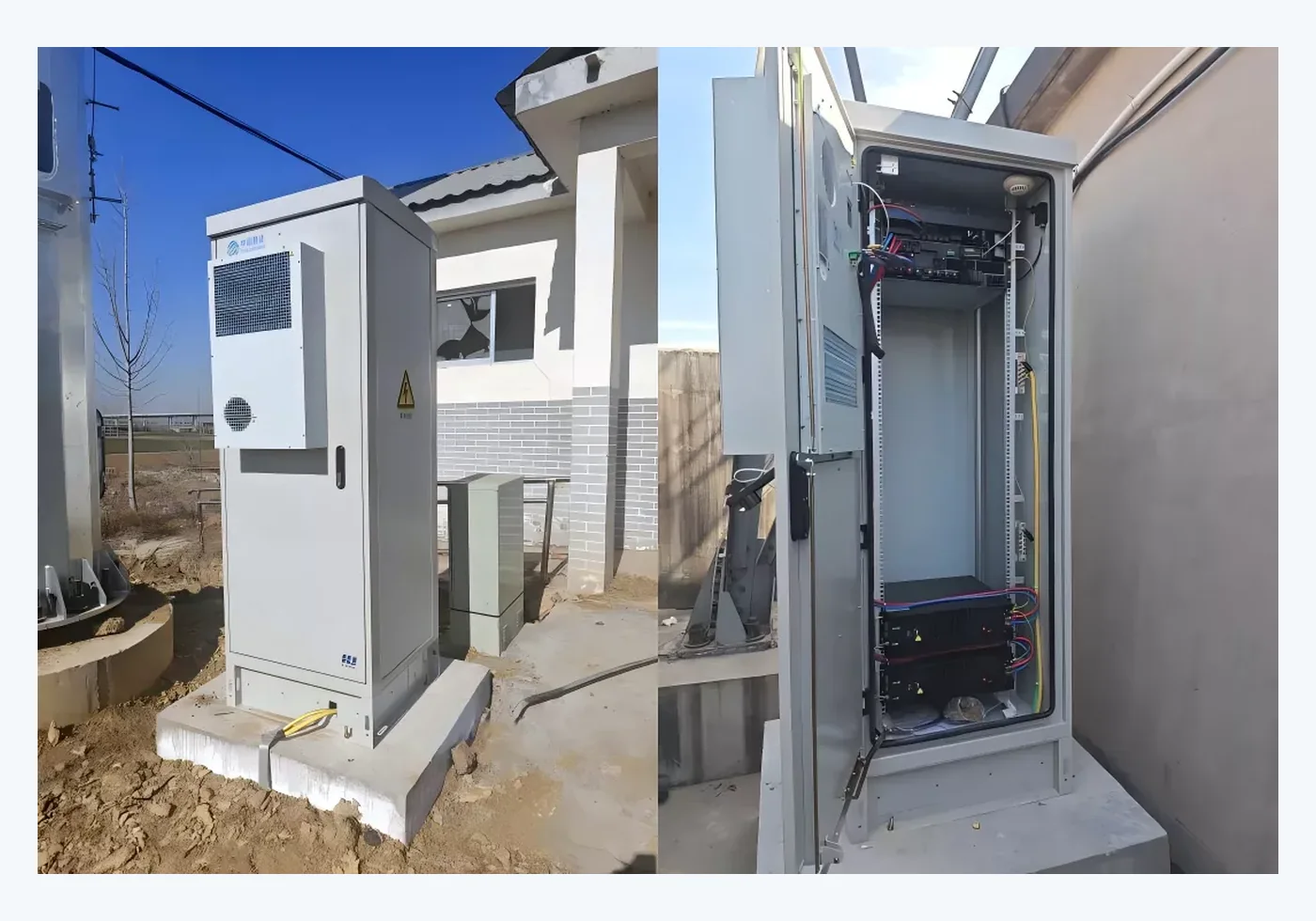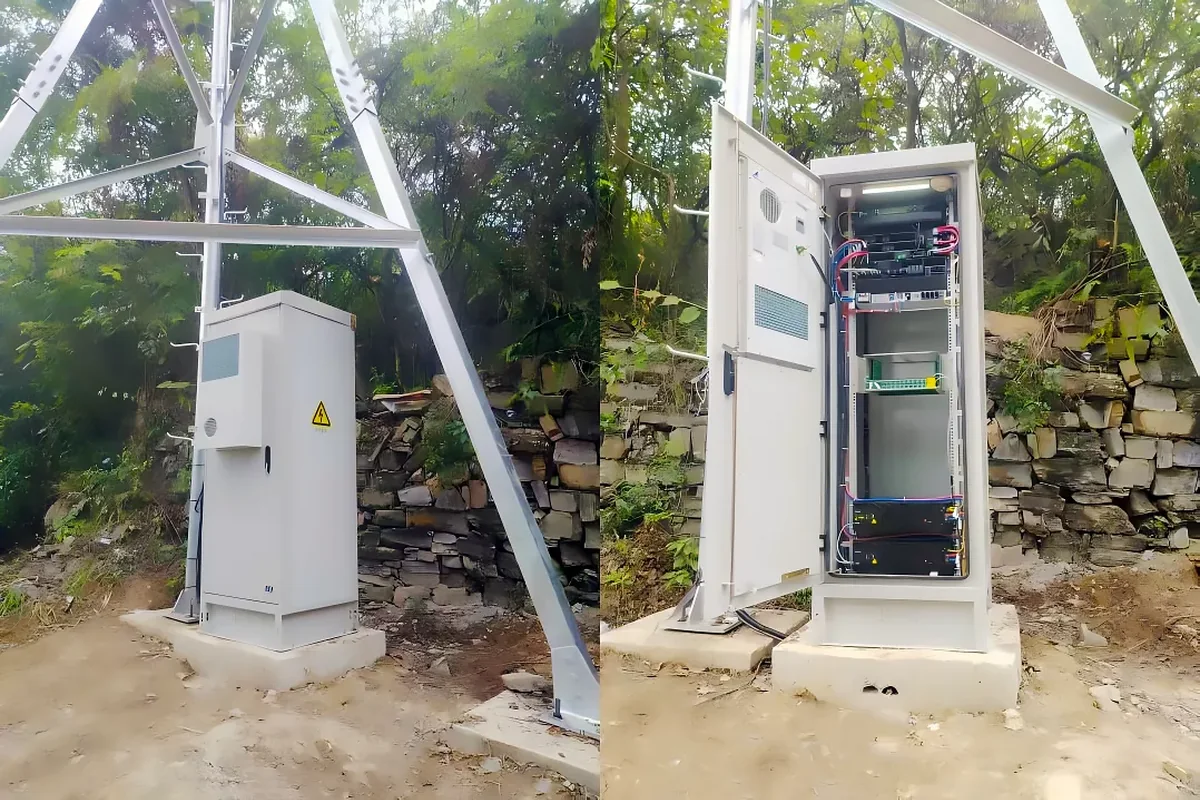
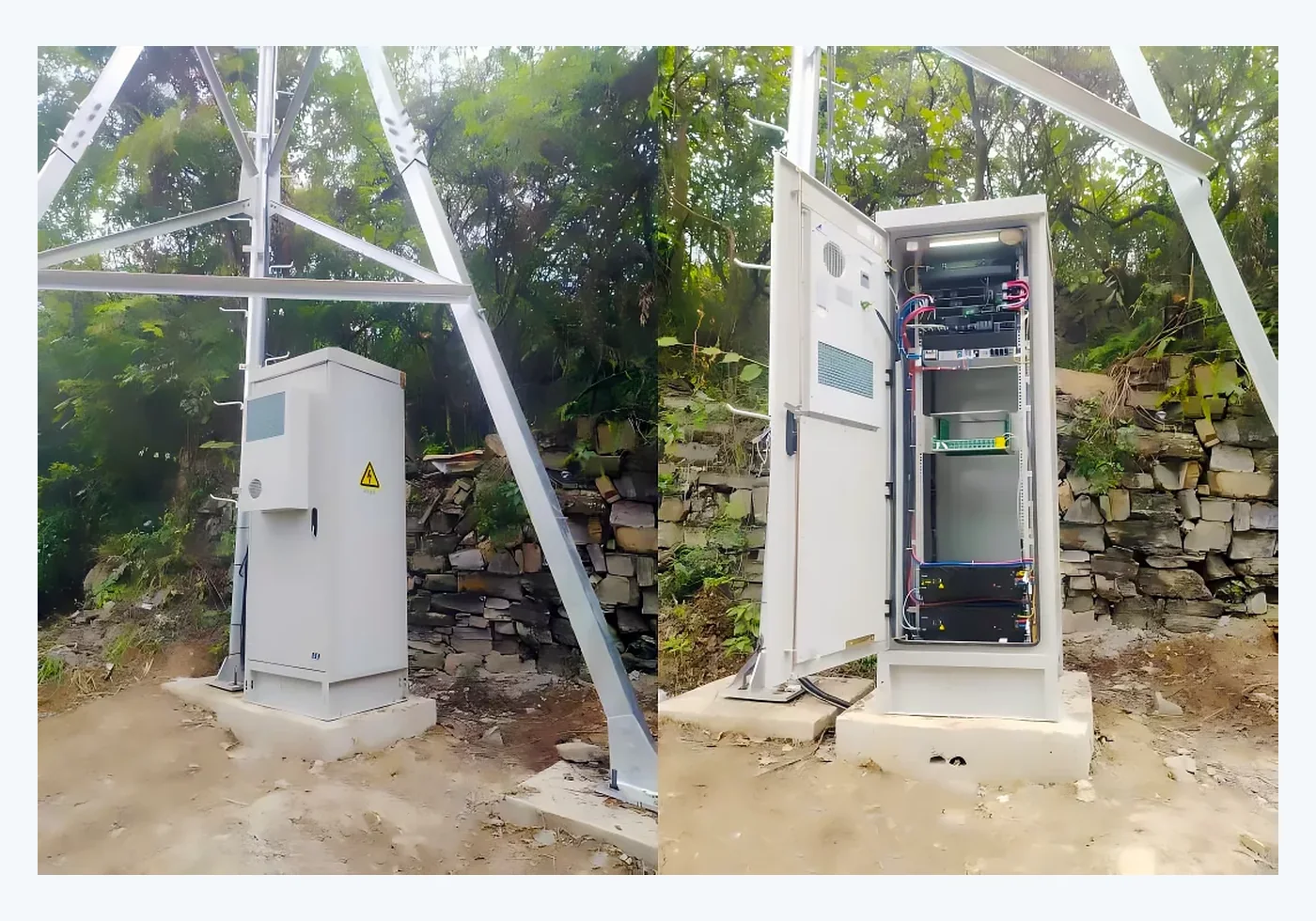
This carrier base-station project addressed a practical integration problem: outdoor communications equipment needed power conversion, AC and DC distribution, backup storage, environmental control and monitoring, but the site package also had to remain compact and serviceable. Huijue Group supplied an integrated outdoor energy-cabinet configuration in which those functions were coordinated inside one enclosure rather than assembled as unrelated field boxes.
Project requirement
The cabinet was intended for carrier communications sites in outdoor locations such as streetside areas, mountainous terrain and transport corridors, including environments with high or low temperatures. The project needed a protected equipment space with standard installation interfaces, controlled internal temperature, power-source management and centralized visibility of site conditions.
The integration boundary included the mechanical enclosure, telecommunications power, distribution, battery backup, environmental monitoring and site protection. Bringing those subsystems into a coordinated design reduces the number of cabinet-to-cabinet interfaces, but it also makes the approved internal arrangement essential: thermal zones, protective devices, cable routes and maintenance clearance must all be resolved before manufacture.
Documented system configuration
| Assembly | Documented configuration |
|---|---|
| Outdoor enclosure | 2200 mm high × 750 mm wide × 750 mm deep; steel frame and sandwich-panel construction. |
| Temperature control | 1500 W air conditioner. |
| Battery system | 48 V lithium iron phosphate backup storage within the integrated cabinet. |
| Monitoring | EMS-B2010 FSU unit for energy and site supervision. |
| Hybrid power section | Power shelf, rectifier modules, photovoltaic modules and a PV distribution frame, supporting management of more than one source type. |
This arrangement is comparable to the functions provided by an outdoor integrated power supply or an outdoor hybrid telecom energy cabinet. The exact product and internal bill of materials must still be matched to each operator’s load and site standards.
Three operating functions
Input-power limiting
The project brief describes local or remote settings that can limit total input power and phase input power. When the communications load rises, the system can use controlled battery discharge to supplement the restricted utility input. This is a power-management function; its permissible settings depend on the connected load, battery condition, conductor ratings and operator policy.
Time-based battery use
The system also supports configured periods for charging and discharging in response to peak and off-peak schedules. Battery state-of-charge and discharge cut-off settings are part of that control. The function can be enabled or disabled locally or remotely. Whether this operating mode is appropriate for another site requires a review of tariff rules, backup obligations and battery cycling strategy.
Photovoltaic expansion
The power shelf supports compatible rectifier and photovoltaic modules under common power-system supervision. This creates a path for adding solar generation without treating it as an isolated supply. Array size, controller compatibility, string protection and operating priority remain site-specific engineering items. A multi-source hybrid power system can be reviewed where the site needs broader source coordination.
Mechanical and maintenance considerations
The published project emphasizes a compact enclosure, independent thermal channels, modular production and the ability to extend the cabinet arrangement at the side or rear. Standard 19-inch equipment can be accommodated. Central monitoring may include temperature, humidity, smoke, water ingress and access control, while a three-point lock and the absence of exposed removable fasteners support physical security.
These features have to be translated into an approved site drawing. Rear or side expansion needs physical clearance; air-conditioning needs intake, discharge and condensate planning; and cable entries must preserve enclosure sealing. The outdoor telecom base-station cabinet family offers another reference for projects where the enclosure and equipment space are the main design drivers.
What similar projects should define
- Continuous and peak -48 V load, plus future expansion
- Available utility input and any input-power limit
- Required backup time and battery operating policy
- AC and DC outgoing circuit schedule
- Photovoltaic or generator interface requirements
- Ambient temperature, solar exposure and site access
- Required rack space and equipment dimensions
- Cooling redundancy and emergency ventilation
- FSU points, alarm ownership and communication protocol
- Cable entry, grounding, locking and maintenance clearances
This project demonstrates the value of treating the outdoor cabinet as an integrated site-energy assembly. For a similar carrier deployment, send the load schedule and site layout for configuration review.