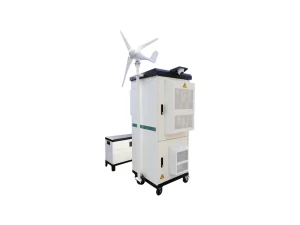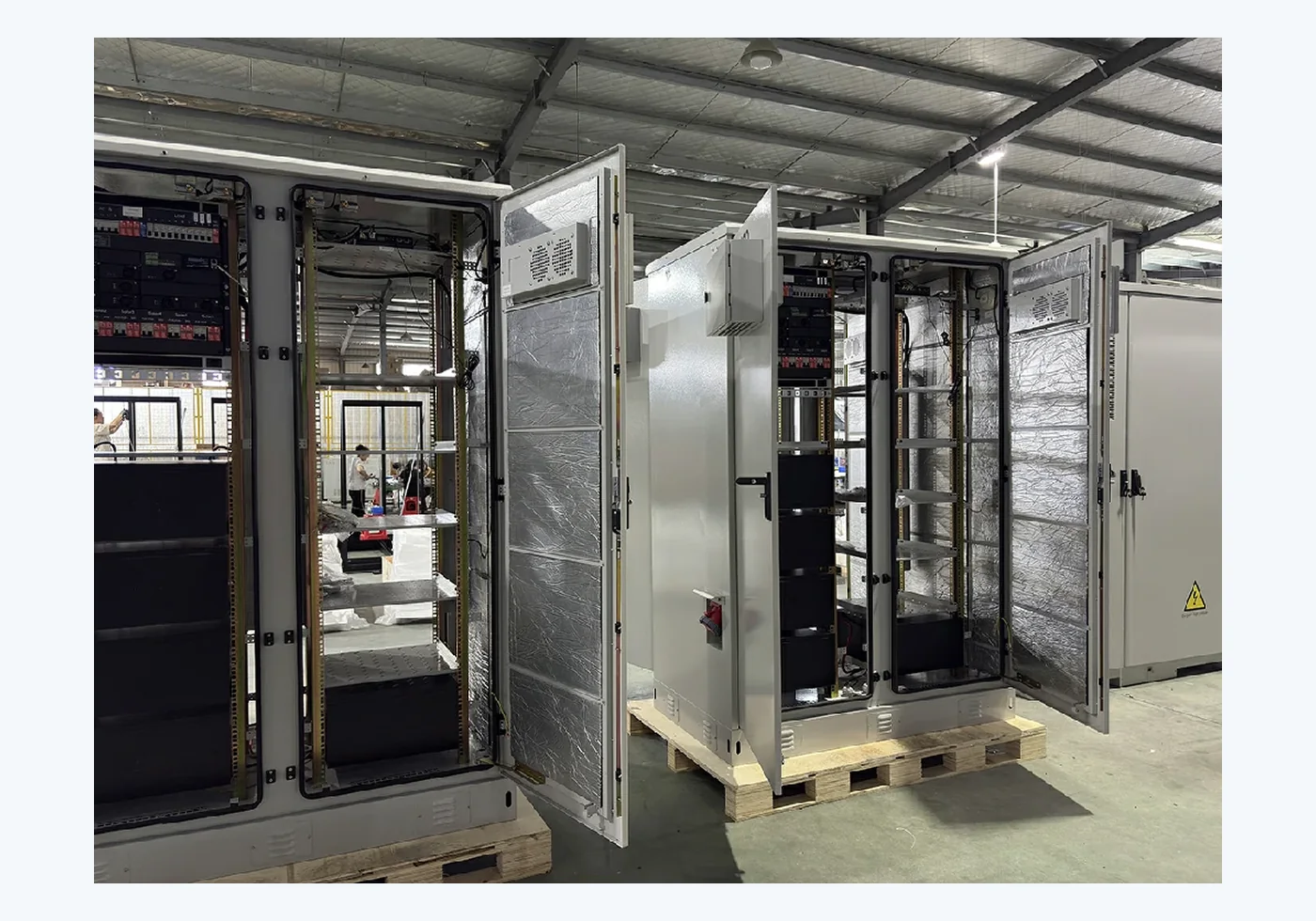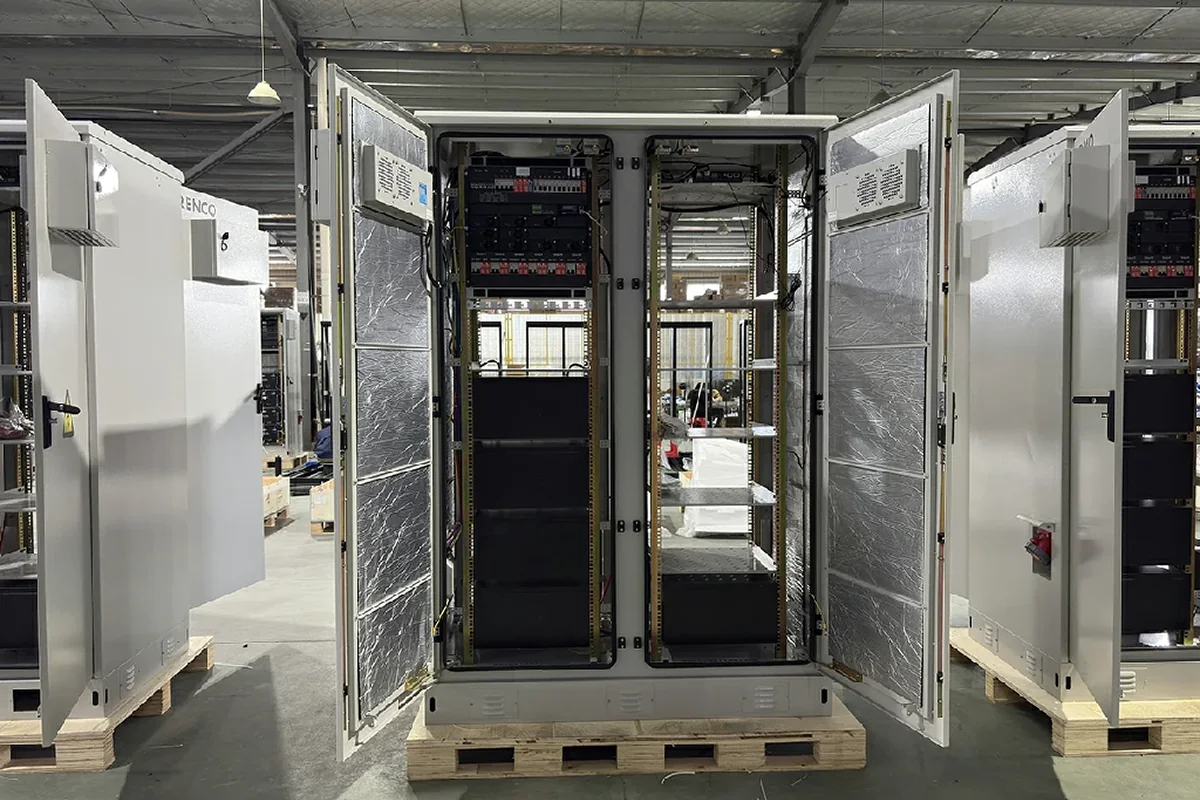
Seven communications sites in Mauritania required power without a supporting utility grid. The delivered project combined photovoltaic generation, lithium iron phosphate storage and diesel backup with outdoor equipment housing, thermal control and site monitoring. Rather than running a generator as the only source, the architecture assigned solar generation and stored energy primary operating roles while keeping the generator available for prolonged energy shortfalls.
Site challenge
An off-grid base station must balance continuous communications demand against solar availability, battery autonomy and generator logistics. The design cannot be reduced to peak power. Daily energy use, overnight demand, seasonal irradiation, high ambient temperature and the ability to refuel or service equipment all influence the configuration.
For these seven sites, the solution used an integrated outdoor package so that power conversion, distribution, storage, monitoring and environmental equipment could be installed as a defined assembly. That approach also creates repeatable interfaces across multiple locations, while allowing civil works, PV layout and cable routes to respond to each site.
Verified equipment scope
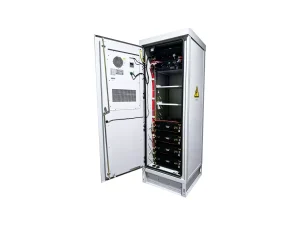
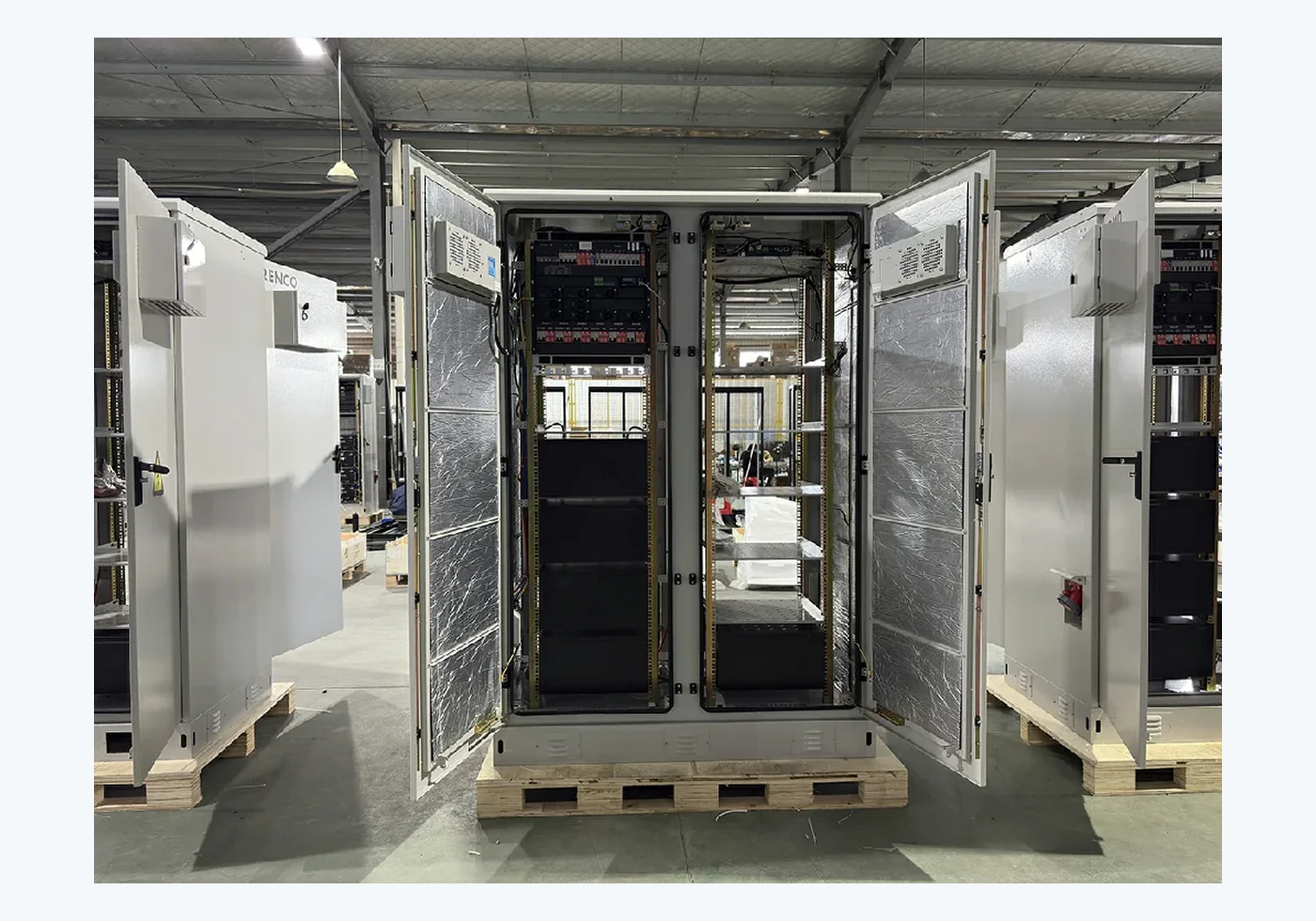
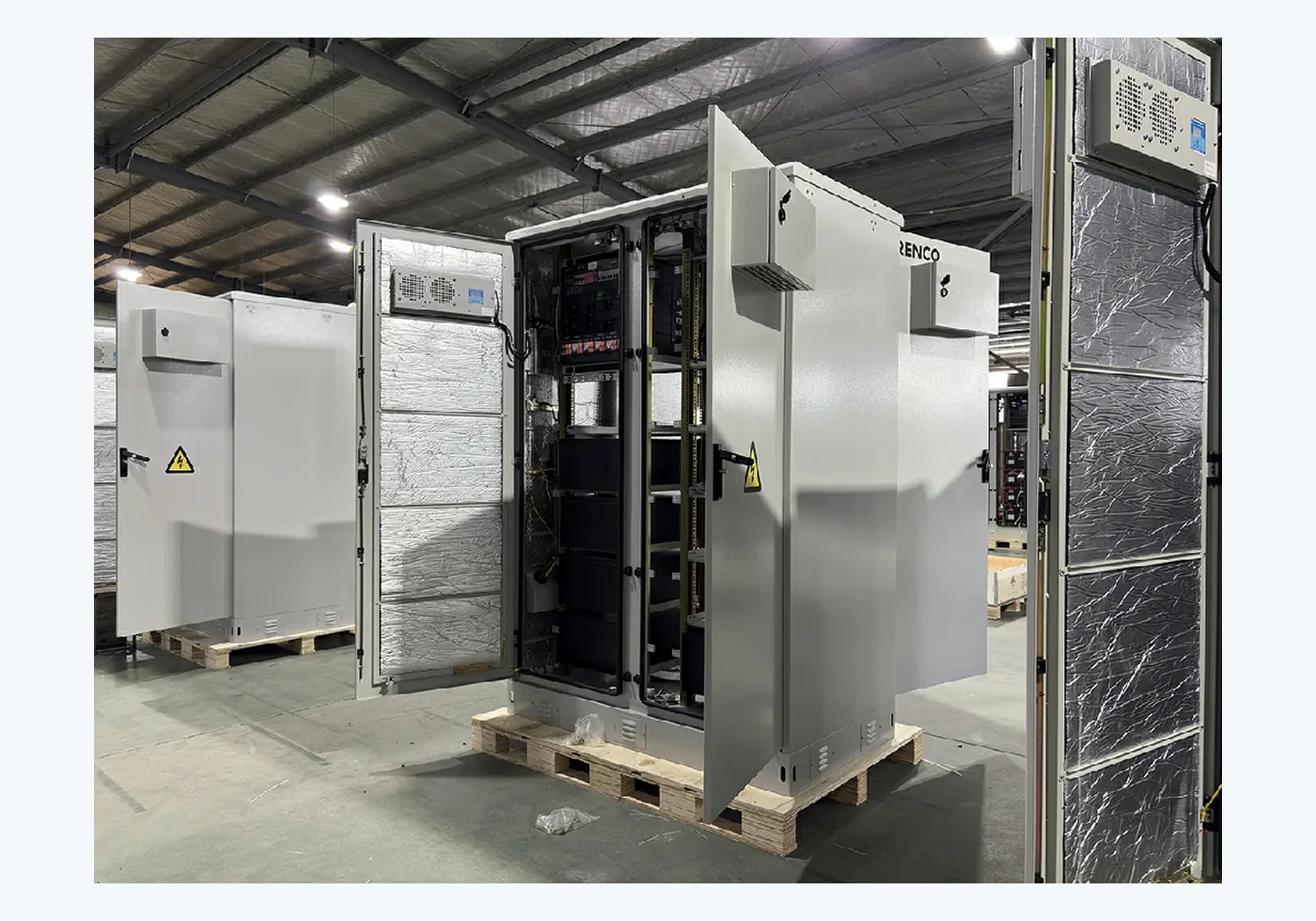
- Outdoor cabinet: the project lists a galvanized-steel enclosure measuring 2000 mm high × 1500 mm wide × 800 mm deep.
- Temperature control: four 48 V DC fans and an intelligent thermostat are identified in the published configuration.
- Battery: a 48 V lithium iron phosphate battery system stores energy for periods when photovoltaic generation is below site demand.
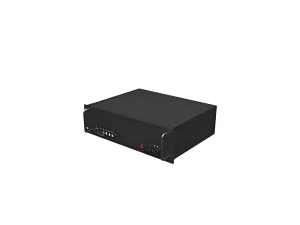
- FSU and energy monitoring: an EMS-B2010 monitoring unit was included.
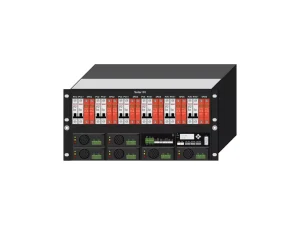
- Hybrid power: the equipment list includes a power-distribution frame, photovoltaic modules, rectifier modules and a photovoltaic distribution box.
- Photovoltaic array: six modules and their mounting structures are listed per documented project package.
- Diesel backup: the record specifies an outdoor silent generator rated 16 kW / 20 kVA with an intelligent control system.
For a new off-grid deployment, the outdoor hybrid telecom energy cabinet and HJ-SG-D02 communication energy cabinet provide current configuration options. Cabinet size, battery arrangement and source-control equipment can be reviewed against the new site’s load and installation conditions.
Operating concept
The operating sequence prioritizes photovoltaic generation, followed by stored energy and then generator support.
- Useful sunlight: PV power serves the communications load and charges the battery.
- Generation below demand: the battery carries the site.
- Reserve or resource shortfall: the generator provides support when stored energy reaches its control threshold or renewable production remains insufficient.
A multi-source hybrid power system provides the relevant control framework, but actual thresholds depend on battery characteristics, generator operating limits and the operator’s autonomy policy. The design also needs safe manual modes and local protective behavior when remote communications are unavailable.
Why enclosure and thermal design mattered
The power electronics and battery system were deployed in an outdoor cabinet, so heat removal and contamination control formed part of the energy design. The documented DC fan arrangement and thermostat provide controlled ventilation for the project configuration. For another location, fan cooling, heat exchange or air conditioning must be selected from measured equipment heat, solar gain, ambient temperature, dust and the internal temperature target.
Cabinet dimensions also have to accommodate conductor bends, protective devices, battery service access and separation between incoming sources. PV, generator and load circuits require identified cable entries and clear isolation points. Grounding and surge protection must be coordinated with the field array, generator and communications equipment.
Multi-site deployment lessons
A repeated cabinet package can simplify manufacturing, labeling, spares and technician training across seven sites. However, repeatability should not hide site differences. Shading, array orientation, access roads, foundation conditions and generator refueling may vary. The engineering package should therefore separate the common cabinet bill of materials from the site-specific PV layout, cable schedule and civil work.
Remote monitoring is particularly useful when travel between sites is difficult. Useful points include source status, load, battery state, cabinet temperature, protective alarms and generator state. Alert ownership and the communication method need to be agreed before commissioning.
Inputs for a similar off-grid project
- Coordinates and credible monthly solar-resource data
- Hourly communications and cooling load profile
- Required autonomy and generator-use policy
- Available PV footprint, orientation and shading
- Battery operating temperature and discharge limits
- Generator rating, fuel logistics and start interface
- Ambient heat, dust, corrosion and site-security conditions
- Cabinet access, lifting and foundation limits
- Remote monitoring protocol and alarm recipients
- Common versus site-specific equipment schedule
The Mauritania deployment shows how PV, batteries and diesel backup can be organized as one telecom energy system when grid supply is absent. Provide the load profile and site coordinates to begin a comparable configuration review.