
Hybrid Site Energy Solutions
Solar-Hybrid Telecom Site Energy
Combine photovoltaic generation, battery storage, utility or generator support and intelligent source control for telecom sites where energy availability varies by location and time.
Planning and configuration
Solution overview
Remote and weak-grid telecom sites need an energy design that follows both the communications load and the available sources. Solar modules, batteries and a generator do not become a reliable hybrid system merely because they are connected to the same cabinet. The project must define how much energy each source can provide, when it is available, how the battery is protected and what happens during an extended resource shortfall.
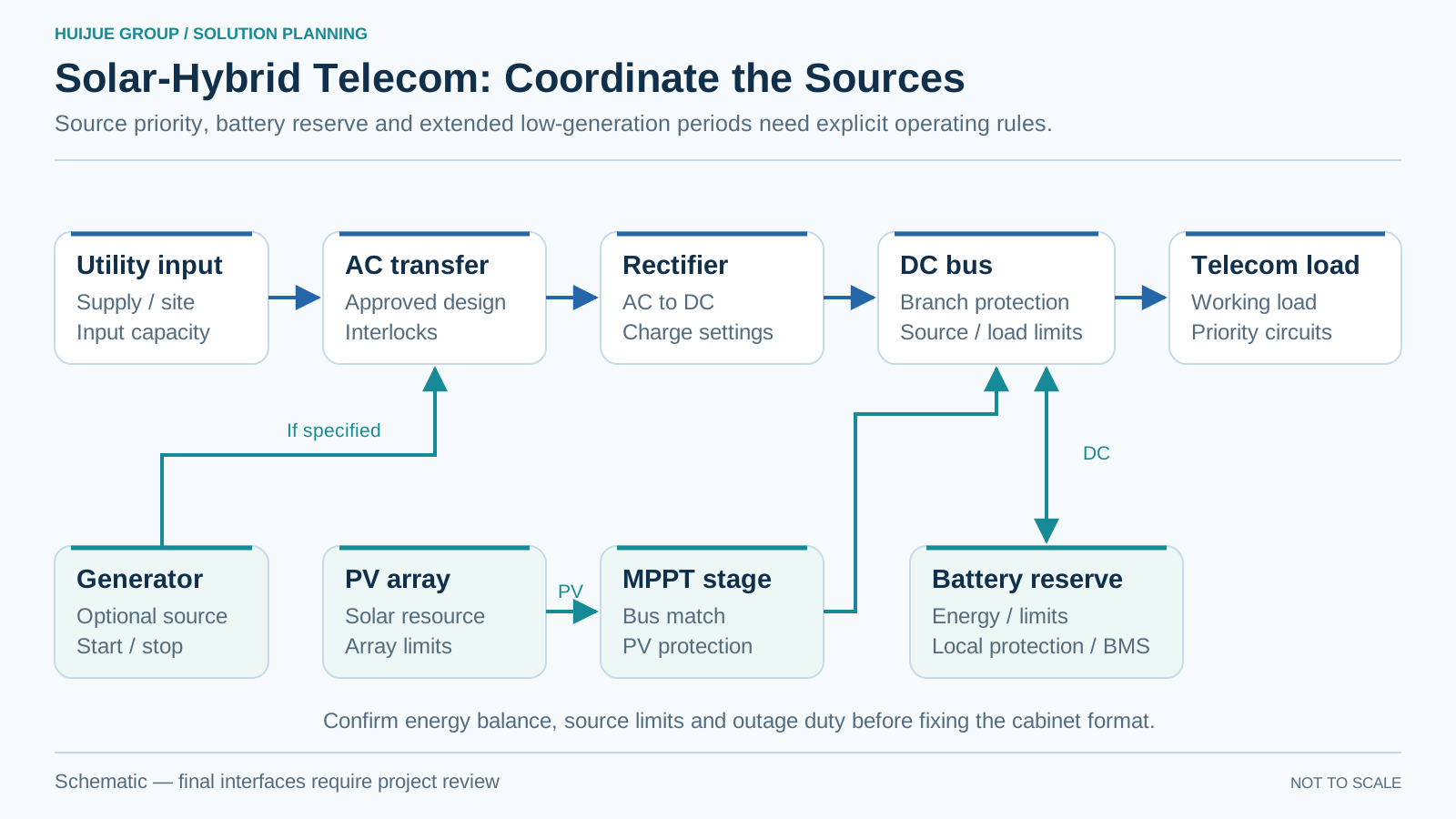
Huijue Group’s solar-hybrid telecom solution coordinates photovoltaic input, battery storage, rectification, distribution, optional utility or diesel support, environmental control and remote monitoring. It can be packaged as a compact micro-station, an integrated indoor or outdoor cabinet, a larger multi-compartment site cabinet or a project-specific container. The correct format is selected after load, solar resource, autonomy and access constraints are reviewed.
Use hourly energy, not only peak power
Peak load is needed for converter and conductor sizing, but daily energy demand determines photovoltaic and storage requirements. A useful project brief lists the 24-hour profile of radio, transmission, cooling and auxiliary loads, including seasonal changes and planned network expansion. The solar assessment should use site-specific irradiation and shading information. Generator operating limits, fuel logistics and utility availability must also be recorded where those sources are present.
This allows the design team to test operating periods rather than rely on a single average. Daytime photovoltaic generation may serve the load and charge the battery; stored energy can cover evening and low-irradiance periods; utility or generator support can protect the site when renewable production and stored energy are insufficient. The final priority logic and start/stop thresholds are project settings, not universal values.
Select the physical architecture
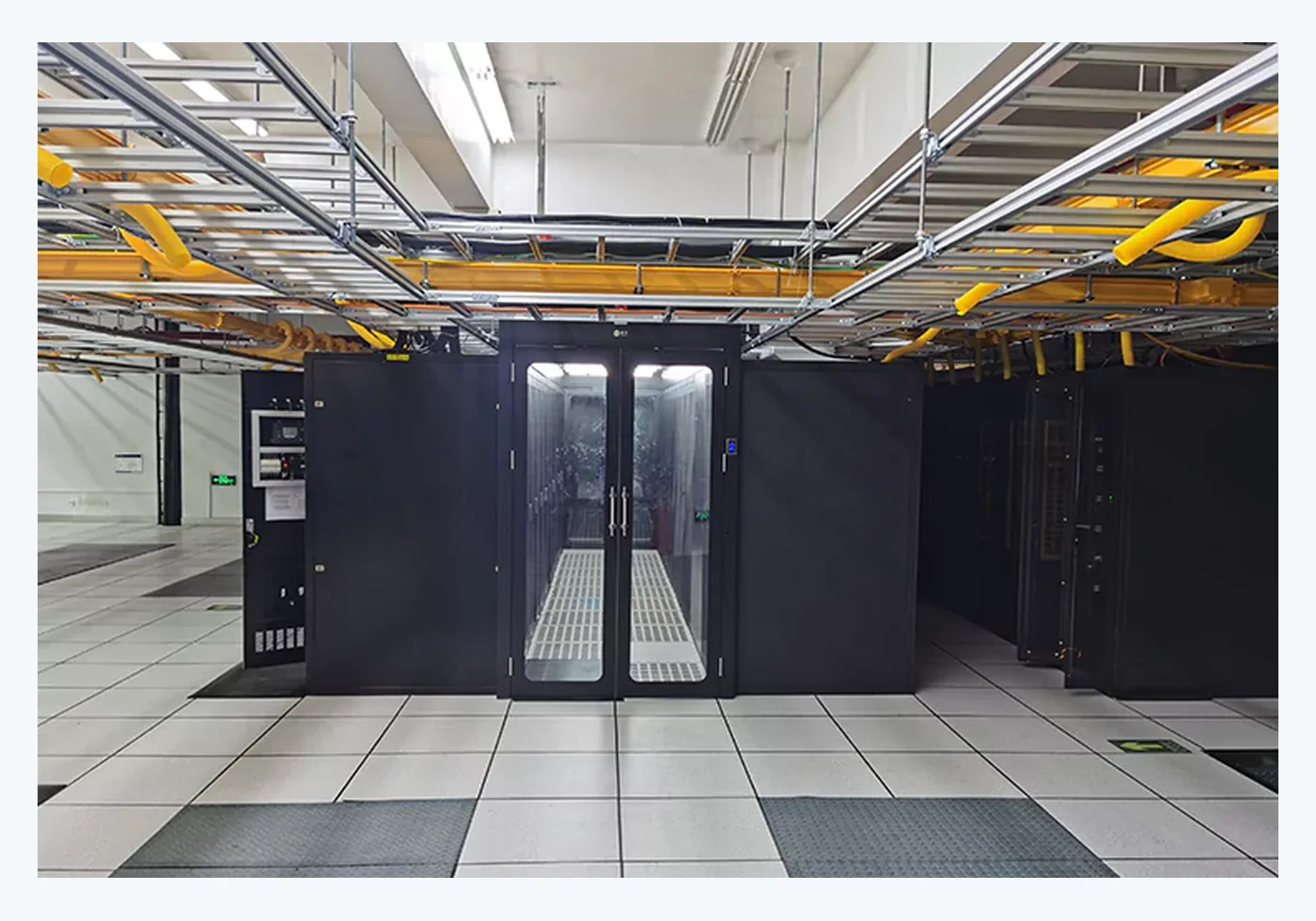
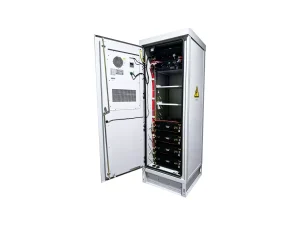
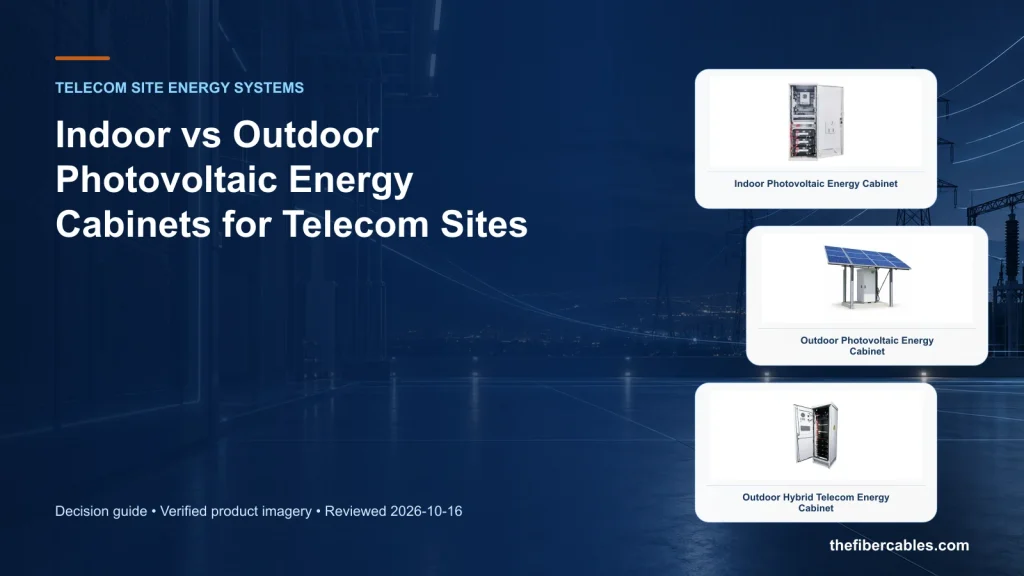
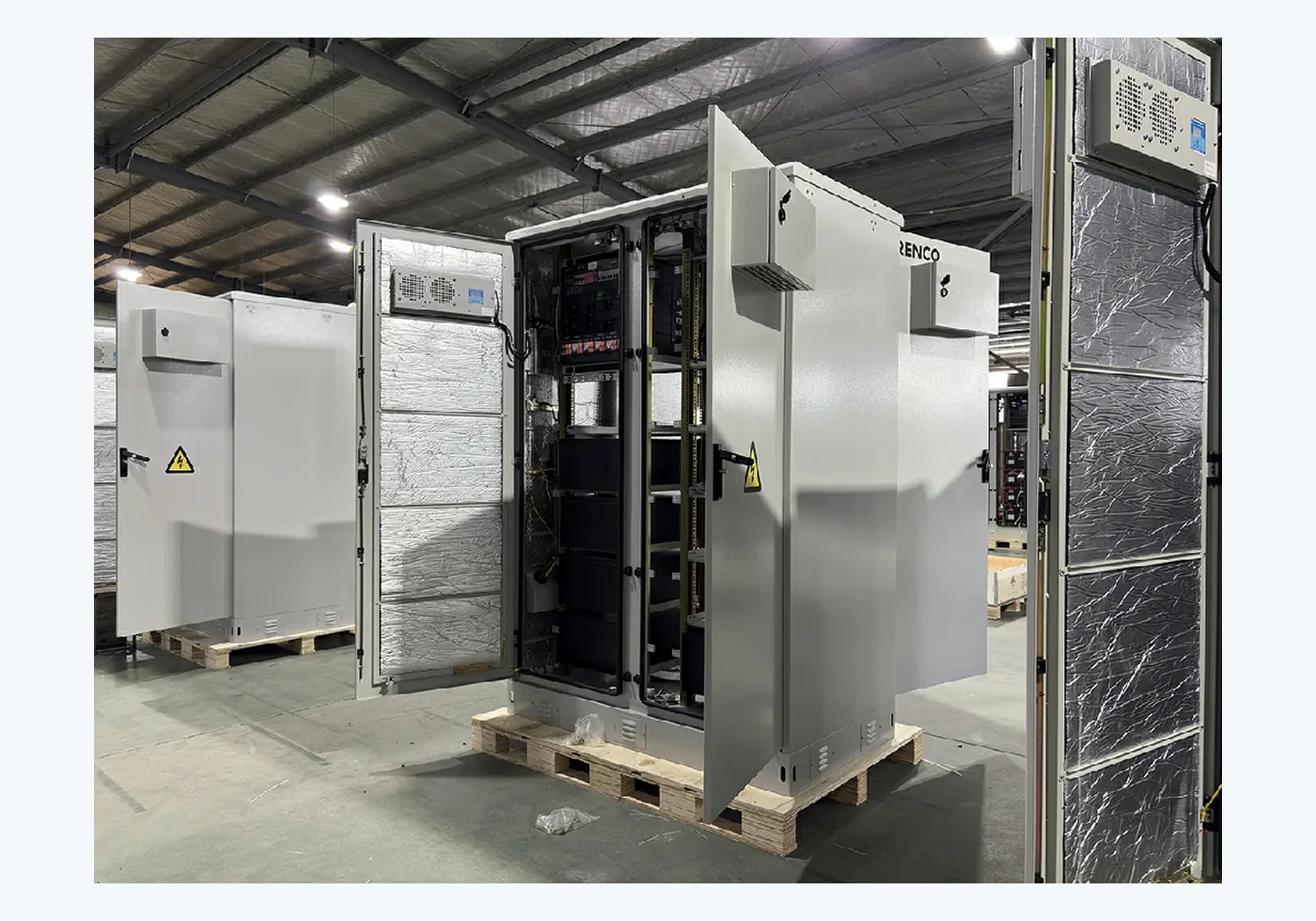
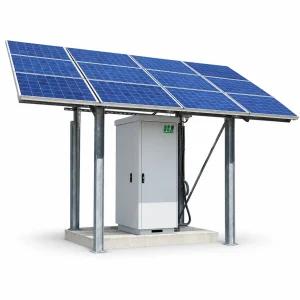
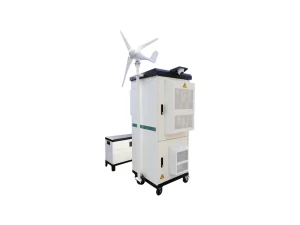
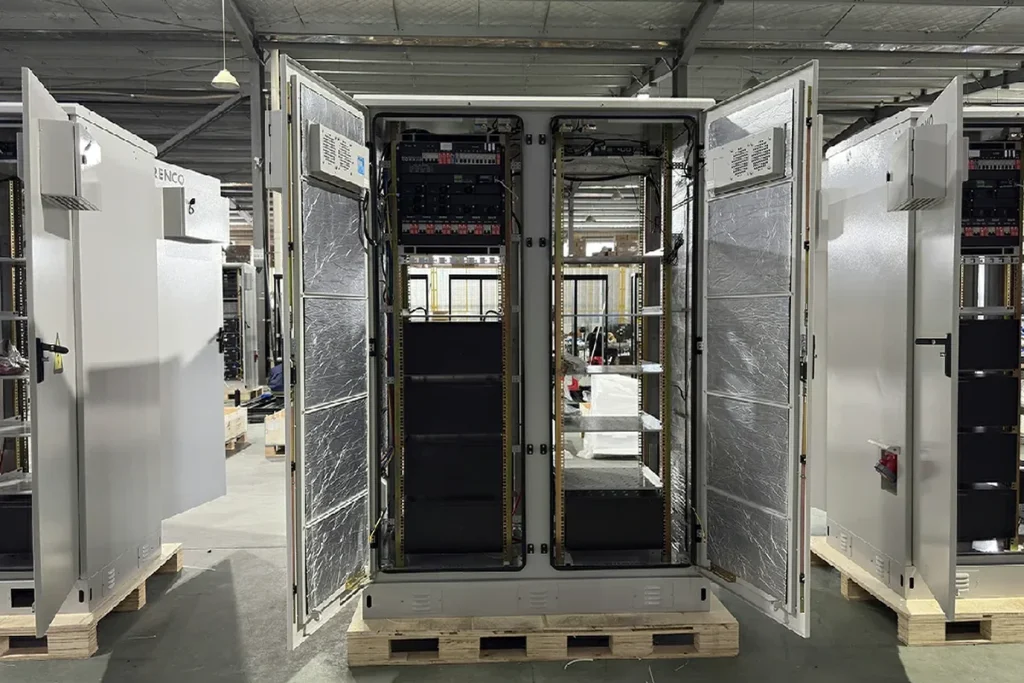
A photovoltaic micro-station energy cabinet suits applications where equipment space and load are limited. The outdoor photovoltaic energy cabinet and outdoor hybrid telecom energy cabinet provide broader integration options for protected field deployment. Higher equipment and storage requirements may point to the HJ-SG-D02 outdoor communication energy cabinet.
The enclosure layout should separate thermal zones where practical, protect live parts, preserve cable bend radius and maintain access to filters, fans, batteries and power modules. PV string entries, grounding, surge protection and DC isolation need their own documented paths. Outdoor placement also requires review of solar gain, dust, humidity, corrosion, wind, foundation and service clearance.
Generation and storage decisions
- Photovoltaic array: define module quantity from resource data, load energy, permitted footprint, string voltage, controller range and shading.
- Battery: size for required autonomy using usable energy, discharge current, temperature and end-of-life margin; confirm BMS and controller compatibility.
- Utility or generator: establish available power, changeover method, recharge allowance, starting logic and fuel or grid constraints.
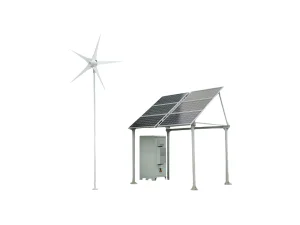
- Wind option: consider only where measured or credible wind data and suitable civil works support it. The wind-supported communication energy cabinet is a configurable family, not evidence that wind is suitable at every site.
- Outputs: document the required -48 V DC, auxiliary DC and any AC loads separately.
Control, monitoring and fallback states
The controller should expose the measurements and alarms needed by the operator: source status, load, battery state, temperature, protective-device state and critical environmental events. Communication protocol and remote-platform ownership must be agreed. The operating specification should also describe fallback behavior if a sensor, network link or energy source becomes unavailable. Local protective functions cannot depend solely on a remote connection.
Manufacturing and deployment support
Huijue Group can review project-specific cabinet size, internal zones, rack space, power-module arrangement, cable entry, cooling, sensor package, labeling and OEM or private-label requirements. Drawing-based changes are checked for fabrication and electrical feasibility before production. The site contractor remains responsible for civil works, array installation, local electrical compliance and commissioning activities that are outside the confirmed supply scope.
For multi-site programs, classify locations by load and resource profile instead of forcing one configuration onto every tower. A small number of controlled site types can preserve purchasing efficiency while allowing PV, battery and generator sizes to reflect real conditions.
If the station already has a suitable DC plant, review an existing-site solar retrofit rather than assuming a complete replacement. The Qinhuo rooftop project and Haiwan tower installation illustrate two different ways of using the available physical estate.
Project inputs
- Location, coordinates and available solar-resource data
- Hourly load profile and future expansion
- Required DC and AC output circuits
- Target autonomy and acceptable generator use
- Existing utility and generator characteristics
- Available PV area, orientation and shading
- Battery technology, capacity or operating constraints
- Ambient temperature, dust, humidity, altitude and corrosion exposure
- Cabinet placement, foundation, access and lifting limits
- Remote monitoring protocol and alarm list
Submit the site load and resource data for an initial hybrid-energy configuration review.
Product pathways
Related products
Use these products as configuration references. Final model selection depends on the approved project inputs.
Manufacturer support
Review the complete system before fixing the bill of materials
Huijue Group supports OEM, private-label and drawing-based customization subject to engineering review and the confirmed production scope.