
Campus and backbone routes
Select indoor, outdoor or armored constructions around fiber count, route length and installation method.
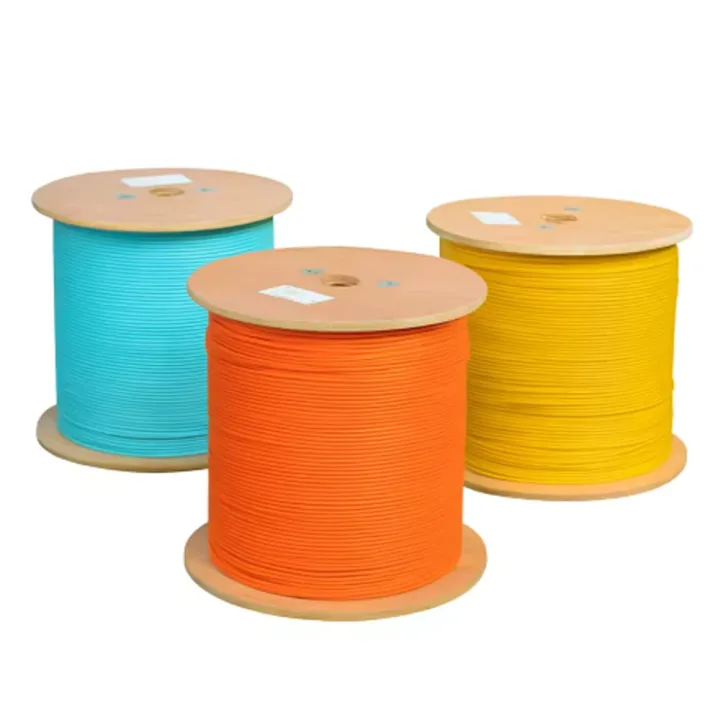
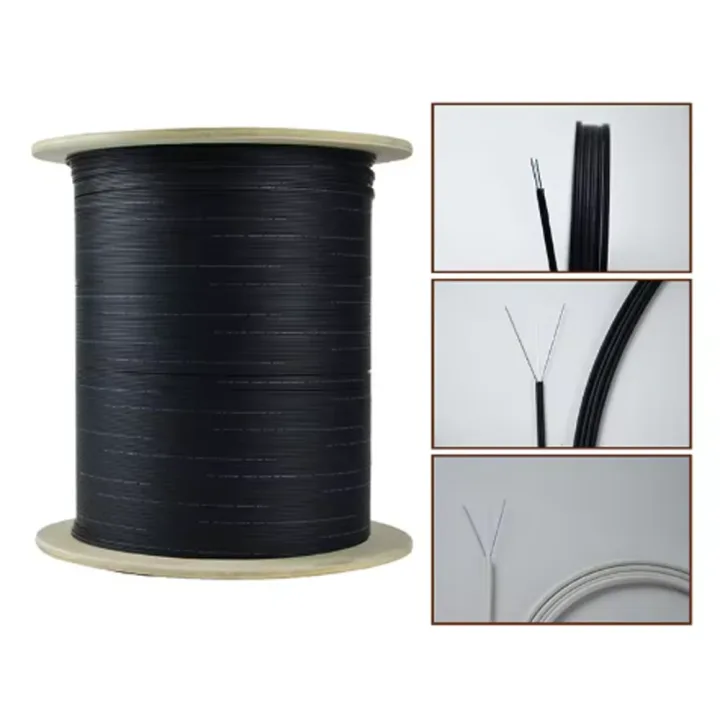
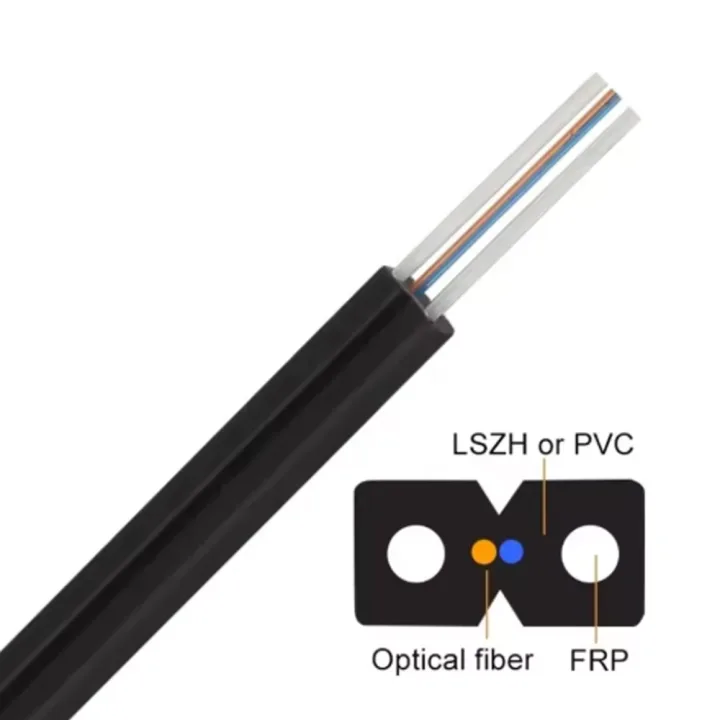
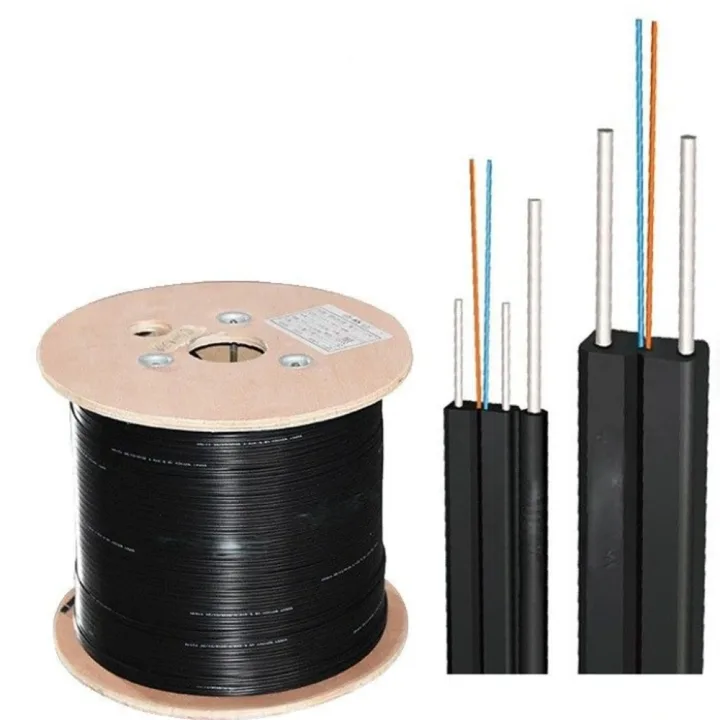
An indoor tight-buffered cable family with single-mode or multimode fiber and distribution or breakout structures for equipment rooms and building communications pathways.
Tight-Buffered Indoor Fiber Cable supports in-building communications between equipment areas, racks and distribution points. The cable structure is selected to suit how fibers will be routed and terminated within the protected indoor pathway.
The current family includes tight-buffered, distribution and breakout forms. Choosing between them requires attention to fiber access, the termination arrangement and the protection needed by individual branches at the end of the cable.
Specify optical grade and core count alongside the termination plan. Identify pathway type, required cable fire and smoke criteria, bend constraints and pulling conditions. LSZH identifies a material approach; obtain the exact test and classification evidence required by the project rather than inferring compliance from the jacket name.
For indoor cabling programs, Huijue Group can review OEM jacket identification, private-label packaging and sample- or drawing-based distribution and breakout layouts. Material choice, tooling, optical/mechanical tests, quantity and delivery scope are subject to engineering confirmation.
Send fiber standard and count, structure, jacket requirements, route and pull lengths, minimum bend space, branch layout and any connectorization or labeling schedule.
| Fiber type | Single-mode / multimode |
| Fiber standards | G.652D / G.657A / OM3 / OM4 |
| Fiber count | 1–144 cores; optional |
| Cable structure | Tight buffered / distribution / breakout |
| Jacket material | PVC / LSZH option |
| Operating temperature | -20°C to +70°C |
| Installation environment | Indoor |
The current indoor specification lists -20°C to 70°C operation. Confirm the required pathway rating and keep outdoor or wet sections outside the selected scope unless separately assessed.
Buyer Questions
Answers specific to Tight-Buffered Indoor Fiber Cable selection, configuration and purchasing.
No. Request the specific cable test reports and classification needed for the intended pathway and supplied construction.
Choose from how fibers reach their terminations and the protection required at each branch. Provide the end arrangement for construction review.
The current local table lists -20°C to 70°C. Confirm that range and any installation-temperature limits on the approved cable specification.
Use the deployment context to narrow the configuration before comparing dimensions, capacities and options.
Select indoor, outdoor or armored constructions around fiber count, route length and installation method.
Coordinate feeder, distribution and drop cables with the building-entry and subscriber topology.
Match tensile, crush, moisture and armor requirements to poles, ducts or direct-buried routes.
Use FTTA or hybrid constructions where optical transmission and site power share a route.
Before quotation: confirm capacity, interfaces, installation environment, power conditions, quantity and required options.