
Core equipment rooms
Coordinate DC power, distribution, batteries and monitoring around communications loads.
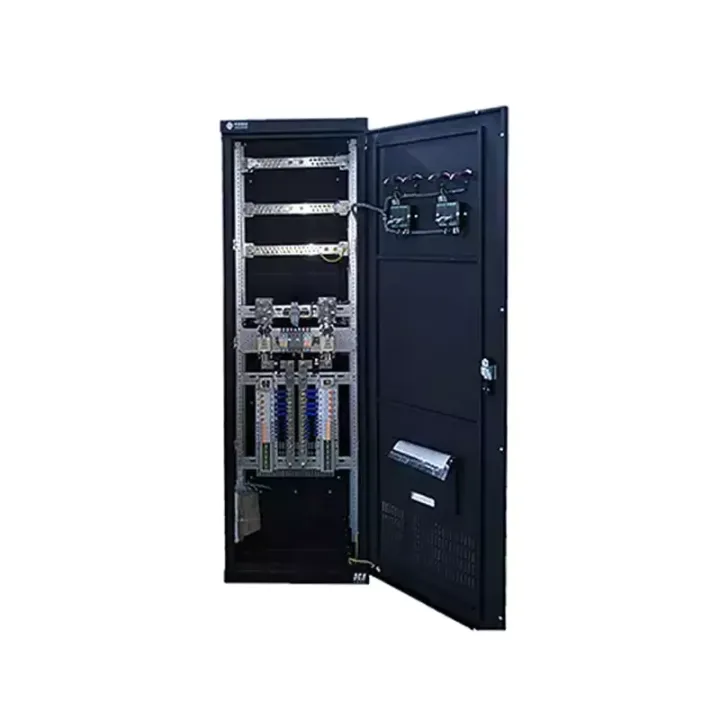
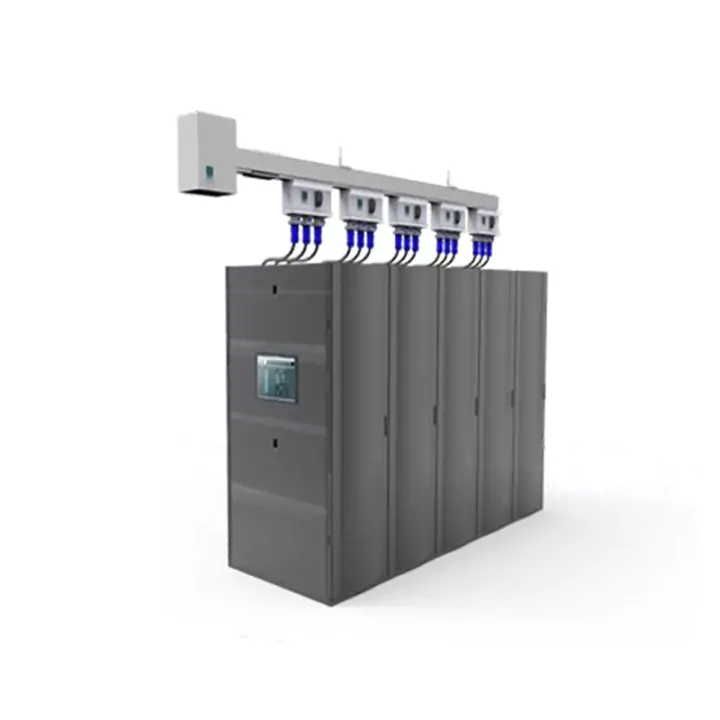
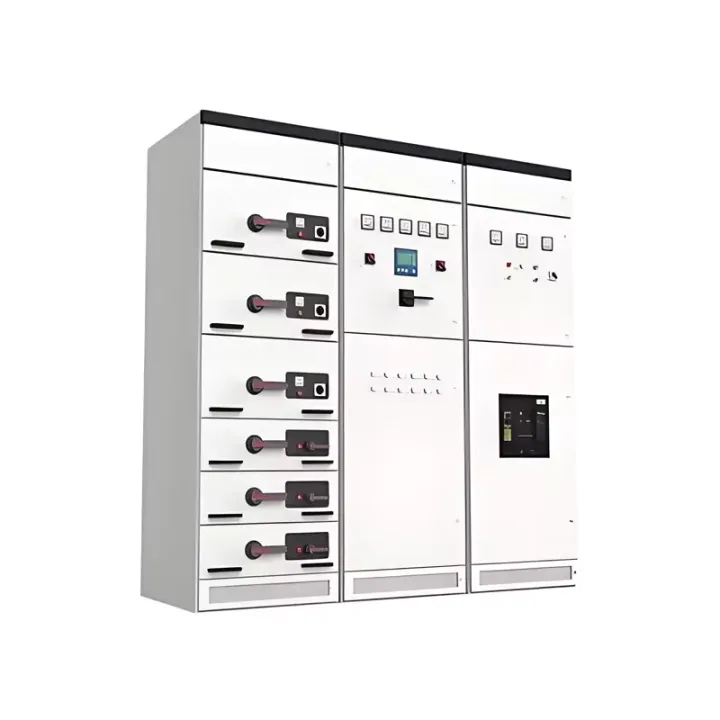
Modular DC row-end cabinet combining monitored feeder distribution and equipment-room micro-environment integration for critical DC loads.
The DC Row-End Power Distribution Cabinet provides a centralized distribution point at the end of an equipment row for battery-backed DC loads. It suits technical rooms requiring organized branch protection, local/remote measurements and a cabinet arrangement that can be adapted as loads are added.
Ethernet and RS485 connectivity can link power and micro-environment information to a supervisory platform. Define the DC feeders and monitoring scope on the project’s single-line diagram so factory wiring, site cable termination and maintenance boundaries are clear.
Provide the DC bus voltage, source/battery arrangement, maximum demand, branch currents and redundancy scheme. Row location affects front/rear access, cable route and heat rejection. Monitoring requirements should identify every measurement, alarm, protocol and upstream platform before the internal layout is released.
Huijue Group can review feeder count, cabinet dimensions, metering and OEM/private-label presentation around an approved schedule or sample. Engineering must confirm physical feasibility, fabrication tooling, copper sizing, temperature-rise and functional tests, communication mapping, production quantity and the factory/site delivery boundary.
| Operating temperature | -5℃~55℃ |
|---|---|
| Storage temperature | -20℃~+55℃ |
| Operating relative humidity | ≤80% (at +30℃) |
| Storage relative humidity | ≤90%~96% (40℃±2℃) |
| Atmospheric pressure | 65~110 kPa |
| Product dimensions | (400-1200) W × (300-1200) D × (2000-2600) H |
Published operating conditions are −5°C to 55°C, up to 80% RH at 30°C and 65–110 kPa. Confirm room cooling, aisle clearances, floor loading, cable entry and grounding.
Buyer Questions
Answers specific to DC Row-End Power Distribution Cabinet selection, configuration and purchasing.
Its cabinet format and feeder organization are intended for placement at an equipment-row boundary, shortening downstream routes and centralizing branch control. The final location follows the room design.
The architecture can integrate power and micro-environment monitoring over Ethernet or RS485. Specify required sensors and point mapping in the enquiry.
No. Width, depth and height ranges are configurable, but Huijue Group must verify busbar, breaker, cabling and service-clearance space for the chosen size.
Use the deployment context to narrow the configuration before comparing dimensions, capacities and options.
Coordinate DC power, distribution, batteries and monitoring around communications loads.
Use integrated or wall-mounted systems where equipment space is limited.
Match generation, storage and power conversion to load and autonomy requirements.
Combine grid, solar, battery or generator inputs around a defined operating strategy.
Before quotation: confirm capacity, interfaces, installation environment, power conditions, quantity and required options.