
Core equipment rooms
Coordinate DC power, distribution, batteries and monitoring around communications loads.
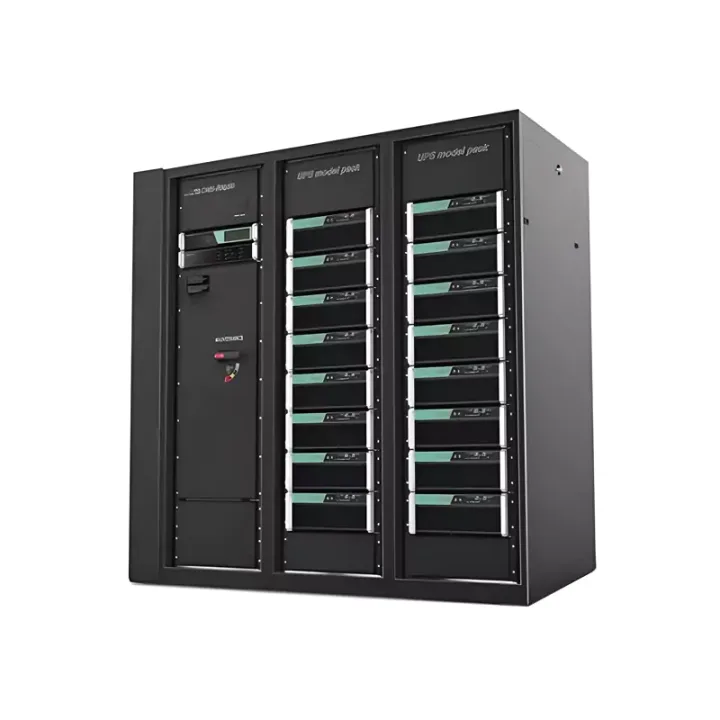
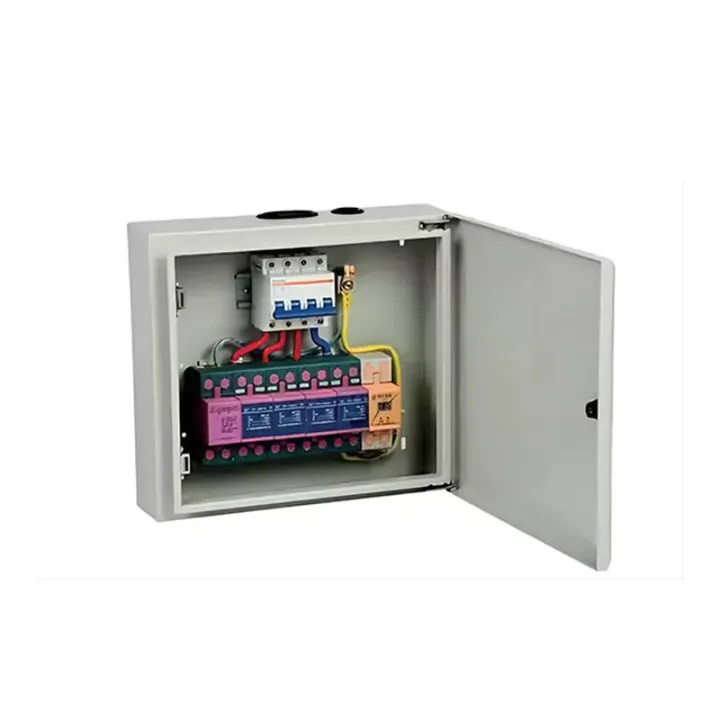
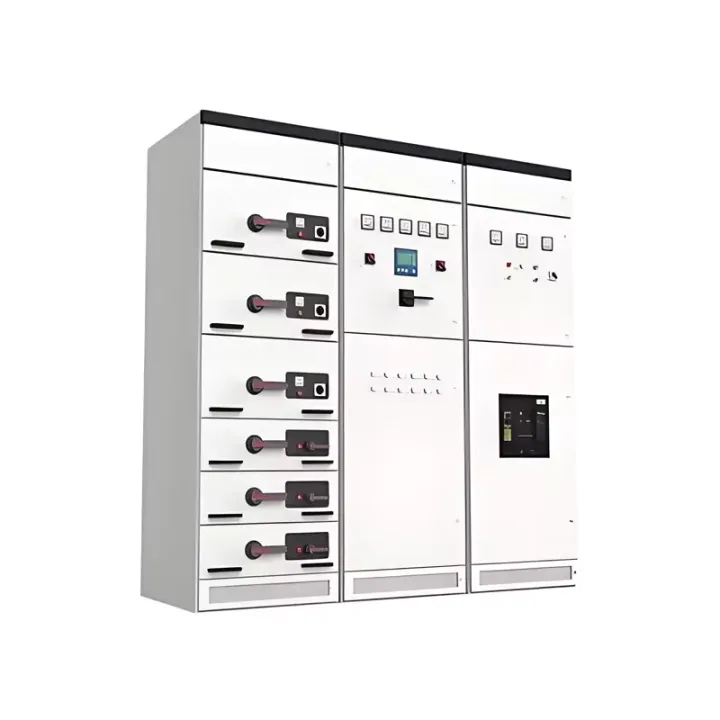
Factory-assembled UPS input, bypass and output distribution cabinet with expandable branches, surge protection and monitored operating status.
The UPS Power Distribution Cabinet organizes the circuits surrounding a UPS system: source inputs, dual-source transfer where specified, UPS supply, maintenance bypass and protected output branches. Combining these functions in one engineered assembly provides a clear maintenance boundary for critical communications and facility loads.
Hot-swappable miniature breaker provisions can support future output expansion and three-phase load balancing. Front and rear barriers isolate live parts, while the monitoring package gives facility teams a real-time view of the cabinet’s operating state.
Supply the UPS rating, input/output voltage, bypass topology, redundancy scheme and complete critical-load schedule. Define whether bypass is internal to the UPS or cabinet, the acceptable maintenance sequence, spare ways and monitoring signals. Fault-current and selectivity data are required for protective-device coordination.
Huijue Group can evaluate OEM/private-label UPS distribution cabinets from approved drawings or reference samples. Access, circuit count and metering depend on engineering confirmation of layout feasibility, panel tooling, interlocks, functional tests, order volume and shipping/equipment scope.
| Operating temperature | -5℃~55℃ |
|---|---|
| Storage temperature | -20℃~+55℃ |
| Operating relative humidity | ≤80% (at +30℃) |
| Storage relative humidity | ≤90%~96% (40℃±2℃) |
| Atmospheric pressure | 65~110 kPa |
| Product dimensions | (400-1200) W × (350-800) D × (400-2200) H |
Listed operating range is −5°C to 55°C, with humidity up to 80% at 30°C. Verify room cooling, working clearances, floor loading, cable entry and the UPS manufacturer’s bypass requirements.
Buyer Questions
Answers specific to UPS Power Distribution Cabinet selection, configuration and purchasing.
Yes, maintenance-bypass distribution is one of the supported functions. The sequence and interlocks must match the selected UPS and operating procedure.
The source platform supports hot-swappable miniature breaker provisions and spare ways. Reserved bus capacity, enclosure space and an approved expansion procedure are still required.
Provide the UPS and bypass single line, load schedule, room layout and signal list. Huijue Group uses these to confirm protection, physical access and factory test scope.
Use the deployment context to narrow the configuration before comparing dimensions, capacities and options.
Coordinate DC power, distribution, batteries and monitoring around communications loads.
Use integrated or wall-mounted systems where equipment space is limited.
Match generation, storage and power conversion to load and autonomy requirements.
Combine grid, solar, battery or generator inputs around a defined operating strategy.
Before quotation: confirm capacity, interfaces, installation environment, power conditions, quantity and required options.