
Core equipment rooms
Coordinate DC power, distribution, batteries and monitoring around communications loads.
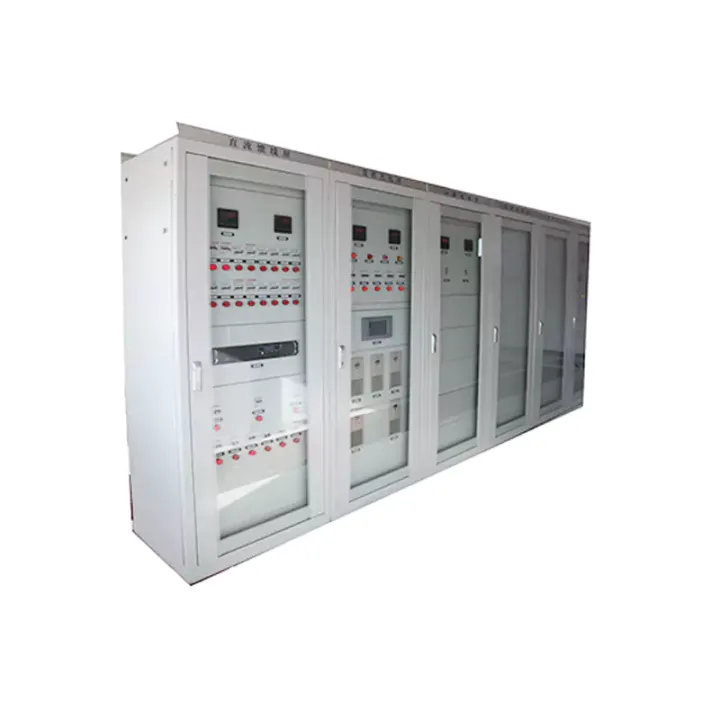
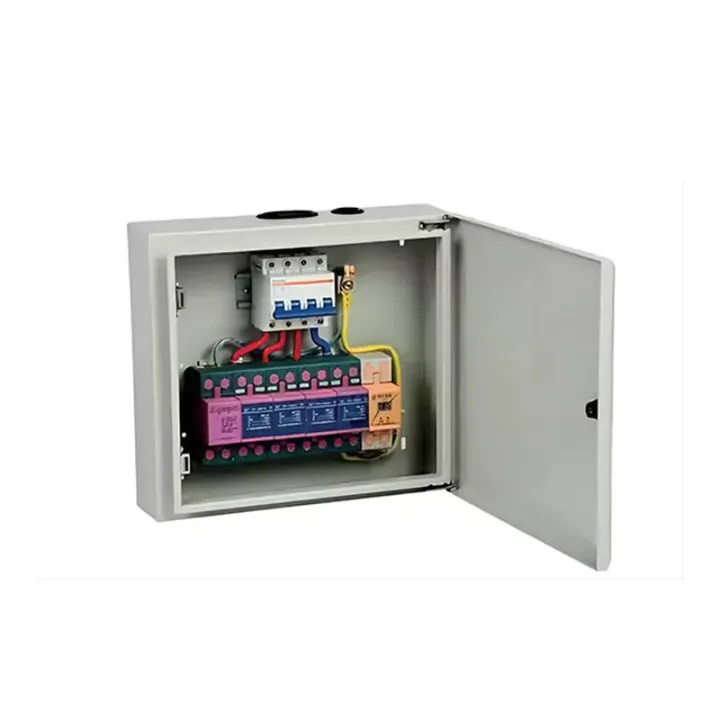
Monitored DC distribution cabinet for battery-backed control, protection, communications, signaling and UPS auxiliary power networks.
The DC Distribution Cabinet forms part of a station DC system alongside batteries, charging equipment, feeder panels and monitoring units. It distributes dependable DC power to relay protection, breaker trip/close circuits, signaling, communications, UPS controls and other critical subsystems.
Measurement units report data to a main monitor over RS485 for centralized display and control. Depending on the project, the monitoring package can add insulation supervision, battery inspection and digital input/output modules, with a host interface for connection to a remote supervisory platform.
State the DC bus voltage, charging-system arrangement, battery groups, maximum load, feeder count and load criticality. Protection must be coordinated for cable length and DC fault current. If remote operation is required, define the supervisory interface and the exact measurements, alarms and commands.
Huijue Group can review DC feeder schedules, terminal plans, monitoring points and OEM/private-label identity. Sample- or drawing-based manufacture requires engineering confirmation of layout feasibility, fabrication tooling, protection calculations, software mapping, verification tests, quantity and the delivered documentation/equipment scope.
| Operating temperature | -5℃~55℃ |
|---|---|
| Storage temperature | -20℃~+55℃ |
| Operating relative humidity | ≤80% (at +30℃) |
| Storage relative humidity | ≤90%~96% (40℃±2℃) |
| Atmospheric pressure | 65~110kpa |
| Product dimensions | Customizable per customer requirements |
The listed operating envelope is −5°C to 55°C, up to 80% RH at 30°C and 65–110 kPa. Installation-room contamination, ventilation, altitude and maintenance clearances should be declared.
Buyer Questions
Answers specific to DC Distribution Cabinet selection, configuration and purchasing.
The source platform can add insulation monitoring, battery inspection and digital I/O beyond basic measurements. Confirm the point list and upstream supervisory interface.
It is primarily the DC distribution and monitoring stage within a wider system. Charging equipment and batteries are selected as separate coordinated elements unless the project specification defines otherwise.
Yes, feeder arrangement can be engineered from the approved load schedule. Huijue Group verifies bus capacity, device ratings, cable terminals and DC protection before production.
Use the deployment context to narrow the configuration before comparing dimensions, capacities and options.
Coordinate DC power, distribution, batteries and monitoring around communications loads.
Use integrated or wall-mounted systems where equipment space is limited.
Match generation, storage and power conversion to load and autonomy requirements.
Combine grid, solar, battery or generator inputs around a defined operating strategy.
Before quotation: confirm capacity, interfaces, installation environment, power conditions, quantity and required options.