
Direct answer
Cold-climate cabinet design must protect equipment during operation, standby and restart after a prolonged outage. Define minimum ambient temperature, wind exposure, outage duration, internal heat at each operating state and the minimum start-up limits of batteries, displays, fans, seals and electronic equipment. Insulation can reduce heat loss but may worsen summer heat or trap moisture if joints and vapor paths are not controlled. Heaters need safe placement, guarded clearances, thermostatic control, power availability and alarms; their load must also be included in the site power budget. Review door opening, ice, snow, drains, condensate and cable flexibility during maintenance. A start-up sequence should state which equipment can energize immediately and which requires preheating before normal service.
Within the broader Outdoor Cabinet Thermal Management workflow, this article focuses on cold climate outdoor telecom cabinet: coordinate heating, insulation, batteries, controls and start-up behavior for low-temperature outdoor sites. Confirm minimum and maximum ambient temperature and the evidence for the offered product before final engineering approval.
Exposure conditions to translate into design inputs
Coordinate heating, insulation, batteries, controls and start-up behavior for low-temperature outdoor sites. Start with the operating requirement and installation boundary, then separate system requirements from product claims so each supplier knows which evidence must accompany the offered configuration.
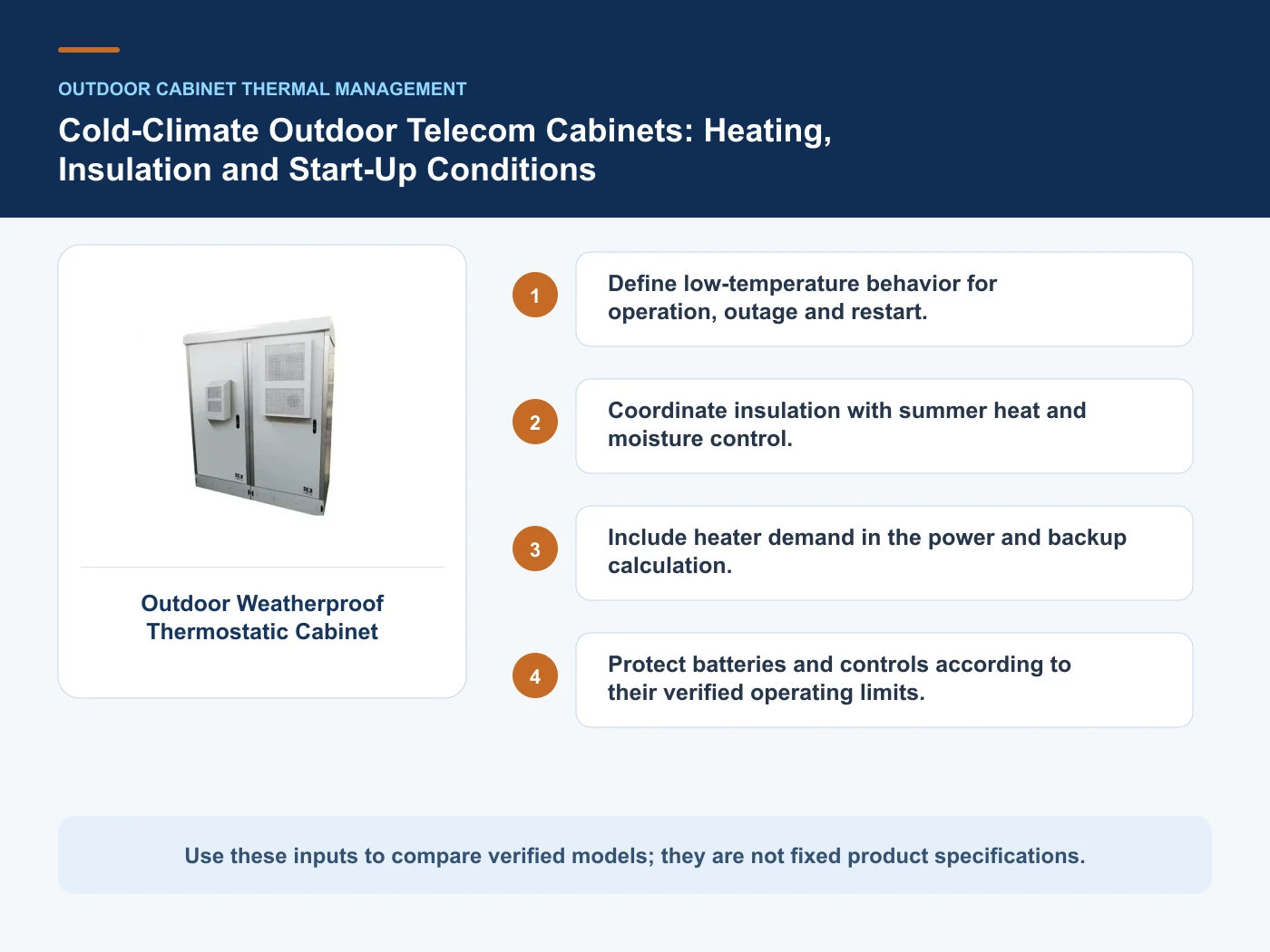
- Define low-temperature behavior for operation, outage and restart.
- Coordinate insulation with summer heat and moisture control.
- Include heater demand in the power and backup calculation.
- Protect batteries and controls according to their verified operating limits.
Define low-temperature behavior for operation, outage and restart
Capture Minimum and maximum ambient temperature, then use Operating state as a practical comparison point: Normal, standby and cold start. Before approval, verify this point: Define heat generated and limits in each state.
Coordinate insulation with summer heat and moisture control
Capture Equipment and battery operating limits, then use Thermal control as a practical comparison point: Insulation, heaters and control logic. Before approval, verify this point: Balance winter protection with summer rejection.
Include heater demand in the power and backup calculation
Capture Outage and restart scenario, then use Site exposure as a practical comparison point: Wind, snow, ice and maintenance. Before approval, verify this point: Keep doors, drains and cables serviceable.
Protect batteries and controls according to their verified operating limits
Capture Insulation construction, then use Operating state as a practical comparison point: Normal, standby and cold start. Before approval, verify this point: Define heat generated and limits in each state.
Relevant products from our communications portfolio
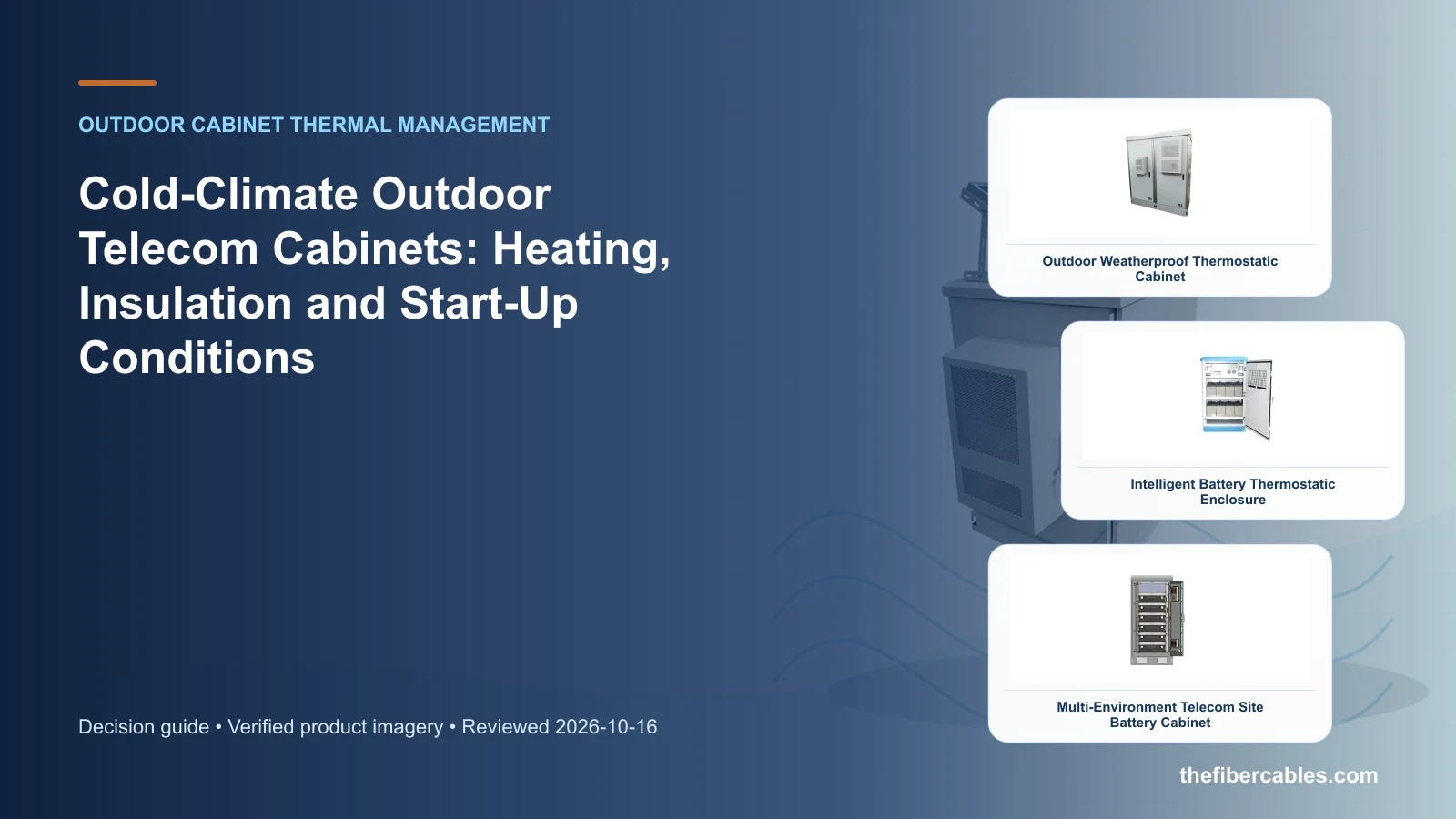
The products below connect the cold climate outdoor telecom cabinet decision to real catalogue families and verified site photography. They are starting points, not a claim that every configuration described here is a standard stock item; confirm model, interface, rating, drawing and testing scope with the project team.
- Outdoor Weatherproof Thermostatic Cabinet — use this product page as a configuration reference when you define low-temperature behavior for operation, outage and restart. Confirm the offered model, interfaces, drawings and available evidence before quotation.
- Intelligent Battery Thermostatic Enclosure — use this product page as a configuration reference when you coordinate insulation with summer heat and moisture control. Confirm the offered model, interfaces, drawings and available evidence before quotation.
- Multi-Environment Telecom Site Battery Cabinet — use this product page as a configuration reference when you include heater demand in the power and backup calculation. Confirm the offered model, interfaces, drawings and available evidence before quotation.
For adjacent configurations, browse Outdoor Cabinets & Site Infrastructure and compare those options against the cold climate outdoor telecom cabinet inputs above, including minimum and maximum ambient temperature.
Environmental choices and evidence to verify
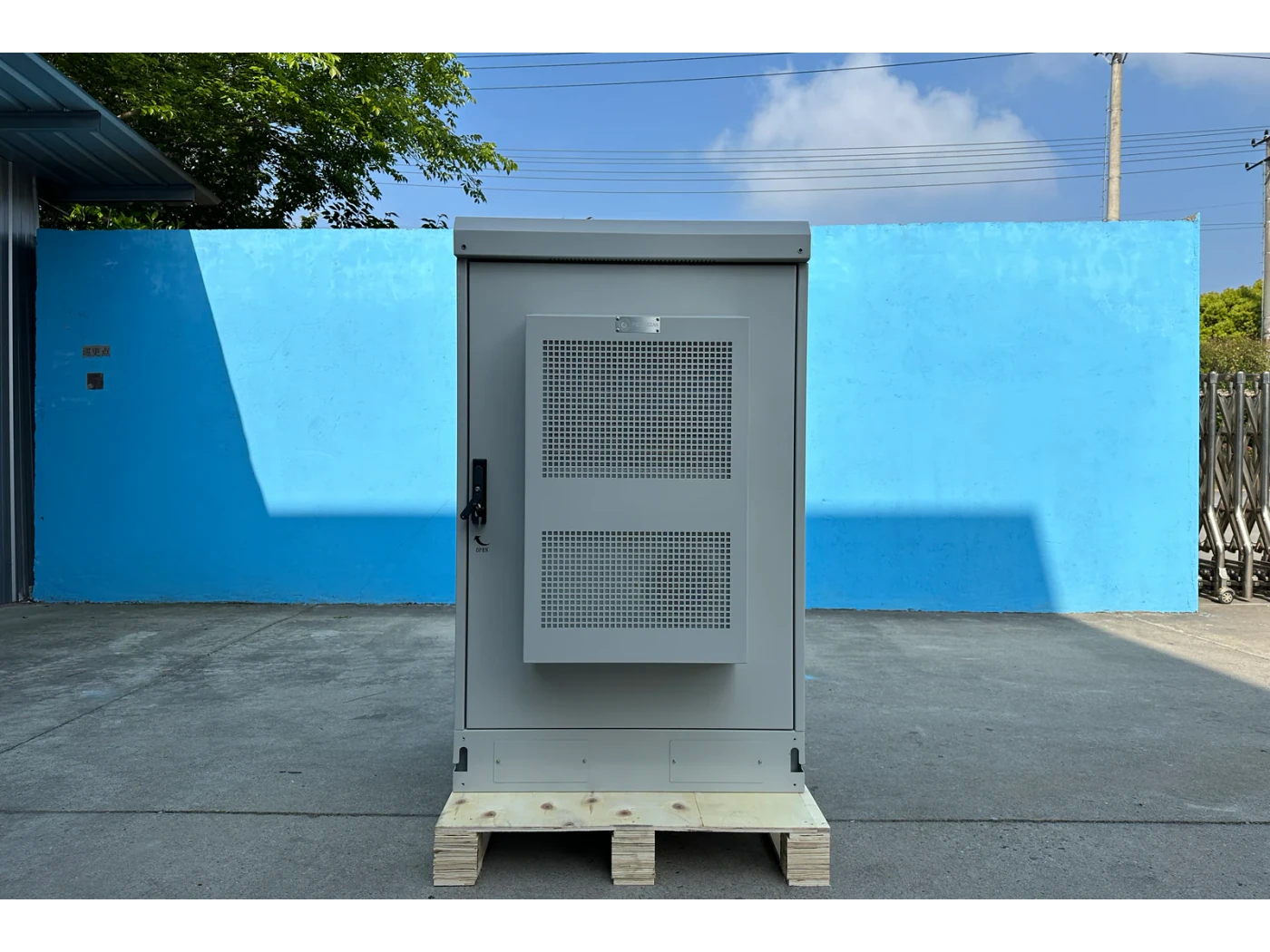
This table connects heat load, solar gain, condensation, airflow, heat exchangers, active cooling and battery thermal boundaries to the decision on cold climate outdoor telecom cabinet. It is a decision aid rather than a universal performance table: exact capacity, environmental class, electrical or optical limits and certifications must come from the selected model, applicable project documents and verifiable test evidence.
| Option or input | When it fits | What must be verified |
|---|---|---|
| Operating state | Normal, standby and cold start | Define heat generated and limits in each state |
| Thermal control | Insulation, heaters and control logic | Balance winter protection with summer rejection |
| Site exposure | Wind, snow, ice and maintenance | Keep doors, drains and cables serviceable |
Reference point: ETSI EN 300 019-1-4: Environmental conditions and environmental tests for telecommunications equipment — stationary use at non-weatherprotected locations and IEC 60721-3-4: Classification of environmental conditions — stationary use at non-weatherprotected locations frame the terminology or method used for this cold climate outdoor telecom cabinet comparison. They do not approve a product configuration; apply the edition named by the contract and local authority.
From site exposure to an approved enclosure configuration
- Step 1: Define operating states and component limits. Record Minimum and maximum ambient temperature as an explicit input. Define heat generated and limits in each state.
- Step 2: Calculate cabinet heat loss and heater demand. Record Equipment and battery operating limits as an explicit input. Balance winter protection with summer rejection.
- Step 3: Coordinate insulation, moisture and summer operation. Record Outage and restart scenario as an explicit input. Keep doors, drains and cables serviceable.
- Step 4: Verify cold start, controls and alarms. Record Insulation construction as an explicit input. Define heat generated and limits in each state.
Common mistakes to avoid
- Sizing heating only for normal powered operation.
- Adding insulation without reviewing summer heat.
- Ignoring battery and display start-up limitations.
What to include in the RFQ or design input
For cold climate outdoor telecom cabinet, a complete request reduces back-and-forth and prevents a catalogue image from being mistaken for a verified configuration. Record the following fields, identify which values are mandatory or provisional and attach route, interface or layout drawings where relevant.
- Minimum and maximum ambient temperature
- Equipment and battery operating limits
- Outage and restart scenario
- Insulation construction
- Heater capacity and placement
- Thermostat, sensor and alarm logic
- Snow, ice and drainage conditions
- Available power during standby
Questions engineers and buyers ask
How should operating state be evaluated for cold climate outdoor telecom cabinet?
Use normal, standby and cold start as the operating context, record minimum and maximum ambient temperature, and verify define heat generated and limits in each state for the exact offered configuration.
Which project input can change the cold climate outdoor telecom cabinet decision?
Define low-temperature behavior for operation, outage and restart. Recheck that decision when equipment and battery operating limits or outage and restart scenario changes.
Sources and standards
The references below define terminology, scope or test methods relevant to cold climate outdoor telecom cabinet. They do not certify an offered product; confirm the edition adopted by the contract and destination authority.
- ETSI EN 300 019-1-4: Environmental conditions and environmental tests for telecommunications equipment — stationary use at non-weatherprotected locations (V3.1.1, 2026). Use it to verify the terminology and scope relevant to cold climate outdoor telecom cabinet; the source does not certify a specific offered product.
- IEC 60721-3-4: Classification of environmental conditions — stationary use at non-weatherprotected locations (2019, Ed. 3). Use it to verify the terminology and scope relevant to cold climate outdoor telecom cabinet; the source does not certify a specific offered product.
- ETSI TR 102 489: Thermal management guidance for telecommunications equipment (V1.3.1, 06/2013). Use it to verify the terminology and scope relevant to cold climate outdoor telecom cabinet; the source does not certify a specific offered product.
- IEC 62619: Safety requirements for secondary lithium cells and batteries for industrial applications (2022, Ed. 2). Use it to verify the terminology and scope relevant to cold climate outdoor telecom cabinet; the source does not certify a specific offered product.
Source review: Links and cited editions for cold climate outdoor telecom cabinet were checked on 2026-10-16. Confirm the edition adopted by the project contract and the authority having jurisdiction.
Related guidance
Outdoor Telecom Cabinet Thermal Design: Heat Load, Solar Gain, Airflow and Moisture • Selecting a Closed-Loop Heat Exchanger for a Sealed Telecom Cabinet • Outdoor Battery Cabinet Thermal Management: Cells, BMS, Compartments and Service Access
Prepare a cold climate outdoor telecom cabinet configuration for review
Send minimum and maximum ambient temperature, equipment and battery operating limits, outage and restart scenario, insulation construction, quantity and delivery destination. Huijue Group can review the configuration boundary and identify the drawings or evidence needed for a factory quotation.
——END——