
Direct answer
A telecom site-energy FAT and SAT should prove the approved configuration, interfaces and control behavior rather than repeat a generic inspection list. FAT can verify the bill of materials, wiring, labels, protection settings, rectifier sharing, battery communications, source transitions, alarms, thermal equipment and document set under controlled conditions. SAT must confirm the installed cabling, polarity, earthing, upstream supply, field devices, NOC mapping, operating modes and recovery behavior that can only be completed on site. Every test needs a precondition, method, instrument, acceptance value, result and exception owner. Safety limits and rollback rules are required before live-source or battery tests. Standards help frame equipment and interface evidence, but the accepted record must identify the exact models, firmware, settings and project revision tested.
Within the broader Integrated Telecom Site Energy workflow, this article focuses on telecom power system FAT SAT checklist: define factory and site acceptance evidence for an integrated telecom power and energy system. Confirm approved single-line and wiring drawings and the evidence for the offered product before final engineering approval.
Scope boundary: This guide follows an integrated energy system from factory checks into installed-site acceptance. For enclosure fabrication and cabinet-specific inspection points, use the separate custom-cabinet FAT checklist.
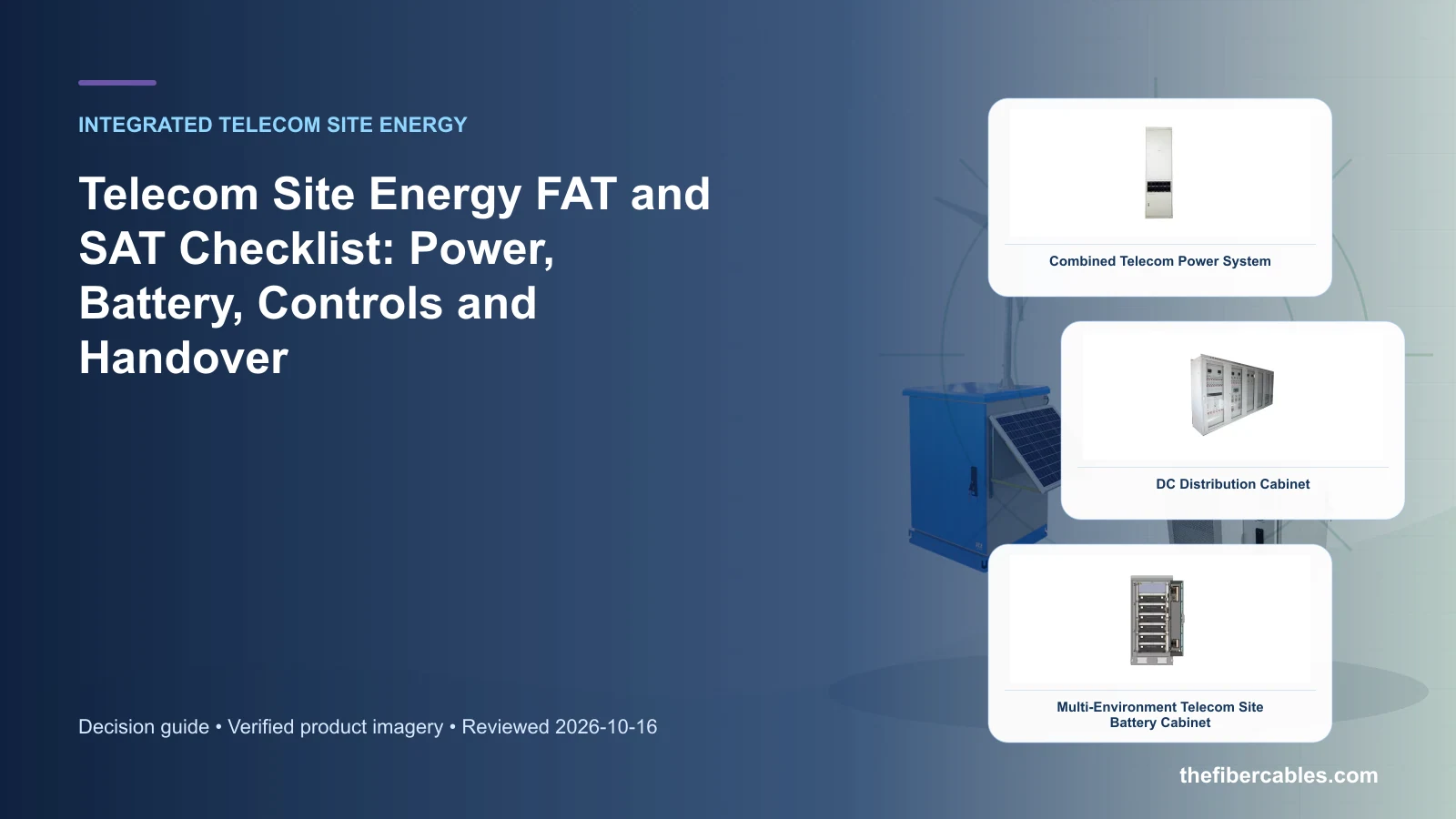
Acceptance scope to divide between factory and site
Define factory and site acceptance evidence for an integrated telecom power and energy system. Start with the operating requirement and installation boundary, then separate system requirements from product claims so each supplier knows which evidence must accompany the offered configuration.
- Assign each requirement to FAT, SAT, document review or an approved type-test record.
- Freeze the tested bill of materials, firmware, settings and drawing revision.
- Define safe methods and rollback rules for source transitions and battery tests.
Assign each requirement to FAT, SAT, document review or an approved type-test record
Capture Approved single-line and wiring drawings, then use Factory acceptance test as a practical comparison point: Integrated equipment can be tested before shipment. Before approval, verify this point: Configuration, wiring, settings, modes and document revision.
Freeze the tested bill of materials, firmware, settings and drawing revision
Capture Bill of materials and firmware list, then use Site acceptance test as a practical comparison point: Field interfaces and operating environment are complete. Before approval, verify this point: Polarity, earthing, upstream supply, NOC and recovery.
Define safe methods and rollback rules for source transitions and battery tests
Capture Protection and control settings, then use Deferred or witnessed evidence as a practical comparison point: A test needs an accredited report or later operating condition. Before approval, verify this point: Owner, due date, applicability and acceptance route.
A controlled path from factory release to site handover
- Step 1: Create a requirement-to-evidence matrix and assign each item to FAT, SAT or document review. Record Approved single-line and wiring drawings as an explicit input. Configuration, wiring, settings, modes and document revision.
- Step 2: Approve detailed procedures with preconditions, safety controls, instruments and acceptance values. Record Bill of materials and firmware list as an explicit input. Polarity, earthing, upstream supply, NOC and recovery.
- Step 3: Execute tests against the frozen configuration and record raw results plus exceptions. Record Protection and control settings as an explicit input. Owner, due date, applicability and acceptance route.
FAT, SAT and commissioning evidence
This table connects integrated site architecture, hybrid energy, batteries, BMS, monitoring, energy metrics and FAT/SAT handover to the decision on telecom power system FAT SAT checklist. It is a decision aid rather than a universal performance table: exact capacity, environmental class, electrical or optical limits and certifications must come from the selected model, applicable project documents and verifiable test evidence.
| Option or input | When it fits | What must be verified |
|---|---|---|
| Factory acceptance test | Integrated equipment can be tested before shipment | Configuration, wiring, settings, modes and document revision |
| Site acceptance test | Field interfaces and operating environment are complete | Polarity, earthing, upstream supply, NOC and recovery |
Reference point: ITU-T L.1210: Sustainable power-feeding solutions for 5G network and ITU-T L.1395: Monitoring and control interface for power, cooling and building environment systems in telecommunication networks frame the terminology or method used for this telecom power system FAT SAT checklist comparison. They do not approve a product configuration; apply the edition named by the contract and local authority.
Common mistakes to avoid
- Using a generic checklist that does not identify the exact tested configuration.
- Repeating factory tests on site while omitting field polarity, earthing and NOC integration.
Relevant products from our communications portfolio
The products below connect the telecom power system FAT SAT checklist decision to real catalogue families and verified site photography. They are starting points, not a claim that every configuration described here is a standard stock item; confirm model, interface, rating, drawing and testing scope with the project team.
- Cabinet-Type Telecom DC Power System (HDUM01-48) — use this product page as a configuration reference when you assign each requirement to FAT, SAT, document review or an approved type-test record. Confirm the offered model, interfaces, drawings and available evidence before quotation.
- DC Distribution Cabinet — use this product page as a configuration reference when you freeze the tested bill of materials, firmware, settings and drawing revision. Confirm the offered model, interfaces, drawings and available evidence before quotation.
- Multi-Environment Telecom Site Battery Cabinet — use this product page as a configuration reference when you define safe methods and rollback rules for source transitions and battery tests. Confirm the offered model, interfaces, drawings and available evidence before quotation.
- Telecom Site Energy Management System (EMS) — use this product page as a configuration reference when you require exception closure and complete as-built records before final handover. Confirm the offered model, interfaces, drawings and available evidence before quotation.
For adjacent configurations, browse Telecom Power & Site Energy and compare those options against the telecom power system FAT SAT checklist inputs above, including approved single-line and wiring drawings.
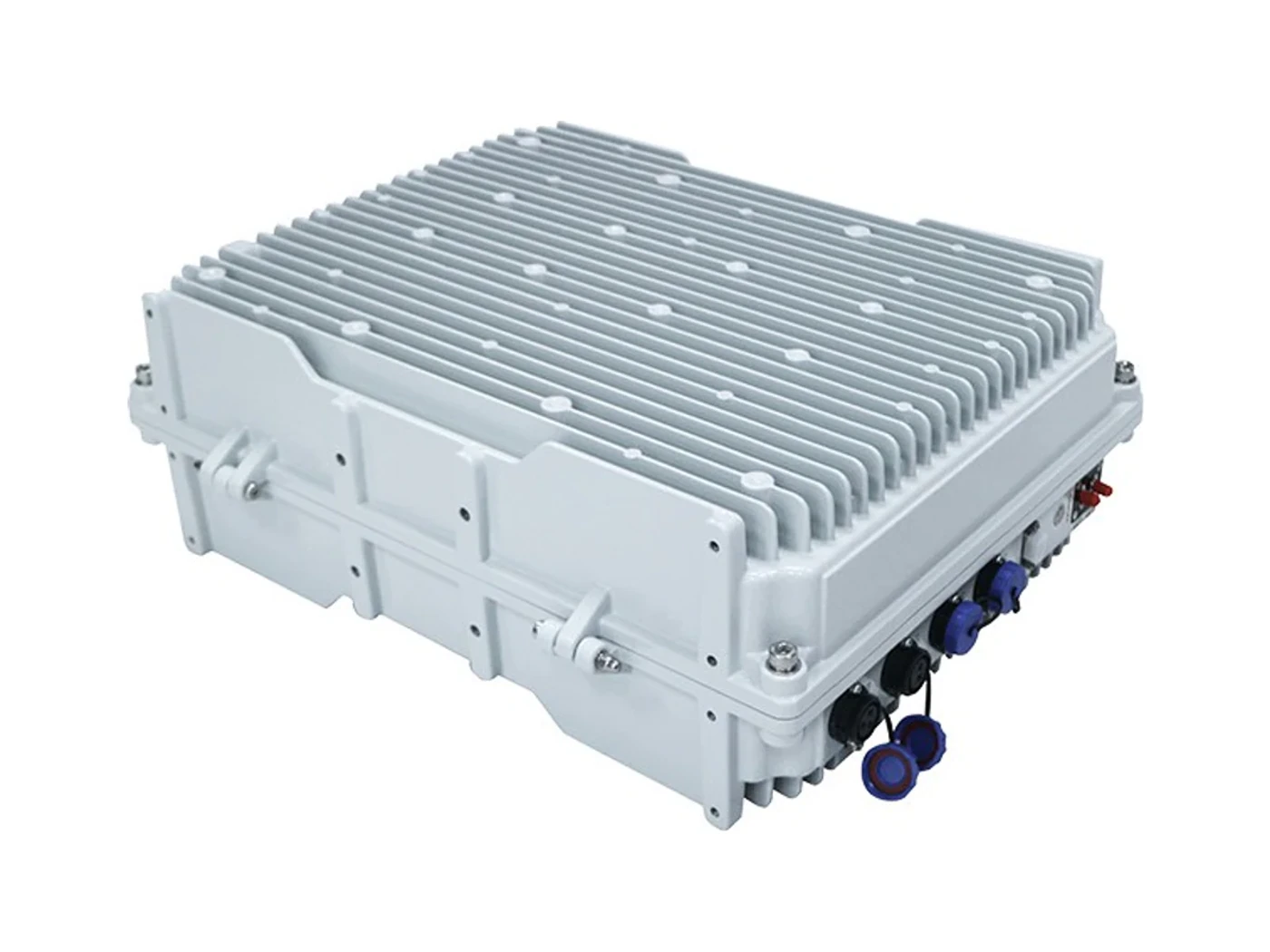
What to include in the RFQ or design input
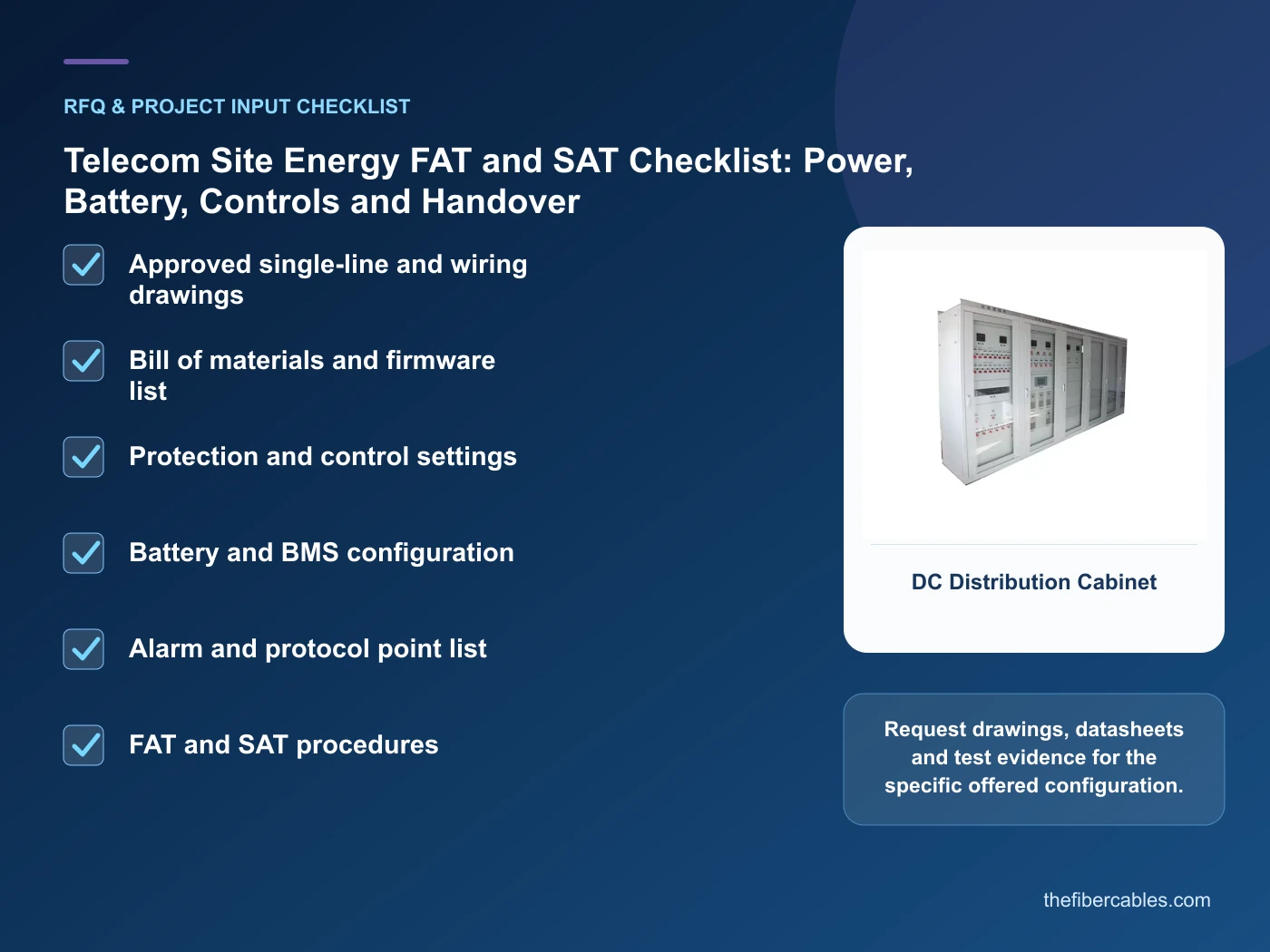
For telecom power system FAT SAT checklist, a complete request reduces back-and-forth and prevents a catalogue image from being mistaken for a verified configuration. Record the following fields, identify which values are mandatory or provisional and attach route, interface or layout drawings where relevant.
- Approved single-line and wiring drawings
- Bill of materials and firmware list
- Protection and control settings
- Battery and BMS configuration
- Alarm and protocol point list
Questions engineers and buyers ask
How should factory acceptance test be evaluated for telecom power system FAT SAT checklist?
Use integrated equipment can be tested before shipment as the operating context, record approved single-line and wiring drawings, and verify configuration, wiring, settings, modes and document revision for the exact offered configuration.
Sources and standards
The references below define terminology, scope or test methods relevant to telecom power system FAT SAT checklist. They do not certify an offered product; confirm the edition adopted by the contract and destination authority.
- ITU-T L.1210: Sustainable power-feeding solutions for 5G network (In force; reviewed 2026-10-16). Use it to verify the terminology and scope relevant to telecom power system FAT SAT checklist; the source does not certify a specific offered product.
- ITU-T L.1395: Monitoring and control interface for power, cooling and building environment systems in telecommunication networks (2025 edition). Use it to verify the terminology and scope relevant to telecom power system FAT SAT checklist; the source does not certify a specific offered product.
- IEC 62619: Safety requirements for secondary lithium cells and batteries for industrial applications (2022, Ed. 2). Use it to verify the terminology and scope relevant to telecom power system FAT SAT checklist; the source does not certify a specific offered product.
- IEC 61439-1: Low-voltage switchgear and controlgear assemblies — General rules (2020, Ed. 3). Use it to verify the terminology and scope relevant to telecom power system FAT SAT checklist; the source does not certify a specific offered product.
- IEC 62477-1: Safety requirements for power electronic converter systems and equipment (2022, Ed. 2). Use it to verify the terminology and scope relevant to telecom power system FAT SAT checklist; the source does not certify a specific offered product.
Source review: Links and cited editions for telecom power system FAT SAT checklist were checked on 2026-10-16. Confirm the edition adopted by the project contract and the authority having jurisdiction.
Related guidance
Weak-Grid vs Off-Grid Telecom Power: Choosing Grid, PV, Battery and Generator Roles • Custom Telecom Cabinet FAT Checklist • Telecom Site Energy Efficiency: Separating ICT Load from Site Overhead
Prepare a telecom power system FAT SAT checklist configuration for review
Send approved single-line and wiring drawings, bill of materials and firmware list, protection and control settings, battery and bms configuration, quantity and delivery destination. Huijue Group can review the configuration boundary and identify the drawings or evidence needed for a factory quotation.
——END——