
Passive optical distribution
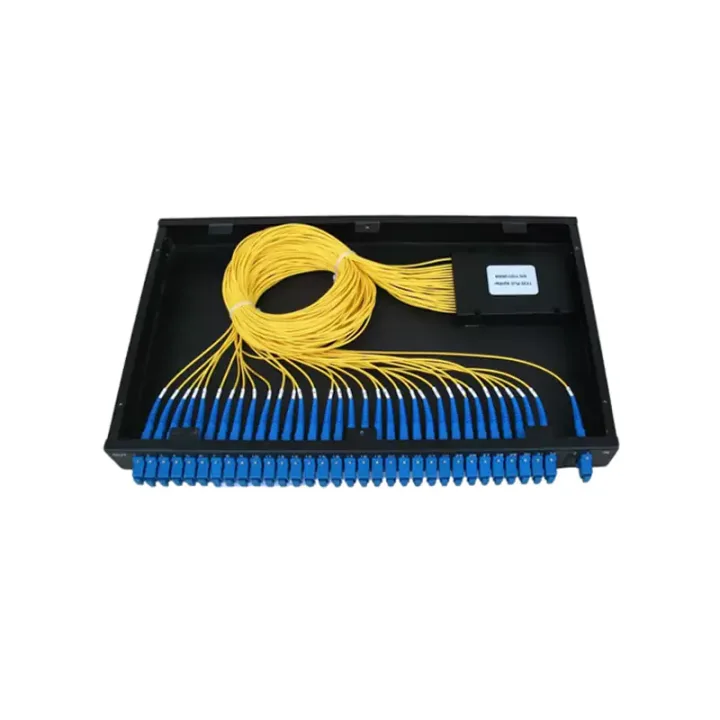
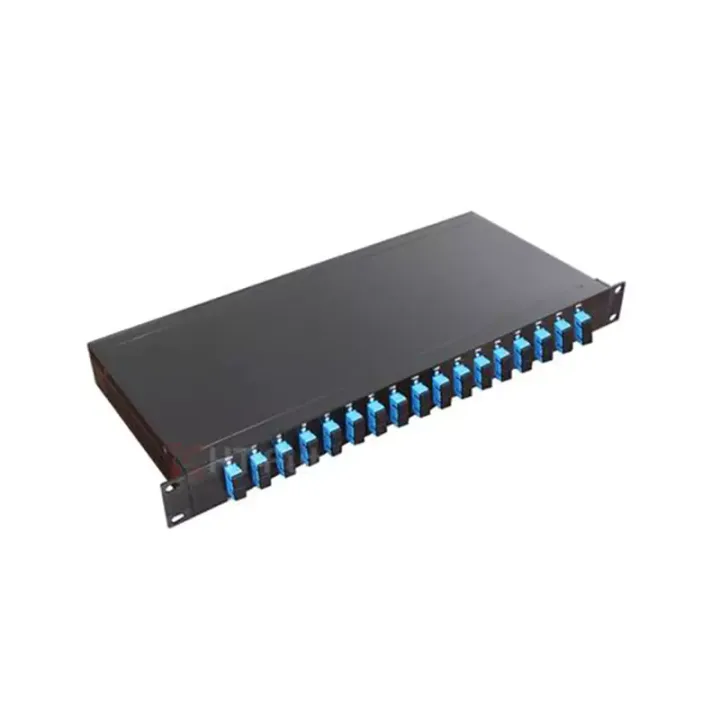
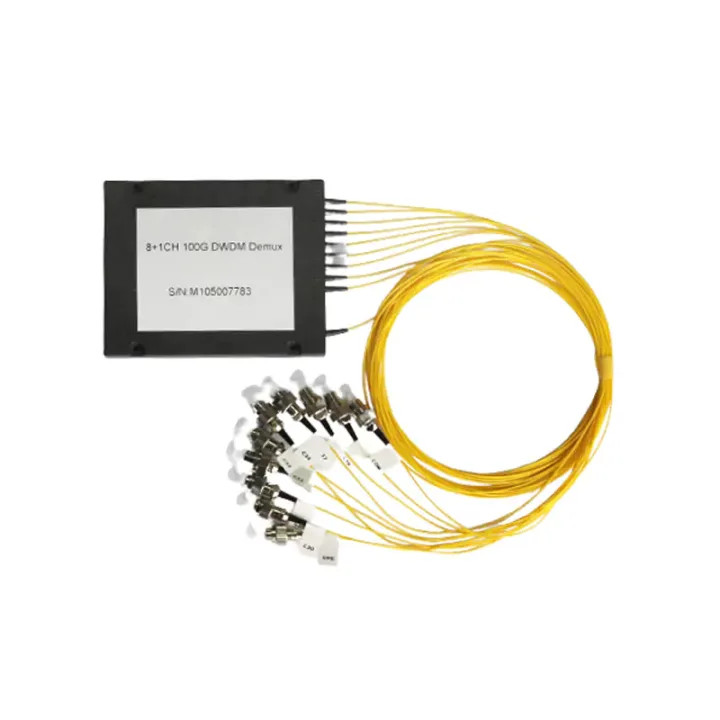
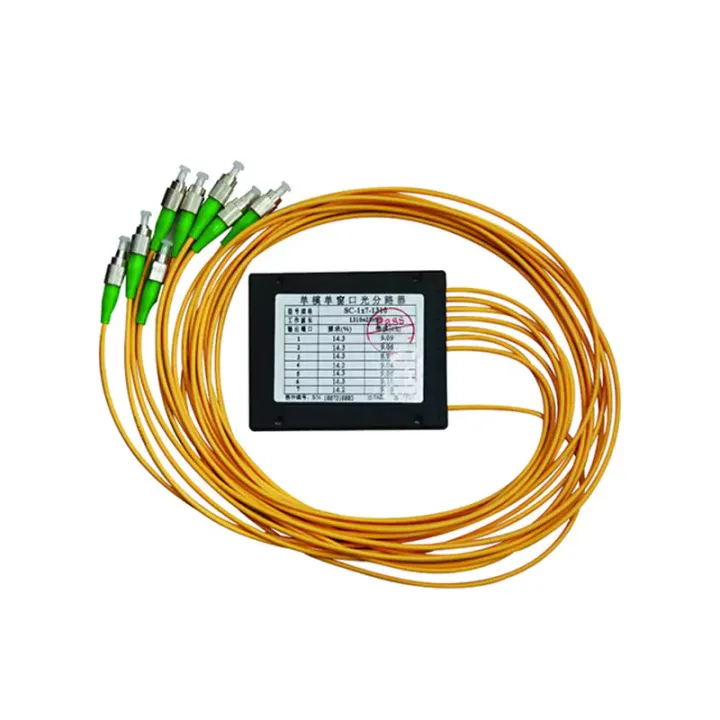
Match splitter or WDM architecture to wavelength plan, ratio, package and insertion-loss targets.
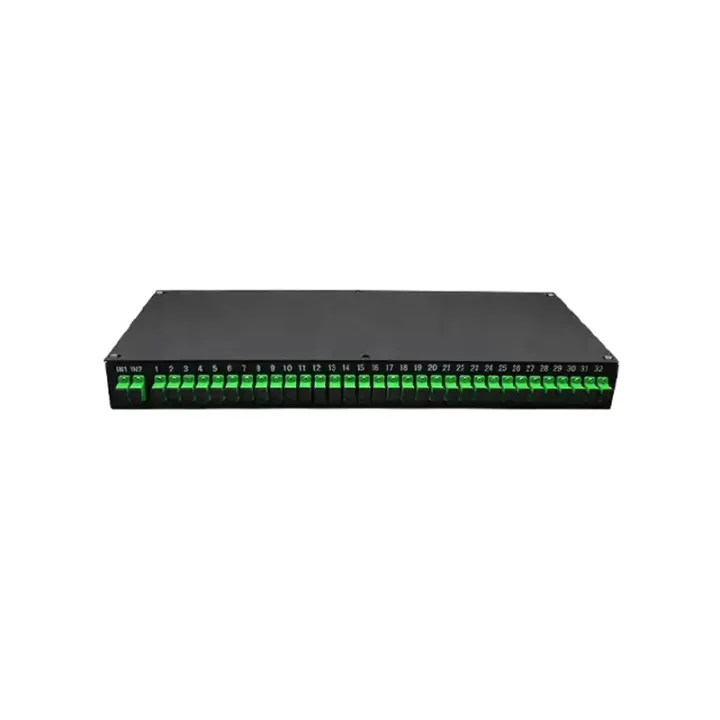
A compact steel-tube PLC splitter module for embedding in terminal boxes, trays, plug-in units or other passive optical enclosures.
Miniature Steel Tube-Type Splitter Series is the primary compact package for a PLC optical splitter. The protected module can be installed directly in a terminal box or used as the internal splitting element for a rack, tray, cassette or plug-in assembly.
The current optical tables cover 1×4 through 1×64 and 2×4 through 2×64 over 1260–1650 nm. As an embedded component, the module depends on the host product for mounting, slack storage, connector presentation and environmental protection.
Specify input/output count, split ratio, bare-fiber or connectorized leads, fiber length and diameter, connector/polish and host-enclosure space. The host design must provide strain relief without loading the tube or bending the leads tightly.
Huijue Group can manufacture OEM steel-tube splitter modules from an approved fiber map and enclosure drawing. Lead lengths, colors, connectors, private-label packaging and sample-based fit checks can be reviewed; optical grade, sealing, tests and quantity require confirmation.
| Parameters | 1×4 | 1×8 | 1×16 | 1×32 | 1×64 | ||
| 1 | Operating Bandwidth (nm) | 1260 - 1650 | |||||
| 2 | Insertion Loss (dB) | Maximum | 7.4 | 10.5 | 13.8 | 17.1 | 20.4 |
| 3 | Polarization Dependent Loss (PDL) (dB) | Maximum | 0.2 | 0.2 | 0.3 | 0.3 | 0.3 |
| 4 | Return Loss (RL) (dB) | Minimum | 45 (PC); 50 (UPC); 55 (APC) | ||||
| 5 | Splitting Uniformity (dB) | Maximum | 0.7 | 0.8 | 1.0 | 1.5 | 2.0 |
| 6 | Directivity (dB) | Minimum | 55 | 55 | 55 | 55 | 55 |
Notes: 1. Applicable to devices with all integrated components;
2. All parameters are tested including connectors, under the condition of λ=1310/1550nm.
3. The test wavelengths for splitting uniformity are 1310nm, 1490nm, and 1550nm. For the wavelength ranges of 1260nm-1300nm and 1600nm-1650nm, the splitting uniformity index is increased by 0.5dB on the basis of the above indicators.
| Parameters | 2×4 | 2×8 | 2×16 | 2×32 | 2×64 | ||
| 1 | Operating Bandwidth (nm) | 1260 - 1650 | |||||
| 2 | Insertion Loss (dB) | Maximum | 7.7 | 10.8 | 14.1 | 17.4 | 20.6 |
| 3 | Polarization Dependent Loss (PDL) (dB) | Maximum | 0.2 | 0.2 | 0.3 | 0.3 | 0.3 |
| 4 | Return Loss (RL) (dB) | Minimum | 45 (PC); 50 (UPC); 55 (APC) | ||||
| 5 | Splitting Uniformity (dB) | Maximum | 0.7 | 0.8 | 1.0 | 1.5 | 2.0 |
| 6 | Directivity (dB) | Minimum | 55 | 55 | 55 | 55 | 55 |
Notes: 1. Applicable to uniform devices;
2. All parameters are tested including connectors, under the condition of λ=1310/1550nm.
3. The test wavelengths for splitting uniformity are 1310nm, 1490nm, and 1550nm. For the wavelength ranges of 1260nm-1300nm and 1600nm-1650nm, the splitting uniformity index is increased by 0.5dB on the basis of the above indicators.
The miniature tube is not a complete outdoor enclosure. Temperature, moisture, pull protection and connector access are determined by the finished host assembly and must be validated there.
Buyer Questions
Answers specific to Miniature Steel Tube-Type Splitter Series selection, configuration and purchasing.
No. It is a compact internal splitter package and needs a suitable host enclosure and strain relief.
Bare-fiber lead configurations can be reviewed together with lead diameter, length and splice method.
Its small primary package can be integrated into several different splitter housings instead of fixing the project to one enclosure style.
Use the deployment context to narrow the configuration before comparing dimensions, capacities and options.
Match splitter or WDM architecture to wavelength plan, ratio, package and insertion-loss targets.
Coordinate connector, polish, fiber grade, polarity and cable length across patching points.
Plan MPO/MTP trunks and harnesses around port mapping, breakout format and rack density.
Select splicing, cleaning and test tools for the connector types and measurements used on site.
Before quotation: confirm capacity, interfaces, installation environment, power conditions, quantity and required options.