

Passive optical distribution
Match splitter or WDM architecture to wavelength plan, ratio, package and insertion-loss targets.
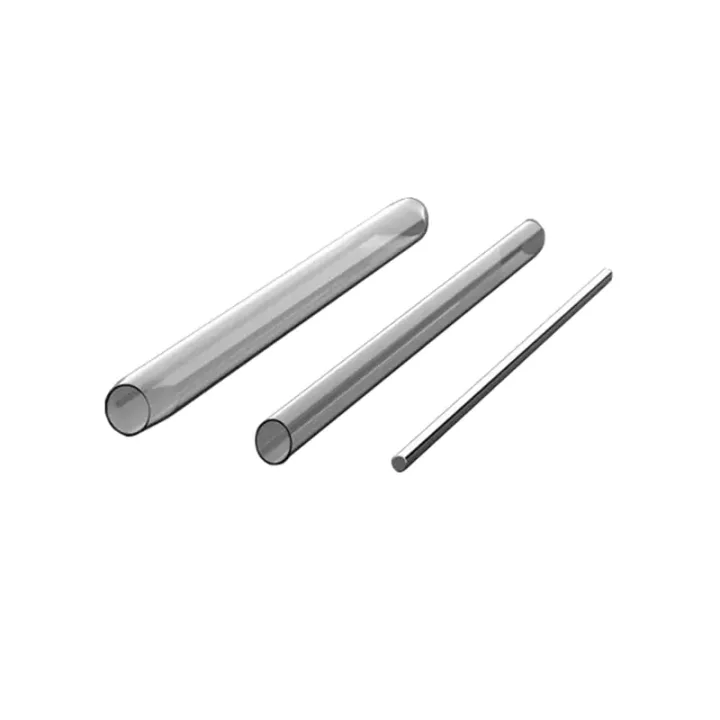
A heat-shrink protection sleeve for single-fiber or 12-fiber fusion splices, using polyolefin, hot-melt adhesive and 304 stainless reinforcement.
Fiber Fusion Splice Protection Sleeve reinforces and seals the fragile joint after fusion splicing. The verified source describes single-fiber and 12-fiber versions made from a transparent cross-linked polyolefin heat-shrink tube, a hot-melt inner tube and a 304 stainless-steel reinforcing member.
The clear outer tube allows the splice to be inspected before shrinking. During heating, the inner material seals around the fiber while the reinforcement supports the joint. Correct sleeve size and a compatible heater cycle are essential; an unsuitable sleeve can stress the fiber or fail to fit the splice organizer.
Specify single-fiber or ribbon use, sleeve length and diameter, reinforcing-member dimensions, splice-organizer groove and heater compatibility. No universal sleeve dimension is stated in the source, so the fusion splicer and tray must be checked before ordering.
Huijue Group can review OEM packs, private-label bags and sample-based sleeve dimensions for a defined splice tray. Drawing-based production is subject to material, shrink behavior, heater-cycle, pull and dimensional tests, plus quantity and tooling confirmation.
| Configuration | Project-specific; confirm requirements before quotation. |
Store sleeves clean and dry, keep the fiber centered during shrinking and allow the joint to cool before placing it in the holder. Environmental performance depends on correct shrink, the tray and the surrounding enclosure.
Buyer Questions
Answers specific to Fiber Fusion Splice Protection Sleeve selection, configuration and purchasing.
It supports the finished splice mechanically while the heat-shrink and hot-melt layers seal and hold the fiber.
No. Sleeve dimensions, heater cycle and tray groove must be matched.
Huijue Group can review private-label pack counts and artwork after the sleeve specification and order quantity are approved.
Use the deployment context to narrow the configuration before comparing dimensions, capacities and options.
Match splitter or WDM architecture to wavelength plan, ratio, package and insertion-loss targets.
Coordinate connector, polish, fiber grade, polarity and cable length across patching points.
Plan MPO/MTP trunks and harnesses around port mapping, breakout format and rack density.
Select splicing, cleaning and test tools for the connector types and measurements used on site.
Before quotation: confirm capacity, interfaces, installation environment, power conditions, quantity and required options.