
Passive optical distribution
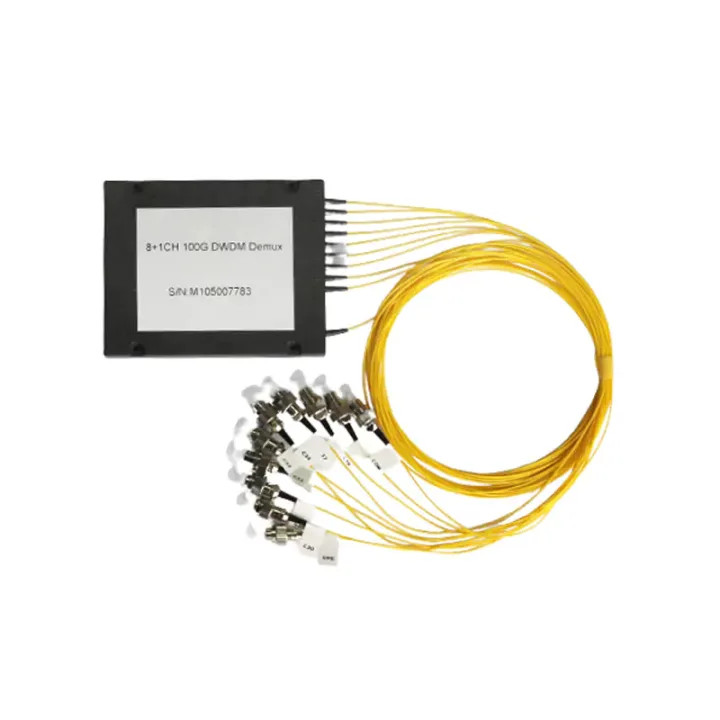
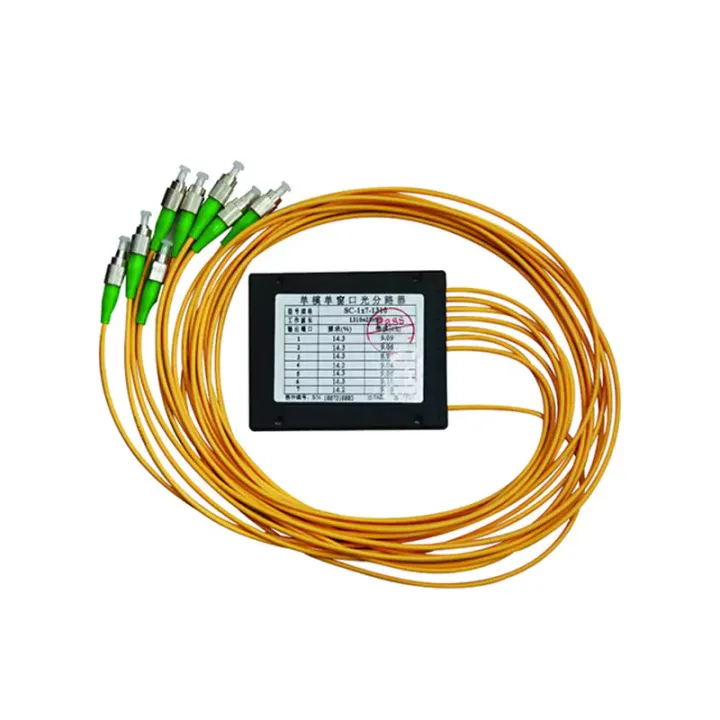
Match splitter or WDM architecture to wavelength plan, ratio, package and insertion-loss targets.
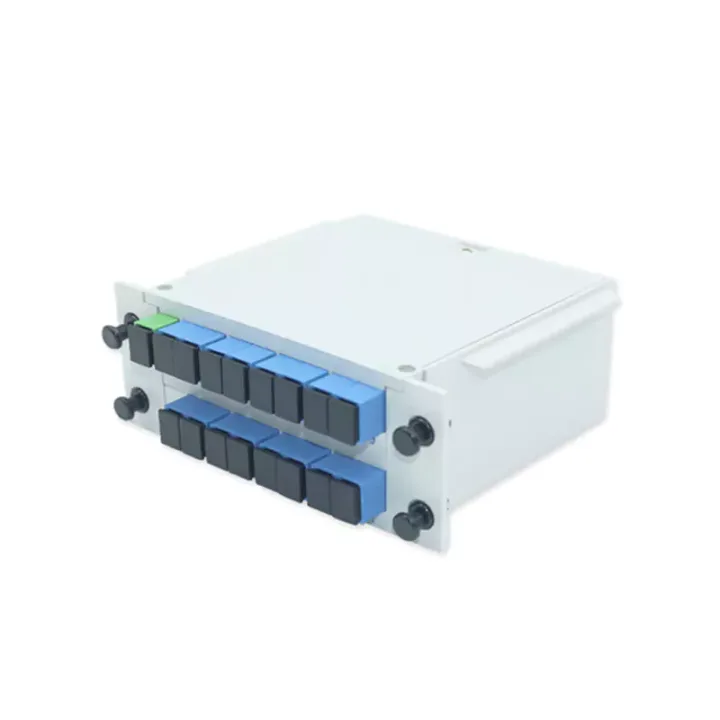
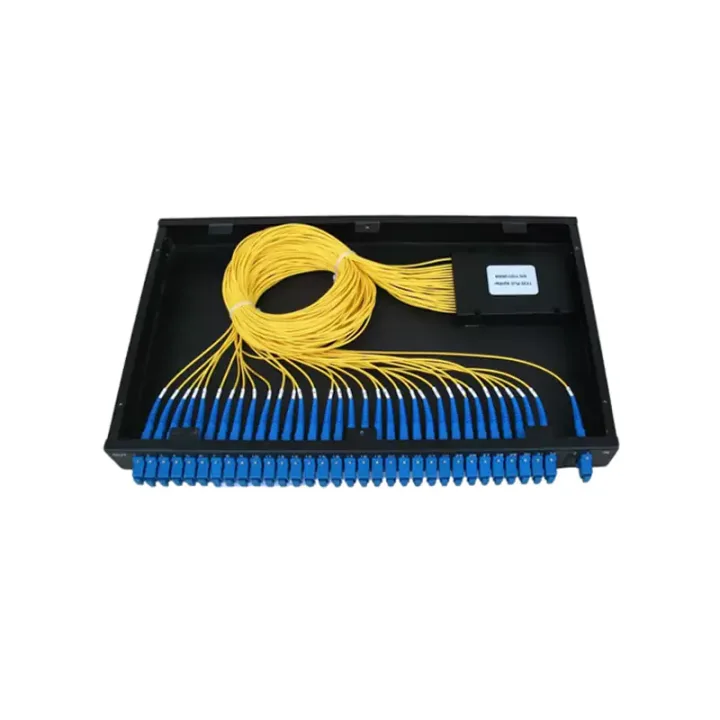
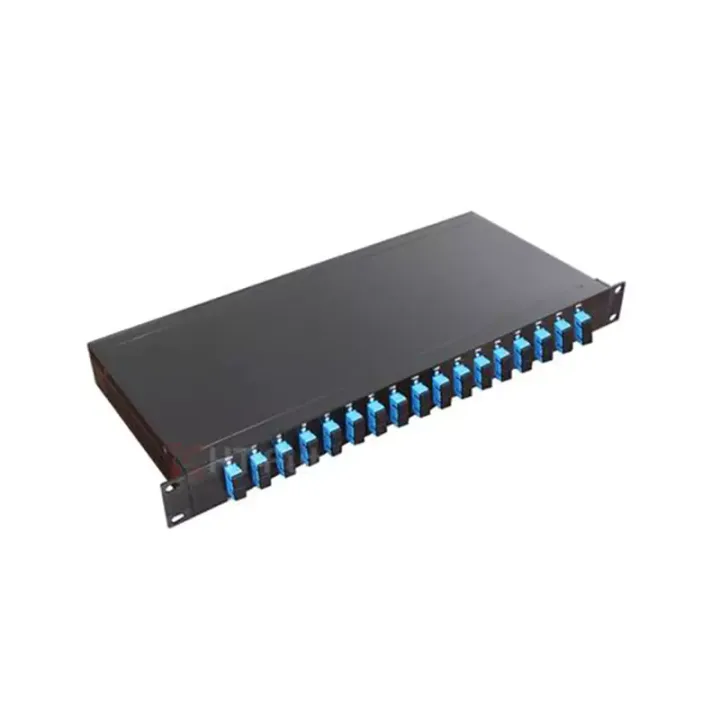
A modular plug-in PLC splitter for compatible no-jumper cross-connect cabinets and distribution boxes, with combinable split ratios and SC/LC options.
Plug-In Type Optical Splitter Series packages passive PLC splitting in a modular unit that can be inserted into a compatible distribution box or no-jumper optical cross-connect cabinet. Different ratios can be combined within the host platform, allowing capacity to be added in defined modules instead of permanently fixing one large splitter arrangement.
The current series lists 1×4 through 1×64 and 2×4 through 2×64. Module height increases with split count, making host-slot compatibility and front connector clearance essential selection inputs.
Provide the host-equipment manufacturer or slot drawing, split ratio, input count, connector/polish and port orientation. Confirm the optical grade and loss budget. A similar-looking plug-in module is not necessarily mechanically interchangeable.
Huijue Group can assess sample-based and drawing-based plug-in modules, including faceplate labels and private-label identification. Housing geometry, latch, connector layout, fiber map, materials, tests, tooling and volume must be confirmed before production.
| Parameters | 1×4 | 1×8 | 1×16 | 1×32 | 1×64 | ||
| 1 | Operating Bandwidth (nm) | 1260 - 1650 | |||||
| 2 | Insertion Loss (dB) | Maximum | 7.4 | 10.5 | 13.8 | 17.1 | 20.4 |
| 3 | Polarization Dependent Loss (PDL) (dB) | Maximum | 0.2 | 0.2 | 0.3 | 0.3 | 0.3 |
| 4 | Return Loss (RL) (dB) | Minimum | 45 (PC); 50 (UPC); 55 (APC) | ||||
| 5 | Splitting Uniformity (dB) | Maximum | 0.7 | 0.8 | 1.0 | 1.5 | 2.0 |
| 6 | Directivity (dB) | Minimum | 55 | 55 | 55 | 55 | |
Notes: 1. Applicable to devices with all integrated components;
2. All parameters are tested including connectors, under the condition of λ=1310/1550nm;
3. The test wavelengths for splitting uniformity are 1310nm, 1490nm, and 1550nm. For the wavelength ranges of 1260nm-1300nm and 1600nm-1650nm, the splitting uniformity index is increased by 0.5dB on the basis of the above indicators.
It can be used normally for more than 10 years. This splitter is suitable for the three major operators and can meet their coverage needs in specific locations.
| Parameters | 2×4 | 2×8 | 2×16 | 2×32 | 2×64 | ||
| 1 | Operating Bandwidth (nm) | 1260 - 1650 | |||||
| 2 | Insertion Loss (dB) | Maximum | 7.7 | 10.8 | 14.1 | 17.4 | 20.6 |
| 3 | Polarization Dependent Loss (PDL) (dB) | Maximum | 0.2 | 0.2 | 0.3 | 0.3 | 0.3 |
| 4 | Return Loss (RL) (dB) | Minimum | 45 (PC); 50 (UPC); 55 (APC) | ||||
| 5 | Splitting Uniformity (dB) | Maximum | 0.7 | 0.8 | 1.0 | 1.5 | 2.0 |
| 6 | Directivity (dB) | Minimum | 55 | 55 | 55 | 55 | |
Notes: 1. Applicable to uniform devices;
2. All parameters are tested including connectors, under the condition of λ=1310/1550nm;
3. The test wavelengths for splitting uniformity are 1310nm, 1490nm, and 1550nm. For the wavelength ranges of 1260nm-1300nm and 1600nm-1650nm, the splitting uniformity index is increased by 0.5dB on the basis of the above indicators.
The host cabinet determines ingress and mechanical protection. Insert modules only into approved slots, preserve connector access and cap all unused ports.
Buyer Questions
Answers specific to Plug-In Type Optical Splitter Series selection, configuration and purchasing.
No. Slot dimensions, latch, faceplate and connector position must match the host equipment.
The modular concept allows different ratios to be combined when the host slots and optical plan support them.
Yes, a sample can support evaluation, but an approved drawing and qualification requirements are still needed.
Use the deployment context to narrow the configuration before comparing dimensions, capacities and options.
Match splitter or WDM architecture to wavelength plan, ratio, package and insertion-loss targets.
Coordinate connector, polish, fiber grade, polarity and cable length across patching points.
Plan MPO/MTP trunks and harnesses around port mapping, breakout format and rack density.
Select splicing, cleaning and test tools for the connector types and measurements used on site.
Before quotation: confirm capacity, interfaces, installation environment, power conditions, quantity and required options.