
Campus and backbone routes
Select indoor, outdoor or armored constructions around fiber count, route length and installation method.
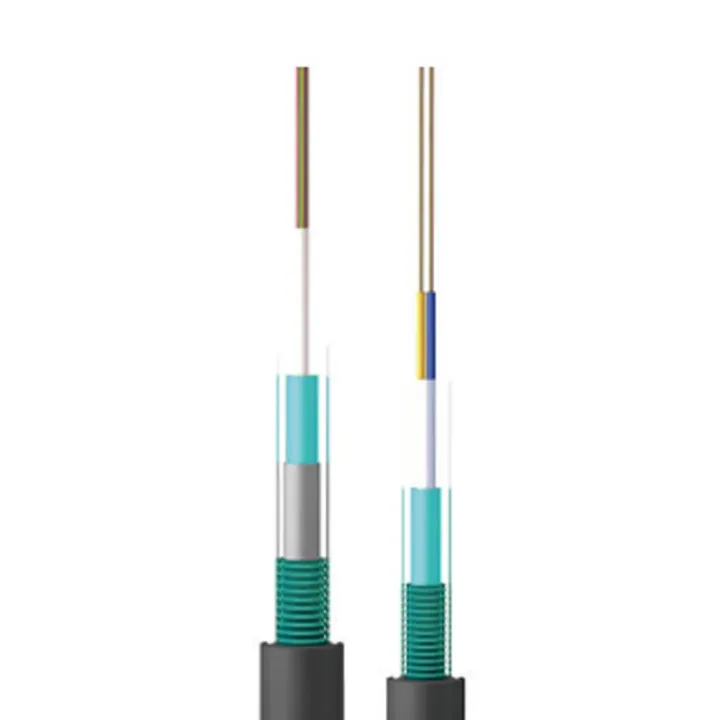
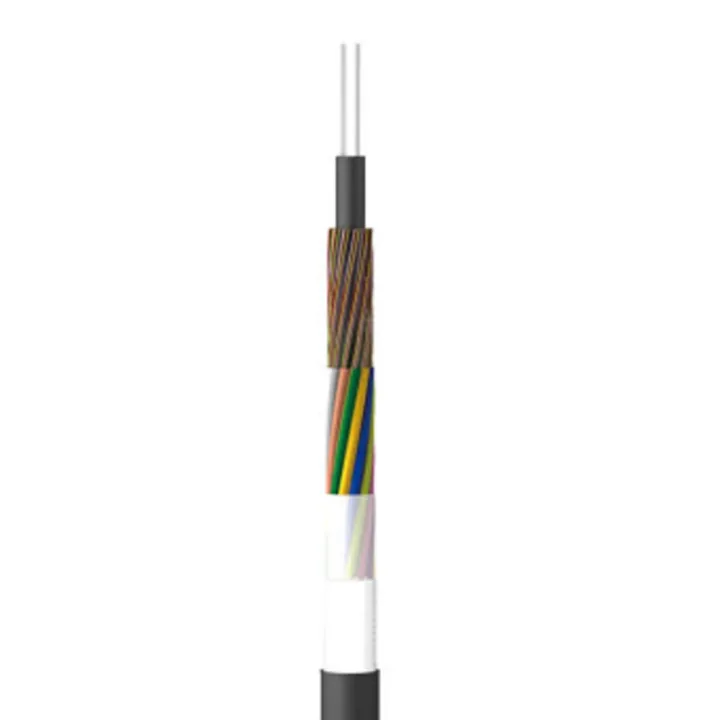
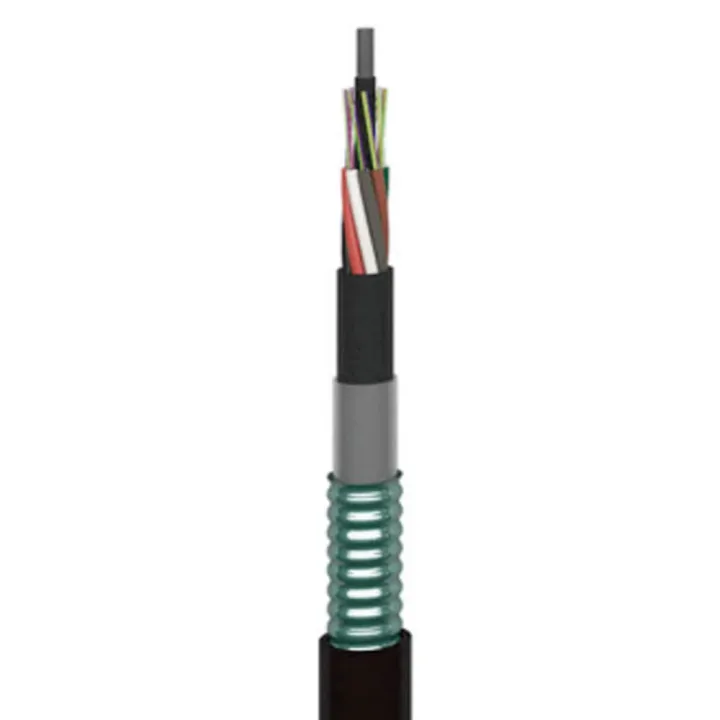
A GYXTZW central-tube cable combining water-blocking materials, coated steel tape and parallel steel reinforcement with a flame-retardant outer sheath for defined optical route requirements.
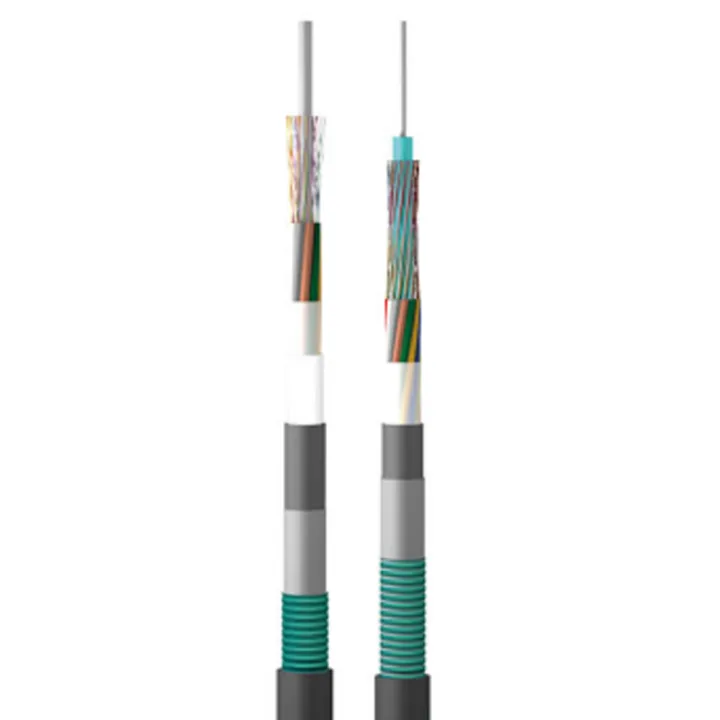
Central-tube Flame-retardant Optical Cable uses a GYXTZW construction with a compound-filled tube at the center. Coated steel tape, water-blocking material and two parallel steel wires form the protective structure beneath the flame-retardant sheath.
This product is selected when the route specification calls for that central-tube structure and a defined flame behavior. A sheath description must be converted into an agreed material and test requirement before the cable is approved for a particular pathway.
Specify the required flame test, fiber grade and count, then choose the mechanical variant. The table has 600/1500 N and 1000/3000 N tensile reference arrangements with different masses. Verify the selected row's complete crush and bend limits, including the applicability of the 10D/20D reference, before planning installation.
For a GYXTZW project, Huijue Group can assess OEM legends, private-label supply and sample- or drawing-based sheath requirements. Material feasibility, tooling, fire and mechanical tests, order quantity and delivery scope need engineering confirmation.
Include GYXTZW model requirements, optical grade, core count, tensile duty, route drawing, sheath/fire test criteria, bend constraints and delivery lengths.
| Fiber Type | Attenuation (+20℃) | Bandwidth | Numerical Aperture | Cable Cut-off Wavelength | ||||
|---|---|---|---|---|---|---|---|---|
| @850nm | @1300nm | @1310nm | @1550nm | @850nm | @1300nm | |||
| G.652 | — | — | ≤0.36dB/km | ≤0.22dB/km | — | — | — | ≤1260nm |
| G.655 | — | — | ≤0.40dB/km | ≤0.23dB/km | — | — | — | ≤1450nm |
| 50/125μm | ≤3.3dB/km | ≤1.2dB/km | — | — | ≥500MHz·km | ≥500MHz·km | 0.200±0.015 NA | — |
| 62.5/125μm | ≤3.5dB/km | ≤1.2dB/km | — | — | ≥200MHz·km | ≥500MHz·km | 0.275±0.015 NA | — |
| Cable Model (increments of 2 fibers) | Fiber Count | Reference Cable Weight (kg/km) | Allowable Tensile Load Long/Short Term (N) | Allowable Crush Load Long/Short Term (N/100mm) | Bend Radius Static/Dynamic (mm) | |||
| GYXTZW-2~12Xn | 2~12 | 152 | 600/1500 | 300/1000 | 10D/20D | |||
| GYXTZW-14~24Xn | 14~24 | 192 | ||||||
| GYXTZW-2~12Xn | 2~12 | 172 | 1000/3000 | |||||
| GYXTZW-14~24Xn | 14~24 | 215 |
For optical cable routes requiring a central-tube steel-reinforced design with a specifically agreed flame-retardant sheath and acceptance criteria.
Supply the route's moisture, temperature and fire requirements. Neither a specific certification nor an indoor pathway class is established by the product name.
Buyer Questions
Answers specific to Central-tube Flame-retardant Optical Cable selection, configuration and purchasing.
The source identifies a flame-retardant sheath without establishing a specific certified classification. Define the required tests and obtain evidence for the supplied construction.
No. GYXTZW has its own weight entries and sheath construction. Use the approved data for the selected fiber count and mechanical variant.
Confirm wire and sheath construction, diameter, mass, crush limits and bend limits together. A tensile figure alone is not the complete installation specification.
Use the deployment context to narrow the configuration before comparing dimensions, capacities and options.
Select indoor, outdoor or armored constructions around fiber count, route length and installation method.
Coordinate feeder, distribution and drop cables with the building-entry and subscriber topology.
Match tensile, crush, moisture and armor requirements to poles, ducts or direct-buried routes.
Use FTTA or hybrid constructions where optical transmission and site power share a route.
Before quotation: confirm capacity, interfaces, installation environment, power conditions, quantity and required options.