
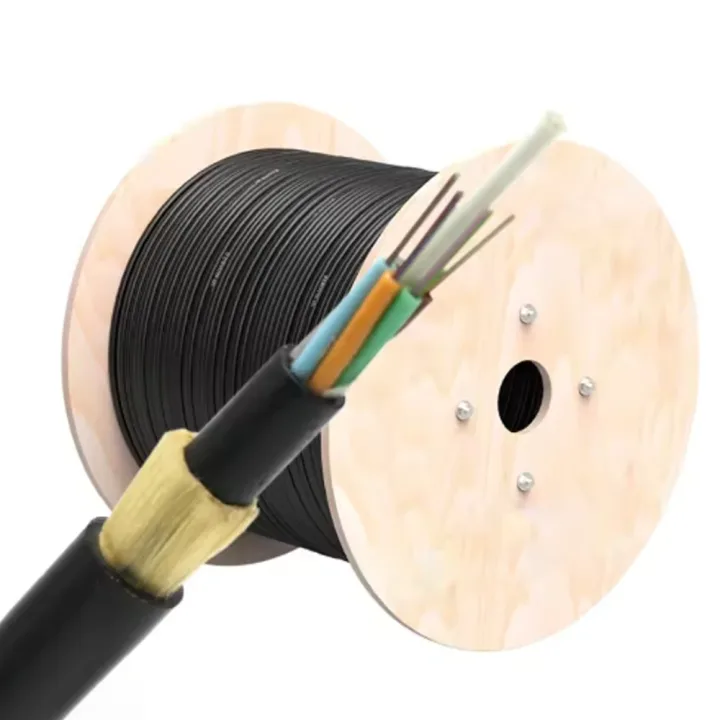
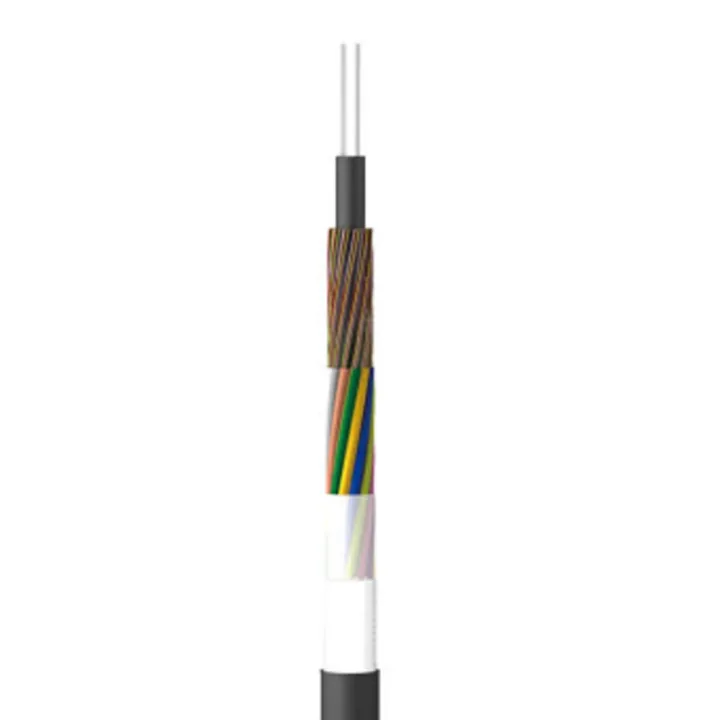
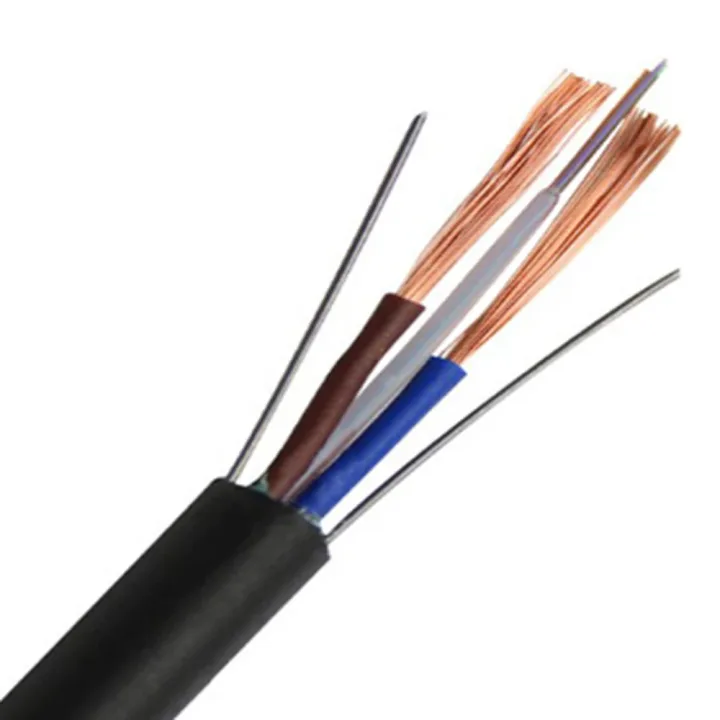
Campus and backbone routes
Select indoor, outdoor or armored constructions around fiber count, route length and installation method.
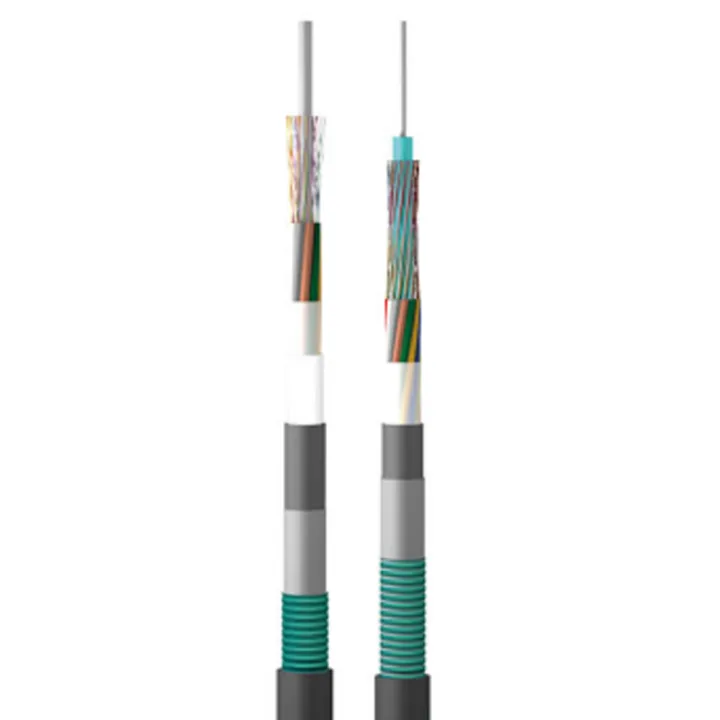
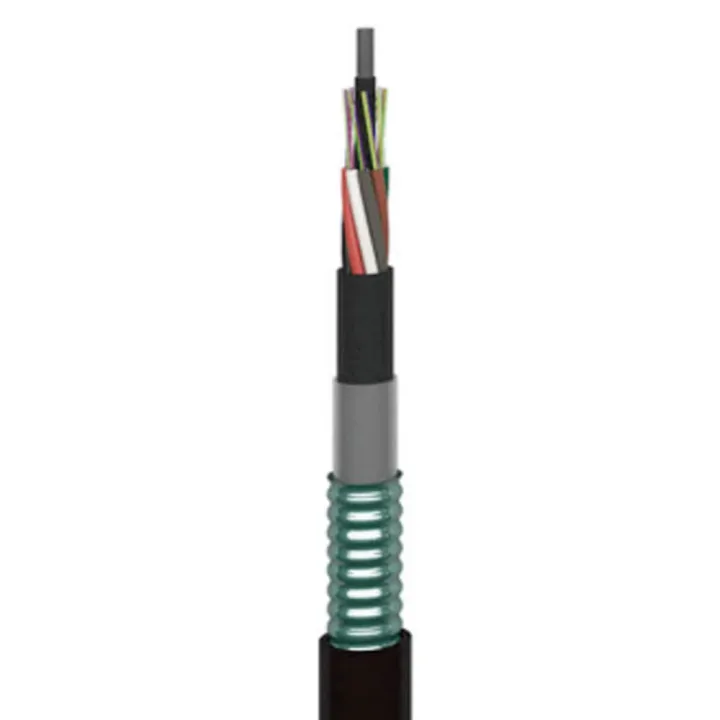
A GYFTZA53 loose-tube cable with FRP central reinforcement, aluminum moisture barrier, steel-tape armor and a flame-retardant outer sheath for mechanically protected optical routes.
This GYFTZA53 cable combines a non-metallic central strength member with a layered armored sheath system. Loose tubes and filler rods are stranded around FRP, while the outer construction addresses moisture and mechanical protection along the route.
Non-metallic in the product title describes the central reinforcement. The finished cable also contains aluminum tape and steel armor, so the complete construction should be reviewed wherever metallic elements or bonding requirements affect route selection.
Specify fiber standard and count, route method, pulling conditions and cable-entry details. The table lists static/dynamic bend references of 12.5D/25D; confirm the finished diameter and applicable limits on the approved model sheet. For flame requirements, state the exact test criteria rather than inferring a certification from the sheath description.
Huijue Group can review this armored cable for OEM manufacture, private-label marking and sample- or drawing-based cross-section requirements. Materials, extrusion tooling, mechanical/optical tests, quantity and delivery scope need engineering confirmation.
Include fiber count, optical grade, route drawings, pulling and crush requirements, sheath/fire criteria, metallic-layer termination details and required lengths.
| Fiber Type | Attenuation (+20°C) | Bandwidth | Numerical Aperture | Cable Cut-off Wavelength | ||||
|---|---|---|---|---|---|---|---|---|
| @850nm | @1300nm | @1310nm | @1550nm | @850nm | @1300nm | |||
| G.652 | — | — | ≤0.35 dB/km | ≤0.22 dB/km | — | — | — | ≤1260 nm |
| G.655 | — | — | ≤0.40 dB/km | ≤0.23 dB/km | — | — | — | ≤1450 nm |
| 50/125μm | ≤3.3 dB/km | ≤1.2 dB/km | — | — | ≥500 MHz·km | ≥500 MHz·km | 0.200±0.015 NA | — |
| 62.5/125μm | ≤3.5 dB/km | ≤1.2 dB/km | — | — | ≥200 MHz·km | ≥500 MHz·km | 0.275±0.015 NA | — |
| Cable Model | Fiber Count | Tube Count | Filler Rod Count | Reference Cable Weight (kg/km) | Allowable Tensile Load Long/Short Term (N) | Allowable Crush Load Long/Short Term (N/100mm) | Bend Radius Static/Dynamic (mm) | |
| GYFTZA53-2~6Xn | 2~6 | 1 | 7 | 275 | 1000/3000 | 1000/3000 | 12.5D/25D | |
| GYFTZA53-8~12Xn | 8~12 | 2 | 6 | 275 | 1000/3000 | 1000/3000 | 12.5D/25D | |
| GYFTZA53-14~18Xn | 14~18 | 3 | 5 | 275 | 1000/3000 | 1000/3000 | 12.5D/25D | |
| GYFTZA53-20~24Xn | 20~24 | 4 | 4 | 275 | 1000/3000 | 1000/3000 | 12.5D/25D | |
| GYFTZA53-26~30Xn | 26~30 | 5 | 3 | 275 | 1000/3000 | 1000/3000 | 12.5D/25D | |
| GYFTZA53-32~36Xn | 32~36 | 6 | 2 | 275 | 1000/3000 | 1000/3000 | 12.5D/25D | |
| GYFTZA53-38~42Xn | 38~42 | 7 | 1 | 275 | 1000/3000 | 1000/3000 | 12.5D/25D | |
| GYFTZA53-44~48Xn | 44~48 | 8 | 0 | 275 | 1000/3000 | 1000/3000 | 12.5D/25D | |
| GYFTZA53-50~60Xn | 50~60 | 5 | 3 | 290 | 1000/3000 | 1000/3000 | 12.5D/25D | |
| GYFTZA53-62~72Xn | 62~72 | 6 | 2 | 290 | 1000/3000 | 1000/3000 | 12.5D/25D | |
| GYFTZA53-74~84Xn | 74~84 | 7 | 1 | 290 | 1000/3000 | 1000/3000 | 12.5D/25D | |
| GYFTZA53-86~96Xn | 86~96 | 8 | 0 | 290 | 1000/3000 | 1000/3000 | 12.5D/25D | |
| GYFTZA53-98~108Xn | 98~108 | 9 | 1 | 327 | 1000/3000 | 1000/3000 | 12.5D/25D | |
| GYFTZA53-110~120Xn | 110~120 | 10 | 0 | 327 | 1000/3000 | 1000/3000 | 12.5D/25D | |
| GYFTZA53-122~132Xn | 122~132 | 11 | 1 | 354 | 1000/3000 | 1000/3000 | 12.5D/25D | |
| GYFTZA53-134~144Xn | 134~144 | 12 | 0 | 354 | 1000/3000 | 1000/3000 | 12.5D/25D |
The source describes duct, aerial and direct-buried installation contexts. Select and approve the route support and protective arrangement for the actual site.
Provide moisture, soil and exposure conditions, plus the required fire behavior. The record does not establish a universal temperature or fire classification for all ordered variants.
Buyer Questions
Answers specific to Loose-tube Stranded Non-metallic Strength Member Armored Flame-retardant Optical Cable selection, configuration and purchasing.
No. Its central member is FRP, but the documented construction includes aluminum tape and steel-tape armor.
The model table covers 2–144 fibers in count groups. Confirm the exact tube arrangement, dimensions and reference mass for the selected count.
The sheath description alone does not establish a class. Agree the required standard and test evidence for the exact supplied cable.
Use the deployment context to narrow the configuration before comparing dimensions, capacities and options.
Select indoor, outdoor or armored constructions around fiber count, route length and installation method.
Coordinate feeder, distribution and drop cables with the building-entry and subscriber topology.
Match tensile, crush, moisture and armor requirements to poles, ducts or direct-buried routes.
Use FTTA or hybrid constructions where optical transmission and site power share a route.
Before quotation: confirm capacity, interfaces, installation environment, power conditions, quantity and required options.