
Campus and backbone routes
Select indoor, outdoor or armored constructions around fiber count, route length and installation method.
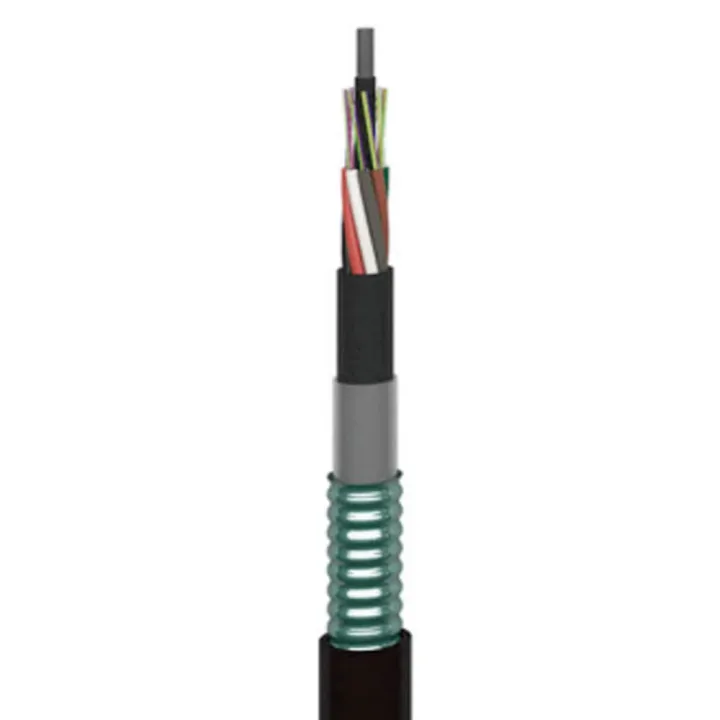
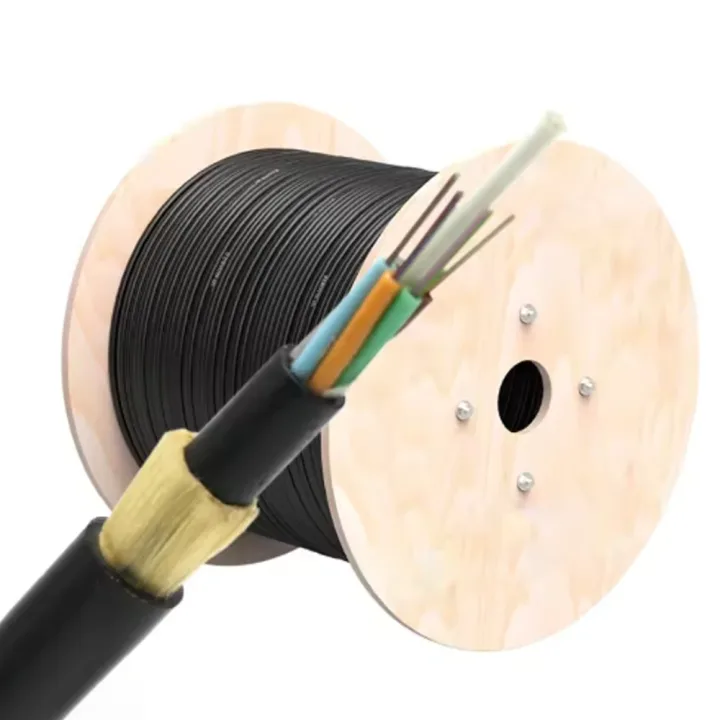
A GYTY53 stranded loose-tube cable with metallic central reinforcement, dual polyethylene sheaths and coated steel-tape armor for specified outdoor optical infrastructure routes and installations.
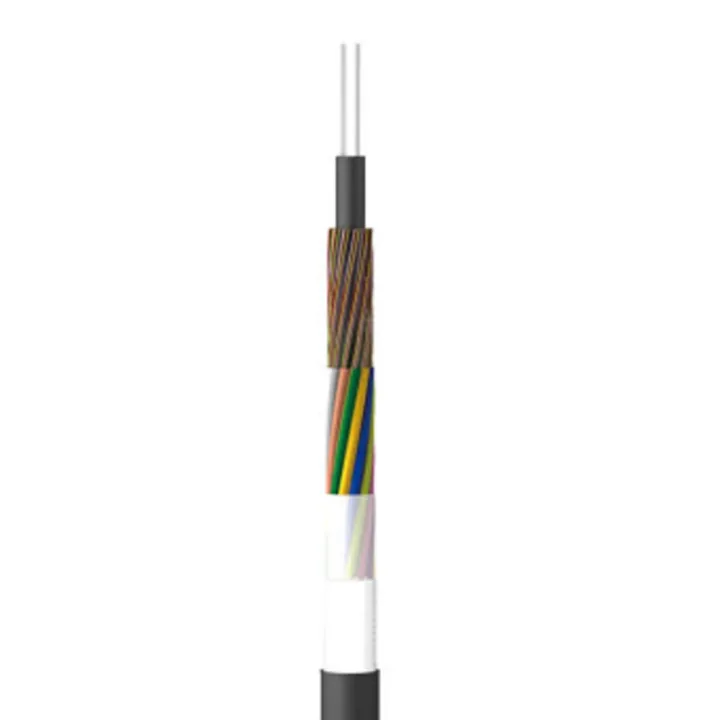
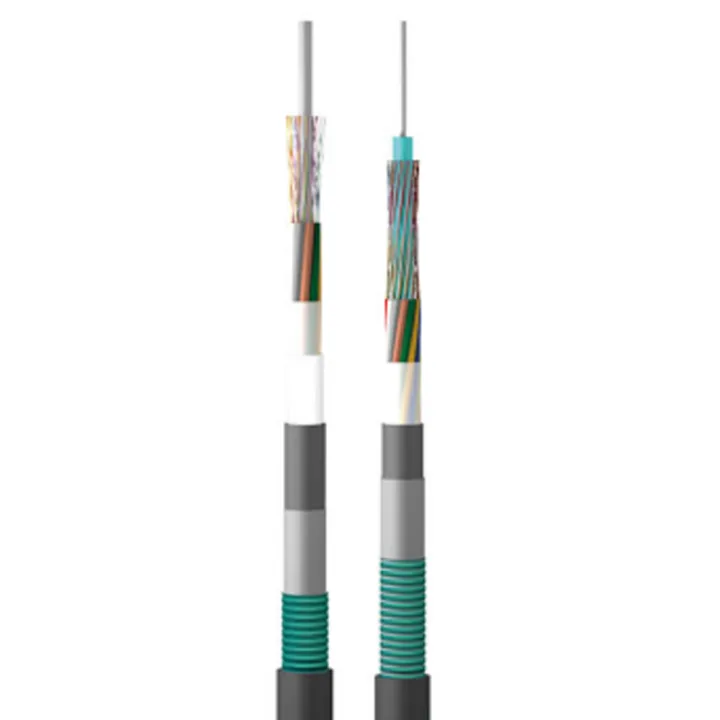
Loose-tube Stranded Standard Armored Optical Cable uses GYTY53 construction to package fibers within a stranded core and layered protective sheath. Loose tubes and fillers surround a metallic central strength member, creating a round cable core.
The inner polyethylene sheath, coated steel tape and outer polyethylene sheath form the documented protective build. Choose the cable model from route loads and fiber requirements, and coordinate metallic elements with the site’s termination and bonding design.
Request the exact count and fiber grade rather than selecting from the family name. Reference weight changes across count groups; several mechanical cells are not repeated on every row. Obtain a complete model sheet with tensile, crush and bend limits for the ordered construction before planning pulling or support arrangements.
For GYTY53 supply, Huijue Group can assess OEM jacket legends, private-label drums and cross-section drawings or cable samples. Changes to strand layout or sheath build require engineering confirmation of tooling, tests, quantity and delivery scope.
Provide fiber type/count, route method and length, pulling conditions, bend constraints, armor and sheath requirements, metallic termination plan and drum schedule.
| Fiber Type | Attenuation (+20℃) | Bandwidth | Numerical Aperture | Cable Cut-off Wavelength | ||||
|---|---|---|---|---|---|---|---|---|
| @850nm | @1300nm | @1310nm | @1550nm | @850nm | @1300nm | |||
| G.652 | — | — | ≤0.36dB/km | ≤0.22dB/km | — | — | — | ≤1260nm |
| G.655 | — | — | ≤0.40dB/km | ≤0.23dB/km | — | — | — | ≤1450nm |
| 50/125μm | ≤3.0dB/km | ≤1.0dB/km | — | — | ≥500MHz·km | ≥500MHz·km | 0.200±0.015 NA | — |
| 62.5/125μm | ≤3.3dB/km | ≤1.0dB/km | — | — | ≥200MHz·km | ≥500MHz·km | 0.275±0.015 NA | — |
| Cable Model (increments of 2 fibers) | Fiber Count | Tube Count | Filler Rod Count | Reference Cable Weight (kg/km) | Allowable Tensile Load Long/Short Term (N) | Allowable Crush Load Long/Short Term (N/100mm) | Bend Radius Static/Dynamic (mm) | |
| GYTY53-2~6Xn | 2~6 | 1 | 5 | 160 | 1000/3000 | 1000/3000 | 12.5D/25D | |
| GYTY53-8~12Xn | 8~12 | 2 | 4 | 160 | ||||
| GYTY53-14~18Xn | 14~18 | 3 | 3 | 160 | ||||
| GYTY53-20~24Xn | 20~24 | 4 | 2 | 160 | ||||
| GYTY53-26~30Xn | 26~30 | 5 | 1 | 160 | ||||
| GYTY53-32~36Xn | 32~36 | 6 | 0 | 160 | ||||
| GYTY53-38~48Xn | 38~48 | 4 | 1 | 174 | ||||
| GYTY53-50~60Xn | 50~60 | 5 | 0 | 174 | ||||
| GYTY53-62~72Xn | 62~72 | 6 | 0 | 185 | ||||
| GYTY53-74~84Xn | 74~84 | 7 | 1 | 214 | ||||
| GYTY53-86~96Xn | 86~96 | 8 | 0 | 214 | ||||
| GYTY53-98~108Xn | 98~108 | 9 | 1 | 245 | ||||
| GYTY53-110~120Xn | 110~120 | 10 | 0 | 245 | ||||
| GYTY53-122~132Xn | 122~132 | 11 | 1 | 281 | ||||
| GYTY53-134~144Xn | 134~144 | 12 | 0 | 281 | ||||
| GYTY53-146~216Xn | 146~216 | 13~18 | 5~0 | 281 |
For outdoor optical route projects requiring a specified stranded core and steel-tape armored construction. Confirm the installation method against the final mechanical specification.
Describe water exposure, installation surfaces and any soil or corrosion conditions. Polyethylene and steel-tape construction does not by itself establish suitability for every burial or aerial arrangement.
Buyer Questions
Answers specific to Loose-tube Stranded Standard Armored Optical Cable selection, configuration and purchasing.
The verified GYTY53 description uses a metallic central strength member. If a dielectric central member is required, request a separately defined construction.
Obtain confirmation for the exact model. The source table has incomplete repeated cells, so the final model sheet should state the applicable limits explicitly.
Use the deployment context to narrow the configuration before comparing dimensions, capacities and options.
Select indoor, outdoor or armored constructions around fiber count, route length and installation method.
Coordinate feeder, distribution and drop cables with the building-entry and subscriber topology.
Match tensile, crush, moisture and armor requirements to poles, ducts or direct-buried routes.
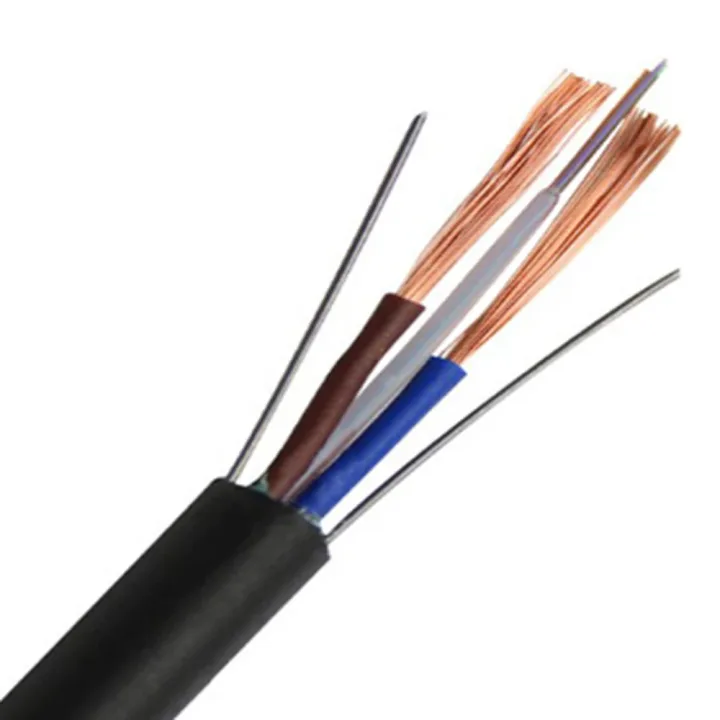
Use FTTA or hybrid constructions where optical transmission and site power share a route.
Before quotation: confirm capacity, interfaces, installation environment, power conditions, quantity and required options.